
Studies of Psychology and Behavior ›› 2025, Vol. 23 ›› Issue (6): 813-821.DOI: 10.12139/j.1672-0628.2025.06.012
• ? • Previous Articles Next Articles
Xuying WANG1,2, Yang SHAO1,2, Xiaojuan YIN3, Xiaokang JIN1,2, Hua JIN*,1,2,4( )
)
Received:2025-01-20
Online:2025-11-20
Published:2025-11-20
Contact:
Hua JIN
王旭瑛1,2, 邵杨1,2, 阴晓娟3, 金晓康1,2, 金花*,1,2,4()
通讯作者:
金花
基金资助:Xuying WANG, Yang SHAO, Xiaojuan YIN, Xiaokang JIN, Hua JIN. Corrections for Health Wish Rumors Under Fear Appeals: Evidence from Behavioral and Eye-Tracking Studies[J]. Studies of Psychology and Behavior, 2025, 23(6): 813-821.
王旭瑛, 邵杨, 阴晓娟, 金晓康, 金花. 恐惧诉求下希望类健康错误信息的更正:来自行为和眼动的证据[J]. 心理与行为研究, 2025, 23(6): 813-821.
Add to citation manager EndNote|Ris|BibTeX
URL: https://psybeh.tjnu.edu.cn/EN/10.12139/j.1672-0628.2025.06.012
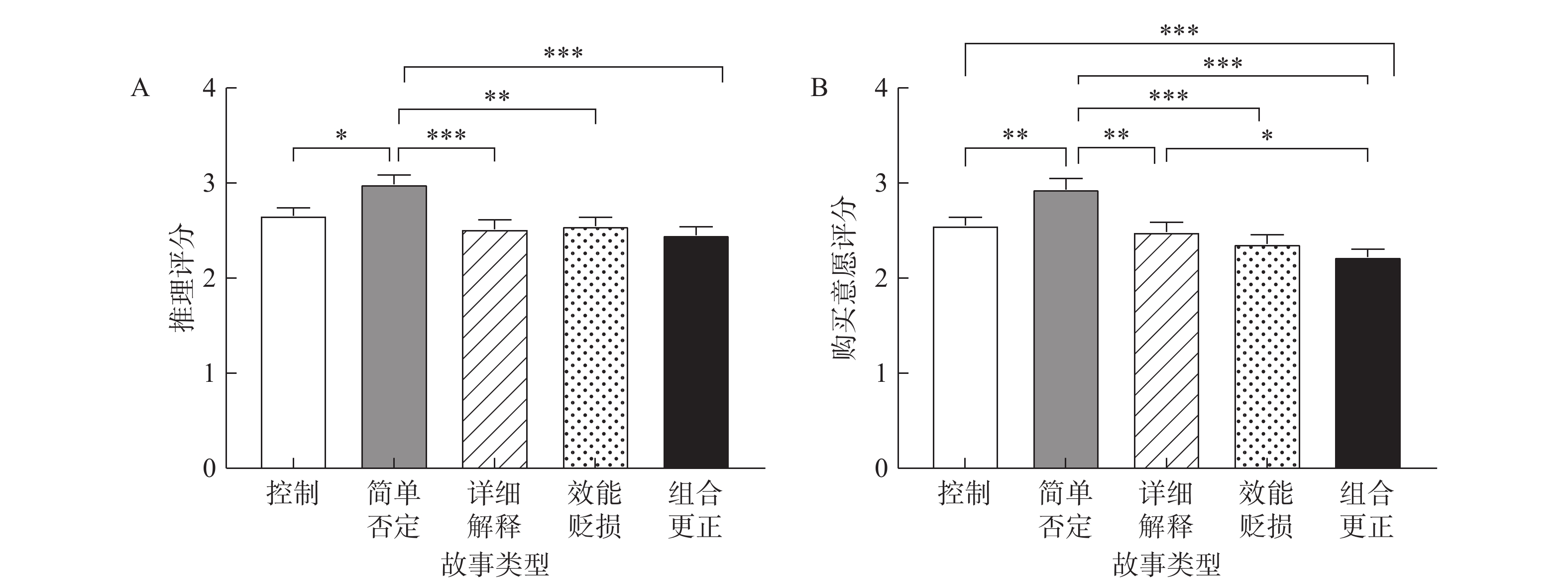
| 实验条件 | 推理评分 | 购买意愿评分 |
| 控制条件 | 2.65(1.07) | 2.55(1.04) |
| 简单否定 | 2.98(1.23) | 2.93(1.41) |
| 详细解释 | 2.51(1.22) | 2.49(1.23) |
| 效能贬损 | 2.55(1.11) | 2.36(1.16) |
| 组合更正 | 2.45(1.08) | 2.22(1.01) |
| 实验条件 | 推理评分 | 购买意愿评分 |
| 控制条件 | 2.65(1.07) | 2.55(1.04) |
| 简单否定 | 2.98(1.23) | 2.93(1.41) |
| 详细解释 | 2.51(1.22) | 2.49(1.23) |
| 效能贬损 | 2.55(1.11) | 2.36(1.16) |
| 组合更正 | 2.45(1.08) | 2.22(1.01) |
| 对比条件 | 推理评分 | 购买意愿评分 | |||||
| t | pBonf | Cohen’s d | t | pBonf | Cohen’s d | ||
| 控制条件 vs. 简单否定 | −3.10 | 0.023 | −0.29 | −3.64 | 0.004 | −0.32 | |
| 控制条件 vs. 详细解释 | 1.23 | >0.05 | 0.12 | 0.68 | >0.05 | 0.06 | |
| 控制条件 vs. 效能贬损 | 1.03 | >0.05 | 0.10 | 1.91 | >0.05 | 0.17 | |
| 控制条件 vs. 组合更正 | 1.88 | >0.05 | 0.18 | 4.10 | <0.001 | 0.28 | |
| 简单否定 vs. 详细解释 | 4.21 | <0.001 | 0.42 | 3.95 | 0.001 | 0.38 | |
| 简单否定 vs. 效能贬损 | 3.99 | 0.001 | 0.39 | 5.12 | <0.001 | 0.49 | |
| 简单否定 vs. 组合更正 | 5.00 | <0.001 | 0.47 | 6.30 | <0.001 | 0.60 | |
| 详细解释 vs. 效能贬损 | −0.32 | >0.05 | −0.03 | 1.19 | >0.05 | 0.11 | |
| 详细解释 vs. 组合更正 | 0.65 | >0.05 | 0.06 | 3.24 | 0.015 | 0.22 | |
| 效能贬损 vs. 组合更正 | 1.07 | >0.05 | 0.08 | 1.52 | >0.05 | 0.12 | |
| 对比条件 | 推理评分 | 购买意愿评分 | |||||
| t | pBonf | Cohen’s d | t | pBonf | Cohen’s d | ||
| 控制条件 vs. 简单否定 | −3.10 | 0.023 | −0.29 | −3.64 | 0.004 | −0.32 | |
| 控制条件 vs. 详细解释 | 1.23 | >0.05 | 0.12 | 0.68 | >0.05 | 0.06 | |
| 控制条件 vs. 效能贬损 | 1.03 | >0.05 | 0.10 | 1.91 | >0.05 | 0.17 | |
| 控制条件 vs. 组合更正 | 1.88 | >0.05 | 0.18 | 4.10 | <0.001 | 0.28 | |
| 简单否定 vs. 详细解释 | 4.21 | <0.001 | 0.42 | 3.95 | 0.001 | 0.38 | |
| 简单否定 vs. 效能贬损 | 3.99 | 0.001 | 0.39 | 5.12 | <0.001 | 0.49 | |
| 简单否定 vs. 组合更正 | 5.00 | <0.001 | 0.47 | 6.30 | <0.001 | 0.60 | |
| 详细解释 vs. 效能贬损 | −0.32 | >0.05 | −0.03 | 1.19 | >0.05 | 0.11 | |
| 详细解释 vs. 组合更正 | 0.65 | >0.05 | 0.06 | 3.24 | 0.015 | 0.22 | |
| 效能贬损 vs. 组合更正 | 1.07 | >0.05 | 0.08 | 1.52 | >0.05 | 0.12 | |
| 条件及 统计指标 | 材料组1 | 材料组2 | |||
| 词频(次/百万) | 笔画数 | 词频(次/百万) | 笔画数 | ||
| 效能贬损 | 305.50(167.56) | 326.63(20.79) | 266.24(156.05) | 307.50(26.21) | |
| 简单否定 | 344.43(132.59) | 319.25(22.84) | 298.75(231.83) | 304.75(30.51) | |
| t | 0.58 | 1.12 | 0.28 | 0.25 | |
| p | 0.581 | 0.298 | 0.786 | 0.808 | |
| 条件及 统计指标 | 材料组1 | 材料组2 | |||
| 词频(次/百万) | 笔画数 | 词频(次/百万) | 笔画数 | ||
| 效能贬损 | 305.50(167.56) | 326.63(20.79) | 266.24(156.05) | 307.50(26.21) | |
| 简单否定 | 344.43(132.59) | 319.25(22.84) | 298.75(231.83) | 304.75(30.51) | |
| t | 0.58 | 1.12 | 0.28 | 0.25 | |
| p | 0.581 | 0.298 | 0.786 | 0.808 | |
| 目标区 | 总注视时间(ms) | 平均注视时间(ms) | 注视次数 | 瞳孔直径变化比 | |||||||
| 效能贬损 | 简单否定 | 效能贬损 | 简单否定 | 效能贬损 | 简单否定 | 效能贬损 | 简单否定 | ||||
| 简单否定句 | 1681(695) | 1895(770) | 203(26) | 216(48) | 8.37(3.33) | 8.97(3.53) | 0.88(0.08) | 0.90(0.08) | |||
| 更正背景句 | 4542(1514) | 4889(1781) | 216(25) | 216(27) | 20.85(6.17) | 22.43(7.80) | 0.90(0.08) | 0.91(0.08) | |||
| 推理句 | 2715(1045) | 2645(1010) | 204(23) | 204(24) | 13.14(4.11) | 12.78(3.94) | 0.98(0.05) | 1.00(0.05) | |||
| 购买意愿句 | 1125(468) | 1127(382) | 202(27) | 202(35) | 5.54(1.92) | 5.66(1.71) | 0.97(0.06) | 0.99(0.04) | |||
| 目标区 | 总注视时间(ms) | 平均注视时间(ms) | 注视次数 | 瞳孔直径变化比 | |||||||
| 效能贬损 | 简单否定 | 效能贬损 | 简单否定 | 效能贬损 | 简单否定 | 效能贬损 | 简单否定 | ||||
| 简单否定句 | 1681(695) | 1895(770) | 203(26) | 216(48) | 8.37(3.33) | 8.97(3.53) | 0.88(0.08) | 0.90(0.08) | |||
| 更正背景句 | 4542(1514) | 4889(1781) | 216(25) | 216(27) | 20.85(6.17) | 22.43(7.80) | 0.90(0.08) | 0.91(0.08) | |||
| 推理句 | 2715(1045) | 2645(1010) | 204(23) | 204(24) | 13.14(4.11) | 12.78(3.94) | 0.98(0.05) | 1.00(0.05) | |||
| 购买意愿句 | 1125(468) | 1127(382) | 202(27) | 202(35) | 5.54(1.92) | 5.66(1.71) | 0.97(0.06) | 0.99(0.04) | |||
| 目标区 | 统计指标 | 总注视时间 | 注视次数 | 平均注视时间 | 瞳孔直径变化比 |
| 简单否定 | b | 227.69 | 0.60 | 15.61 | 0.02 |
| SE | 85.09 | 0.40 | 4.49 | 0.01 | |
| t | 2.68 | 1.50 | 3.48 | 2.17 | |
| p | 0.008 | 0.135 | <0.001 | 0.030 | |
| 95%CI | [46.01, 398.68] | [−0.25, 1.36] | [6.86, 23.85] | [0.004, 0.03] | |
| 更正背景 | b | 344.20 | 1.56 | −0.54 | 0.01 |
| SE | 158.90 | 0.70 | 1.86 | 0.01 | |
| t | 2.17 | 2.24 | −0.29 | 1.37 | |
| p | 0.031 | 0.026 | 0.770 | 0.173 | |
| 95%CI | [20.27, 645.71] | [0.25, 2.91] | [−4.36, 3.00] | [−0.01, 0.03] | |
| 推理句 | b | −68.25 | −0.35 | −0.79 | 0.02 |
| SE | 71.51 | 0.30 | 1.60 | 0.01 | |
| t | −0.95 | −1.17 | −0.50 | 2.84 | |
| p | 0.340 | 0.242 | 0.621 | 0.005 | |
| 95%CI | [−212.75, 82.34] | [−0.93, 0.21] | [−3.92, 2.24] | [0.01, 0.03] | |
| 购买意愿句 | b | −2.88 | 0.07 | 0.56 | 0.02 |
| SE | 43.26 | 0.18 | 3.61 | 0.01 | |
| t | −0.07 | 0.35 | 0.16 | 2.01 | |
| p | 0.947 | 0.724 | 0.877 | 0.045 | |
| 95%CI | [−95.21, 81.35] | [−0.28, 0.38] | [−6.61, 7.98] | [0.001, 0.03] |
| 目标区 | 统计指标 | 总注视时间 | 注视次数 | 平均注视时间 | 瞳孔直径变化比 |
| 简单否定 | b | 227.69 | 0.60 | 15.61 | 0.02 |
| SE | 85.09 | 0.40 | 4.49 | 0.01 | |
| t | 2.68 | 1.50 | 3.48 | 2.17 | |
| p | 0.008 | 0.135 | <0.001 | 0.030 | |
| 95%CI | [46.01, 398.68] | [−0.25, 1.36] | [6.86, 23.85] | [0.004, 0.03] | |
| 更正背景 | b | 344.20 | 1.56 | −0.54 | 0.01 |
| SE | 158.90 | 0.70 | 1.86 | 0.01 | |
| t | 2.17 | 2.24 | −0.29 | 1.37 | |
| p | 0.031 | 0.026 | 0.770 | 0.173 | |
| 95%CI | [20.27, 645.71] | [0.25, 2.91] | [−4.36, 3.00] | [−0.01, 0.03] | |
| 推理句 | b | −68.25 | −0.35 | −0.79 | 0.02 |
| SE | 71.51 | 0.30 | 1.60 | 0.01 | |
| t | −0.95 | −1.17 | −0.50 | 2.84 | |
| p | 0.340 | 0.242 | 0.621 | 0.005 | |
| 95%CI | [−212.75, 82.34] | [−0.93, 0.21] | [−3.92, 2.24] | [0.01, 0.03] | |
| 购买意愿句 | b | −2.88 | 0.07 | 0.56 | 0.02 |
| SE | 43.26 | 0.18 | 3.61 | 0.01 | |
| t | −0.07 | 0.35 | 0.16 | 2.01 | |
| p | 0.947 | 0.724 | 0.877 | 0.045 | |
| 95%CI | [−95.21, 81.35] | [−0.28, 0.38] | [−6.61, 7.98] | [0.001, 0.03] |
|
金花, 贾丽娜, 单金磊. 相关度对老年人错误信息持续影响效应的影响: 死亡态度和健康焦虑的作用. 心理与行为研究, 2021, 19 (3): 389- 395.
|
|
|
金花, 贾丽娜, 阴晓娟, 严世振, 魏士琳, 陈俊涛. 错误信息持续影响效应的神经基础. 心理学报, 2022, 54 (4): 343- 354.
|
|
|
刘欣, 吕小康. 健康动机性推理的影响因素及其发生机制. 心理科学进展, 2025, 33 (10): 1805- 1820.
|
|
|
闫国利, 熊建萍, 臧传丽, 余莉莉, 崔磊, 白学军. 阅读研究中的主要眼动指标评述. 心理科学进展, 2013, 21 (4): 589- 605.
|
|
|
Baum, J., Frömer, R., & Abdel Rahman, R. Emotional content reduces the cognitive effort invested in processing the credibility of social (mis)information. Emotion, 2024, 24 (6): 1468- 1480.
DOI |
|
|
Bigsby, E., & Albarracín, D. Self- and response efficacy information in fear appeals: A meta-analysis. Journal of Communication, 2022, 72 (2): 241- 263.
DOI |
|
|
Borges Do Nascimento, I. J., Beatriz Pizarro, A., Almeida, J., Azzopardi-Muscat, N., André Gonçalves, M., Björklund, M., & Novillo-Ortiz, D. Infodemics and health misinformation: A systematic review of reviews. Bulletin of the World Health Organization, 2022, 100 (9): 544- 561.
DOI |
|
|
Buczel, K. A., Szyszka, P. D., Siwiak, A., Szpitalak, M., & Polczyk, R. Vaccination against misinformation: The inoculation technique reduces the continued influence effect. PLoS One, 2022, 17 (4): e0267463.
DOI |
|
|
Chao, F., Zhou, Q., Zhao, J. A., Xu, Y. N., & Yu, G. Trustworthiness matters: Effect of source credibility on sharing debunking information across different rumour types. Information Processing & Management, 2024, 61 (4): 103747.
|
|
|
Ecker, U. K. H., Lewandowsky, S., & Tang, D. T. W. Explicit warnings reduce but do not eliminate the continued influence of misinformation. Memory & Cognition, 2010, 38 (8): 1087- 1100.
|
|
|
Jiang, X. Y., Zhang, N., Sun, X. M., Yang, S. T., Dong, M. X., Yuan, Y. … Zhao, Q. Rumour type matters: The effect of different types of rumours on coping, subjective well-being, and interpersonal trust during the COVID-19 pandemic. Stress and Health, 2023, 39 (5): 1124- 1136.
DOI |
|
|
Johnson, H. M., & Seifert, C. M. (1994). Sources of the continued influence effect: When misinformation in memory affects later inferences. Journal of Experimental Psychology: Learning, Memory, and Cognition, 20(6), 1420–1436.
|
|
|
Kim, S. C., Vraga, E. K., & Cook, J. An eye tracking approach to understanding misinformation and correction strategies on social media: The mediating role of attention and credibility to reduce HPV vaccine misperceptions. Health Communication, 2021, 36 (13): 1687- 1696.
DOI |
|
|
Lee, Y. I., Mu, D., Hsu, Y. C., Wojdynski, B. W., & Binford, M. Misinformation or hard to tell? An eye-tracking study to investigate the effects of food crisis misinformation on social media engagement. Public Relations Review, 2024, 50 (4): 102483.
DOI |
|
|
Lewandowsky, S., Ecker, U. K. H., Seifert, C. M., Schwarz, N., & Cook, J. Misinformation and its correction: Continued influence and successful debiasing. Psychological Science in the Public Interest, 2012, 13 (3): 106- 131.
DOI |
|
|
MacFarlane, D., Hurlstone, M. J., & Ecker, U. K. H. Reducing demand for ineffective health remedies: Overcoming the illusion of causality. Psychology & Health, 2018, 33 (12): 1472- 1489.
|
|
|
MacFarlane, D., Hurlstone, M. J., & Ecker, U. K. H. Countering demand for ineffective health remedies: Do consumers respond to risks, lack of benefits, or both. Psychology & Health, 2021, 36 (5): 593- 611.
|
|
|
MacFarlane, D., Tay, L. Q., Hurlstone, M. J., & Ecker, U. K. H. Refuting spurious COVID-19 treatment claims reduces demand and misinformation sharing. Journal of Applied Research in Memory and Cognition, 2021, 10 (2): 248- 258.
DOI |
|
|
Moravec, P., Minas, R., & Dennis, A. R. (2018). Fake news on social media: People believe what they want to believe when it makes no sense at all. SSRN Electronic Journal. Retrieved July 14, 2024, from https://papers.ssrn.com/sol3/papers.cfm?abstract_id=3269541
|
|
|
Petty, R. E., & Cacioppo, J. T. (1986). The elaboration likelihood model of persuasion. In R. E. Petty & J. T. Cacioppo (Eds.), Communication and persuasion: Central and peripheral routes to attitude change (pp. 1–24). New York: Springer.
|
|
|
Rayner, K. Eye movements in reading and information processing: 20 years of research. Psychological Bulletin, 1998, 124 (3): 372- 422.
DOI |
|
|
Rich, P. R., Donovan, A. M., & Rapp, D. N. Cause typicality and the continued influence effect. Journal of Experimental Psychology: Applied, 2023, 29 (2): 221- 238.
DOI |
|
|
Rose, J. M., Ganbold, O., Rose, A. M., Thibodeau, J. C., & Rotaru, K. Overcoming resistance to belief revision and correction of misinformation beliefs: Psychophysiological and behavioral effects of a counterfactual mindset. Scientific Reports, 2024, 14 (1): 12493.
DOI |
|
|
Sirois, S., & Brisson, J. Pupillometry. WIREs Cognitive Science, 2014, 5 (6): 679- 692.
DOI |
|
|
Southwell, B. G., Otero Machuca, J., Cherry, S. T., Burnside, M., & Barrett, N. J. Health misinformation exposure and health disparities: Observations and opportunities. Annual Review of Public Health, 2023, 44, 113- 130.
DOI |
|
|
Susmann, M. W., & Wegener, D. T. The role of discomfort in the continued influence effect of misinformation. Memory & Cognition, 2022, 50 (2): 435- 448.
|
|
|
Swire, B., Ecker, U. K. H., & Lewandowsky, S. (2017). The role of familiarity in correcting inaccurate information. Journal of Experimental Psychology: Learning, Memory, and Cognition, 43(12), 1948–1961.
|
|
|
Tao, R., Li, J. N., Shen, L. W., & Yang, S. J. Hope over fear: The interplay between threat information and hope appeal corrections in debunking early COVID-19 misinformation. Social Science & Medicine, 2023, 333, 116132.
|
|
|
Warren, T., & McConnell, K. Investigating effects of selectional restriction violations and plausibility violation severity on eye-movements in reading. Psychonomic Bulletin & Review, 2007, 14 (4): 770- 775.
|
|
|
Witte, K. Putting the fear back into fear appeals: The extended parallel process model. Communication Monographs, 1992, 59 (4): 329- 349.
DOI |
|
|
Yahyaie, L., Ebrahimpour, R., & Koochari, A. Pupil size variations reveal information about hierarchical decision-making processes. Cognitive Computation, 2024, 16 (3): 1049- 1060.
DOI |
| Viewed | ||||||
|
Full text |
|
|||||
|
Abstract |
|
|||||
