
Studies of Psychology and Behavior ›› 2026, Vol. 24 ›› Issue (1): 103-112.DOI: 10.12139/j.1672-0628.2026.01.012
• ? • Previous Articles Next Articles
Yunxiao QI1,2, Yuanqiu MA1,2, Yaojie GAO3, Tuo LIU*,1,2,4( )
)
Received:2025-04-19
Online:2026-01-20
Published:2026-01-20
Contact:
Tuo LIU
齐运晓1,2, 马苑秋1,2, 高垚杰3, 刘拓*,1,2,4()
通讯作者:
刘拓
基金资助:Yunxiao QI, Yuanqiu MA, Yaojie GAO, Tuo LIU. PMPU-CAT Platform: Development of a Computerized Adaptive Testing Platform for Problematic Mobile Phone Use Among Adolescents[J]. Studies of Psychology and Behavior, 2026, 24(1): 103-112.
齐运晓, 马苑秋, 高垚杰, 刘拓. PMPU-CAT Platform:面向青少年的问题性手机使用计算机自适应平台的研发[J]. 心理与行为研究, 2026, 24(1): 103-112.
Add to citation manager EndNote|Ris|BibTeX
URL: https://psybeh.tjnu.edu.cn/EN/10.12139/j.1672-0628.2026.01.012
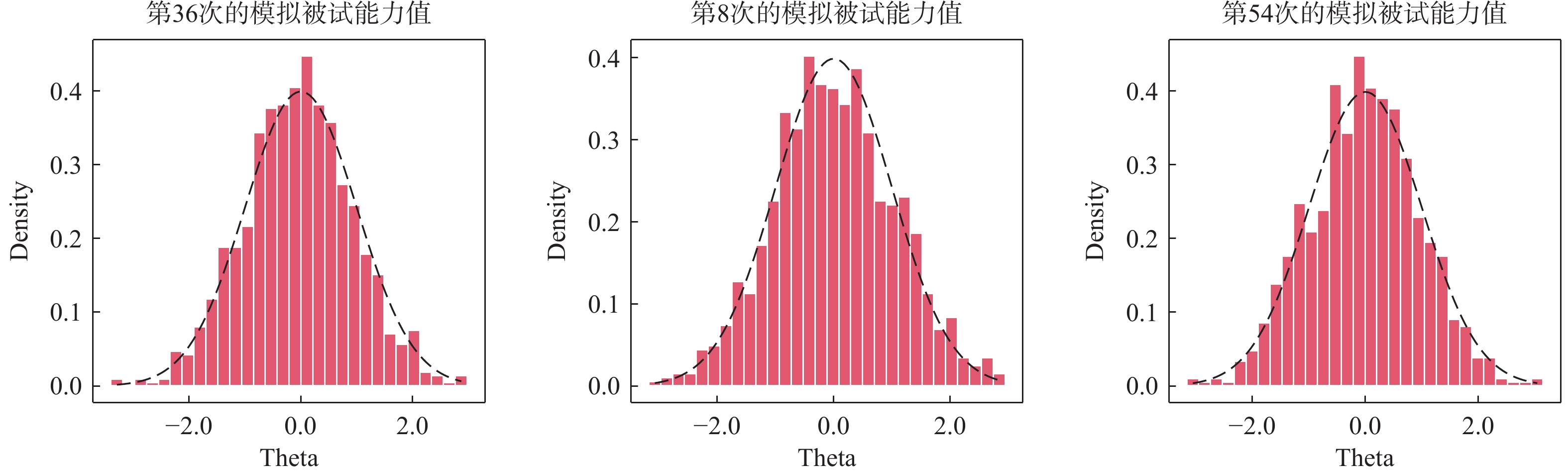
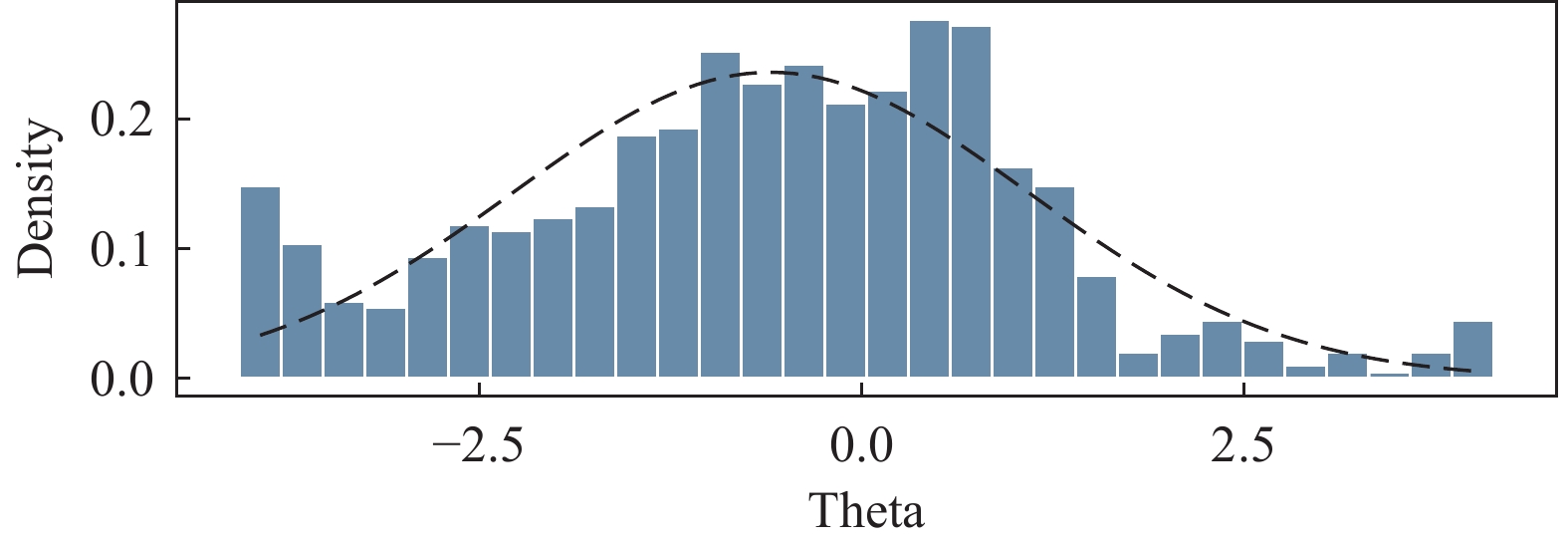
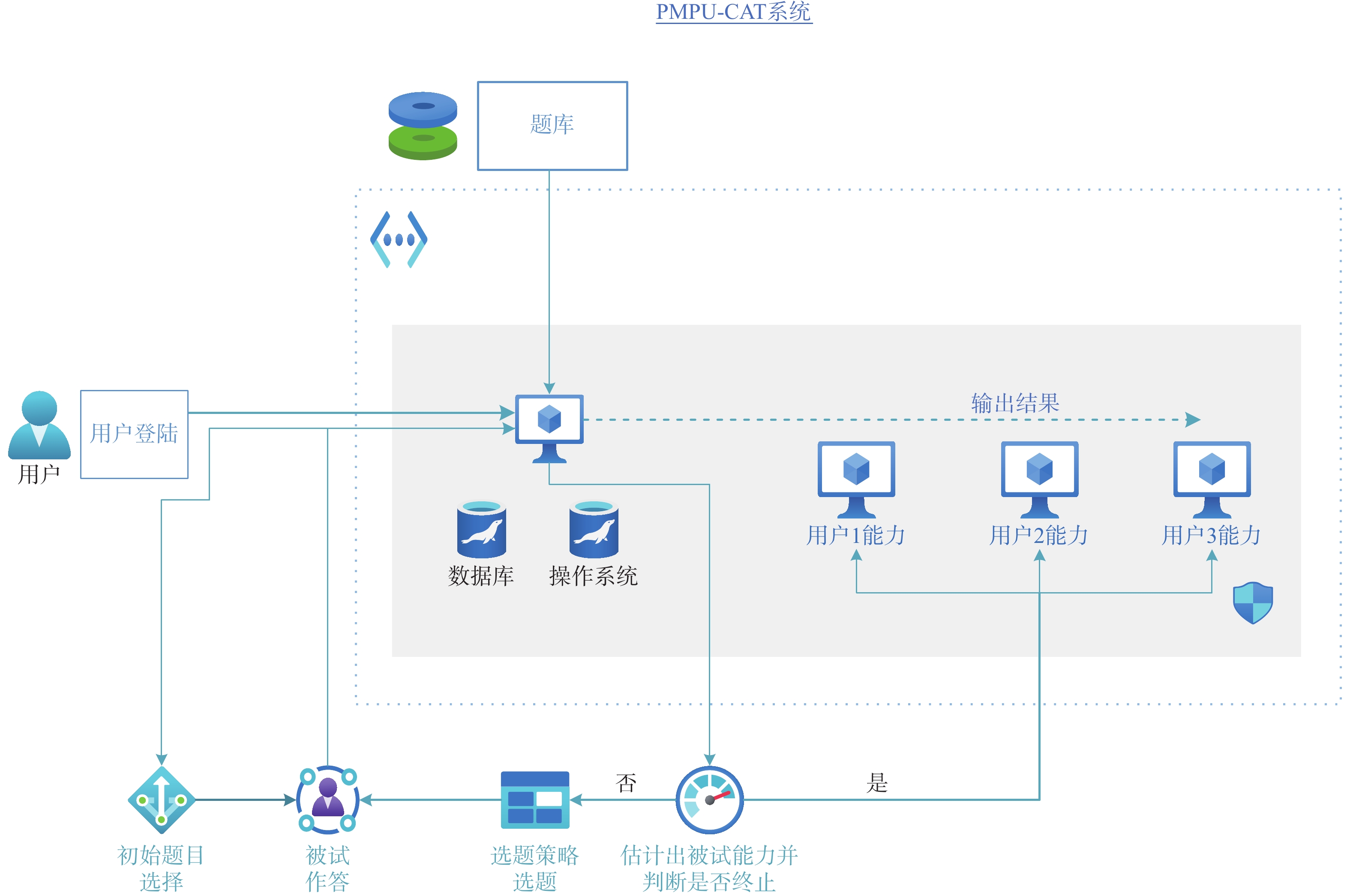
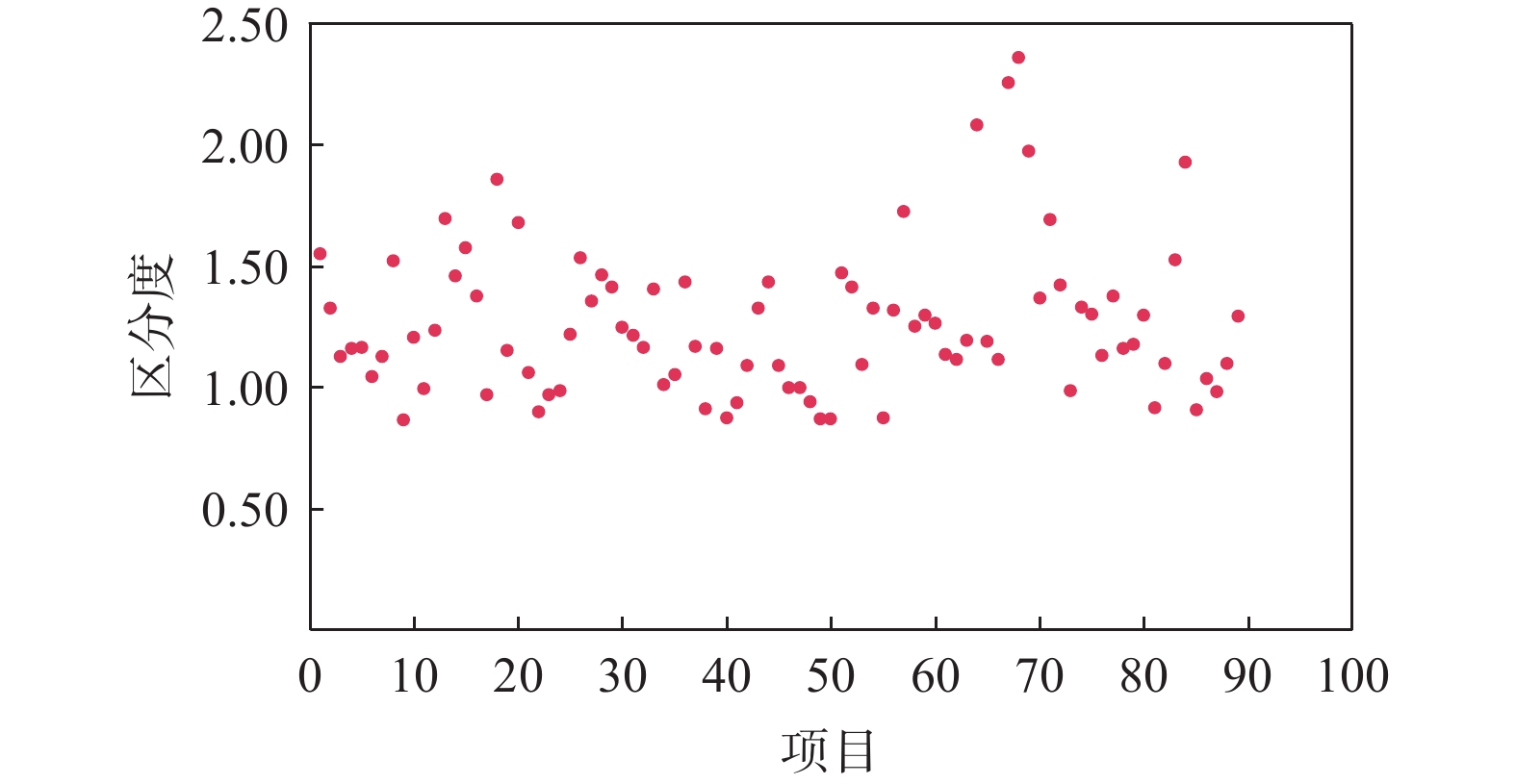

| 终止规则 | 题目使用数量(R) | MSE(R) | MR(R) | r(R & True) | |
| M | SD | ||||
| SE(θ)=0.30 | 14.17 | 1.91 | 0.30 | 0.91 | 0.96 |
| SE(θ)=0.50 | 4.15 | 0.70 | 0.47 | 0.78 | 0.88 |
| SE(θ)=0.70 | 2.01 | 0.13 | 0.61 | 0.63 | 0.79 |
| 终止规则 | 题目使用数量(R) | MSE(R) | MR(R) | r(R & True) | |
| M | SD | ||||
| SE(θ)=0.30 | 14.17 | 1.91 | 0.30 | 0.91 | 0.96 |
| SE(θ)=0.50 | 4.15 | 0.70 | 0.47 | 0.78 | 0.88 |
| SE(θ)=0.70 | 2.01 | 0.13 | 0.61 | 0.63 | 0.79 |
| 终止规则 | 题目使用数量 (JAVA) | MSE(JAVA) | MR (JAVA) | r (JAVA & True) | r (R & JAVA) | |
| M | SD | |||||
| SE(θ)=0.30 | 15.04 | 1.97 | 0.30 | 0.91 | 0.96 | 0.98 |
| SE(θ)=0.50 | 4.59 | 0.67 | 0.48 | 0.77 | 0.88 | 0.94 |
| SE(θ)=0.70 | 2.16 | 0.37 | 0.65 | 0.58 | 0.76 | 0.82 |
| 终止规则 | 题目使用数量 (JAVA) | MSE(JAVA) | MR (JAVA) | r (JAVA & True) | r (R & JAVA) | |
| M | SD | |||||
| SE(θ)=0.30 | 15.04 | 1.97 | 0.30 | 0.91 | 0.96 | 0.98 |
| SE(θ)=0.50 | 4.59 | 0.67 | 0.48 | 0.77 | 0.88 | 0.94 |
| SE(θ)=0.70 | 2.16 | 0.37 | 0.65 | 0.58 | 0.76 | 0.82 |
| 终止规则 | MAE (R) | MAE (JAVA) | MSE (R) | MSE (JAVA) | RMSE (R) | RMSE (JAVA) |
| SE(θ)=0.30 | 0.24 | 0.24 | 0.09 | 0.09 | 0.30 | 0.30 |
| SE(θ)=0.50 | 0.38 | 0.38 | 0.23 | 0.23 | 0.48 | 0.48 |
| SE(θ)=0.70 | 0.49 | 0.52 | 0.38 | 0.43 | 0.61 | 0.65 |
| 终止规则 | MAE (R) | MAE (JAVA) | MSE (R) | MSE (JAVA) | RMSE (R) | RMSE (JAVA) |
| SE(θ)=0.30 | 0.24 | 0.24 | 0.09 | 0.09 | 0.30 | 0.30 |
| SE(θ)=0.50 | 0.38 | 0.38 | 0.23 | 0.23 | 0.48 | 0.48 |
| SE(θ)=0.70 | 0.49 | 0.52 | 0.38 | 0.43 | 0.61 | 0.65 |
| 测验方法 | 测验长度 | 测量误差 | |||
| M(SD) | SE降低百分比(%) | t | Cohen’s d | ||
| NMP-C | 16 | 0.34(0.06) | 11.8 | 19.19*** | 0.71 |
| PMPU-CAT | 16 | 0.30(0.04) | |||
| MPATS | 14 | 0.40(0.04) | 20.0 | 48.23*** | 1.77 |
| PMPU-CAT | 14 | 0.32(0.04) | |||
| SAPS | 7 | 0.55(0.02) | 23.6 | 75.20*** | 2.77 |
| PMPU-CAT | 7 | 0.42(0.05) | |||
| SPAI | 18 | 0.41(0.02) | 29.3 | 82.39*** | 3.03 |
| PMPU-CAT | 18 | 0.29(0.04) | |||
| SAS-C | 11 | 0.43(0.04) | 18.6 | 41.11*** | 1.51 |
| PMPU-CAT | 11 | 0.35(0.04) | |||
| SAS-CA | 14 | 0.36(0.04) | 11.1 | 25.47*** | 0.94 |
| PMPU-CAT | 14 | 0.32(0.04) | |||
| MPAS | 9 | 0.48(0.05) | 20.8 | 46.62*** | 1.72 |
| PMPU-CAT | 9 | 0.38(0.05) | |||
| 测验方法 | 测验长度 | 测量误差 | |||
| M(SD) | SE降低百分比(%) | t | Cohen’s d | ||
| NMP-C | 16 | 0.34(0.06) | 11.8 | 19.19*** | 0.71 |
| PMPU-CAT | 16 | 0.30(0.04) | |||
| MPATS | 14 | 0.40(0.04) | 20.0 | 48.23*** | 1.77 |
| PMPU-CAT | 14 | 0.32(0.04) | |||
| SAPS | 7 | 0.55(0.02) | 23.6 | 75.20*** | 2.77 |
| PMPU-CAT | 7 | 0.42(0.05) | |||
| SPAI | 18 | 0.41(0.02) | 29.3 | 82.39*** | 3.03 |
| PMPU-CAT | 18 | 0.29(0.04) | |||
| SAS-C | 11 | 0.43(0.04) | 18.6 | 41.11*** | 1.51 |
| PMPU-CAT | 11 | 0.35(0.04) | |||
| SAS-CA | 14 | 0.36(0.04) | 11.1 | 25.47*** | 0.94 |
| PMPU-CAT | 14 | 0.32(0.04) | |||
| MPAS | 9 | 0.48(0.05) | 20.8 | 46.62*** | 1.72 |
| PMPU-CAT | 9 | 0.38(0.05) | |||
| 测验方法 | 测验长度 | 测量信度 | |||
| M(SD) | MR增加百分比(%) | t | Cohen’s d | ||
| NMP-C | 16 | 0.88(0.04) | 3.4 | 17.48*** | 0.64 |
| PMPU-CAT | 16 | 0.91(0.03) | |||
| MPATS | 14 | 0.84(0.03) | 7.1 | 44.51*** | 1.64 |
| PMPU-CAT | 14 | 0.90(0.03) | |||
| SAPS | 7 | 0.69(0.02) | 18.8 | 74.00*** | 2.72 |
| PMPU-CAT | 7 | 0.82(0.05) | |||
| SPAI | 18 | 0.83(0.02) | 9.6 | 84.96*** | 3.13 |
| PMPU-CAT | 18 | 0.91(0.03) | |||
| SAS-C | 11 | 0.82(0.03) | 6.1 | 37.49*** | 1.38 |
| PMPU-CAT | 11 | 0.87(0.04) | |||
| SAS-CA | 14 | 0.87(0.03) | 3.4 | 22.29*** | 0.82 |
| PMPU-CAT | 14 | 0.90(0.03) | |||
| MPAS | 9 | 0.76(0.04) | 11.8 | 42.87*** | 1.58 |
| PMPU-CAT | 9 | 0.85(0.04) | |||
| 测验方法 | 测验长度 | 测量信度 | |||
| M(SD) | MR增加百分比(%) | t | Cohen’s d | ||
| NMP-C | 16 | 0.88(0.04) | 3.4 | 17.48*** | 0.64 |
| PMPU-CAT | 16 | 0.91(0.03) | |||
| MPATS | 14 | 0.84(0.03) | 7.1 | 44.51*** | 1.64 |
| PMPU-CAT | 14 | 0.90(0.03) | |||
| SAPS | 7 | 0.69(0.02) | 18.8 | 74.00*** | 2.72 |
| PMPU-CAT | 7 | 0.82(0.05) | |||
| SPAI | 18 | 0.83(0.02) | 9.6 | 84.96*** | 3.13 |
| PMPU-CAT | 18 | 0.91(0.03) | |||
| SAS-C | 11 | 0.82(0.03) | 6.1 | 37.49*** | 1.38 |
| PMPU-CAT | 11 | 0.87(0.04) | |||
| SAS-CA | 14 | 0.87(0.03) | 3.4 | 22.29*** | 0.82 |
| PMPU-CAT | 14 | 0.90(0.03) | |||
| MPAS | 9 | 0.76(0.04) | 11.8 | 42.87*** | 1.58 |
| PMPU-CAT | 9 | 0.85(0.04) | |||
| 精度 | P&P PMPU长度 | PMPU-CAT长度 |
| SE(NMP-C)=0.34 | 16.00 | 13.00 |
| SE(MPATS)=0.40 | 14.00 | 8.44 |
| SE(SAPS)=0.55 | 7.00 | 4.19 |
| SE(SPAI)=0.41 | 18.00 | 8.02 |
| SE(SAS-C)=0.43 | 11.00 | 7.15 |
| SE(SAS-CA)=0.36 | 14.00 | 11.05 |
| SE(MPAS)=0.48 | 9.00 | 5.62 |
| 精度 | P&P PMPU长度 | PMPU-CAT长度 |
| SE(NMP-C)=0.34 | 16.00 | 13.00 |
| SE(MPATS)=0.40 | 14.00 | 8.44 |
| SE(SAPS)=0.55 | 7.00 | 4.19 |
| SE(SPAI)=0.41 | 18.00 | 8.02 |
| SE(SAS-C)=0.43 | 11.00 | 7.15 |
| SE(SAS-CA)=0.36 | 14.00 | 11.05 |
| SE(MPAS)=0.48 | 9.00 | 5.62 |
| 维度 | PMPU-CAT平台 | R平台(catR包) | 传统P&P测验(如SAS-C) |
| 技术实现语言 | 纯JAVA开发 | R语言为主 | 无 |
| 部署复杂度 | 单一语言,部署简单,兼容性强 | 需R环境支持 | 无需技术部署 |
| 计算依赖 | 不依赖外部统计软件 | 依赖R环境 | 无 |
| 测量精度(SE/MR) | 高(SE=0.43时,MR=0.82);可通过设置SE控制测验精度 | 与PMPU-CAT接近 | 较高(SE>0.35) |
| 测验效率(平均题量) | 高(SE=0.43时,仅需7题) | 与PMPU-CAT接近 | 固定(SAS-C 11题,SE=0.43) |
| 自适应算法 | MFI选题+EAP估计+SE终止 | 支持同类算法 | 无自适应机制 |
| 题库支持 | PMPU题库(89题,GRM模型) | 支持 | 一般为单一量表 |
| 应用场景 | 适合大规模、高效率筛查 | 适合模拟研究 | 小规模施测 |
| 维度 | PMPU-CAT平台 | R平台(catR包) | 传统P&P测验(如SAS-C) |
| 技术实现语言 | 纯JAVA开发 | R语言为主 | 无 |
| 部署复杂度 | 单一语言,部署简单,兼容性强 | 需R环境支持 | 无需技术部署 |
| 计算依赖 | 不依赖外部统计软件 | 依赖R环境 | 无 |
| 测量精度(SE/MR) | 高(SE=0.43时,MR=0.82);可通过设置SE控制测验精度 | 与PMPU-CAT接近 | 较高(SE>0.35) |
| 测验效率(平均题量) | 高(SE=0.43时,仅需7题) | 与PMPU-CAT接近 | 固定(SAS-C 11题,SE=0.43) |
| 自适应算法 | MFI选题+EAP估计+SE终止 | 支持同类算法 | 无自适应机制 |
| 题库支持 | PMPU题库(89题,GRM模型) | 支持 | 一般为单一量表 |
| 应用场景 | 适合大规模、高效率筛查 | 适合模拟研究 | 小规模施测 |
|
陈欢, 王丽, 乔宁宁, 曹玉萍, 张亚林. 成年人智能手机成瘾量表的初步编制. 中国临床心理学杂志, 2017, 25 (4): 645- 649.
DOI |
|
|
李宇斌, 蔡艳, 涂冬波. 手机依赖的计算机化自适应测量及其效果评估. 心理科学, 2020, 43 (3): 748- 755.
DOI |
|
|
任世秀, 古丽给娜, 刘拓. 中文版无手机恐惧量表的修订. 心理学探新, 2020, 40 (3): 247- 253.
|
|
|
苏双, 潘婷婷, 刘勤学, 陈潇雯, 王宇静, 李明月. 大学生智能手机成瘾量表的初步编制. 中国心理卫生杂志, 2014, 28 (5): 392- 397.
|
|
|
王孟成, 刘拓. (2023). 心理与行为定量研究手册. 重庆: 重庆大学出版社.
|
|
|
向模军, 岐世峰. 利用Rserve实现Java调用R脚本. 现代信息科技, 2019, 3 (7): 90- 91,94.
DOI |
|
|
熊婕, 周宗奎, 陈武, 游志麒, 翟紫艳. 大学生手机成瘾倾向量表的编制. 中国心理卫生杂志, 2012, 26 (3): 222- 225.
DOI |
|
|
于晓琪, 李哲能, 方圆, 董妍. 青少年智能手机问题性使用与焦虑的交叉滞后分析. 心理科学, 2021, 44 (4): 866- 872.
DOI |
|
|
张龙飞, 刘凯, 宋鸽, 涂冬波. 计算机化自适应测验技术在情绪智力智能测评中的初步应用——基于项目反应理论. 江西师范大学学报(自然科学版), 2020, 44 (5): 454- 461.
DOI |
|
|
中国互联网络信息中心. (2025). 第55次《中国互联网络发展状况统计报告》. 2025-04-13取自https://www3.cnnic.cn/n4/2025/0117/c88-11229.html
|
|
|
Akaike, H. Stochastic theory of minimal realization. IEEE Transactions on Automatic Control, 1974, 19 (6): 667- 674.
DOI |
|
|
American Psychiatric Association. (2013). Diagnostic and statistical manual of mental disorders (5th ed.). Washington, DC: American Psychiatric Association.
|
|
|
Bianchi, A., & Phillips, J. G. Psychological predictors of problem mobile phone use. CyberPsychology & Behavior, 2005, 8 (1): 39- 51.
DOI |
|
|
Billieux, J. Problematic use of the mobile phone: A literature review and a pathways model. Current Psychiatry Reviews, 2012, 8 (4): 299- 307.
DOI |
|
|
Billieux, J., van Der Linden, M., & Rochat, L. The role of impulsivity in actual and problematic use of the mobile phone. Applied Cognitive Psychology, 2008, 22 (9): 1195- 1210.
DOI |
|
|
Chang, H. H., & Ying, Z. L. A global information approach to computerized adaptive testing. Applied Psychological Measurement, 1996, 20 (3): 213- 229.
DOI |
|
|
Chang, H. H., & Ying, Z. L. To weight or not to weight? Balancing influence of initial items in adaptive testing. Psychometrika, 2008, 73 (3): 441- 450.
DOI |
|
|
Chu, G. C. H., Chan, L. Y. L., Do, C. W., Tse, A. C. Y., Cheung, T., Szeto, G. P. Y., ... Lee, P. H. Association between time spent on smartphones and digital eye strain: A 1-year prospective observational study among Hong Kong children and adolescents. Environmental Science and Pollution Research, 2023, 30 (20): 58428- 58435.
DOI |
|
|
Digital Reports. (2025). Digital 2025: Global overview report. Retrieved April 13, 2025, from https://datareportal.com/reports/digital-2025-global-overview-report
|
|
|
Guo, L., Liu, X. R., & Liu, T. Generalizing computerized adaptive testing for problematic mobile phone use from Chinese adults to adolescents. Current Psychology, 2024, 43 (16): 14148- 14158.
DOI |
|
|
Jun, S. The reciprocal longitudinal relationships between mobile phone addiction and depressive symptoms among Korean adolescents. Computers in Human Behavior, 2016, 58, 179- 186.
DOI |
|
|
Kalaitzaki, A., Laconi, S., Spritzer, D. T., Hauck, S., Gnisci, A., Sergi, I., ... Sahlan, R. N. The prevalence and predictors of problematic mobile phone use: A 14-country empirical survey. International Journal of Mental Health and Addiction, 2024, 22 (1): 746- 765.
DOI |
|
|
Kim, D., Lee, Y., Lee, J., Nam, J. K., & Chung, Y. Development of Korean smartphone addiction proneness scale for youth. PLoS One, 2014, 9 (5): e97920.
DOI |
|
|
Kwon, M., Lee, J. Y., Won, W. Y., Park, J. W., Min, J. A., Hahn, C., ... Kim, D. J. Development and validation of a Smartphone Addiction Scale (SAS). PLoS One, 2013, 8 (2): e56936.
DOI |
|
|
Leung, L. Linking psychological attributes to addiction and improper use of the mobile phone among adolescents in Hong Kong. Journal of Children and Media, 2008, 2 (2): 93- 113.
DOI |
|
|
Lin, Y. H., Chang, L. R., Lee, Y. H., Tseng, H. W., Kuo, T. B. J., & Chen, S. H. Development and validation of the Smartphone Addiction Inventory (SPAI). PLoS One, 2014, 9 (6): e98312.
DOI |
|
|
Liu, K., Zhang, L. F., Tu, D. B., & Cai, Y. (2022). Developing an item bank of computerized adaptive testing for eating disorders in Chinese university students. SAGE Open. Advance online publication. https://doi.org/10.1177/21582440221141273
|
|
|
Liu, Q. Q., Xu, X. P., Yang, X. J., Xiong, J., & Hu, Y. T. Distinguishing different types of mobile phone addiction: Development and validation of the Mobile Phone Addiction Type Scale (MPATS) in adolescents and young adults. International Journal of Environmental Research and Public Health, 2022, 19 (5): 2593.
DOI |
|
|
Liu, X. R., Lu, H., Zhou, Z., Chao, M., & Liu, T. Development of a computerized adaptive test for problematic mobile phone use. Frontiers in Psychology, 2022, 13, 892387.
DOI |
|
|
Ma, W. A., Richie-Halford, A., Burkhardt, A. K., Kanopka, K., Chou, C., Domingue, B. W., & Yeatman, J. D. ROAR-CAT: Rapid online assessment of reading ability with computerized adaptive testing. Behavior Research Methods, 2025, 57 (1): 56.
DOI |
|
|
Muhammed, N. A., & Taha, M. A. Psychophysical and cognitive adverse effects of smart phones overuse on children and adolescent. Medical Journal of Babylon, 2024, 21 (1): 46- 51.
DOI |
|
|
Muraki, E. A generalized partial credit model: Application of an EM algorithm. Applied Psychological Measurement, 1992, 16 (2): 159- 176.
DOI |
|
|
Oppl, S., Reisinger, F., Eckmaier, A., & Helm, C. A flexible online platform for computerized adaptive testing. International Journal of Educational Technology in Higher Education, 2017, 14 (1): 2.
DOI |
|
|
Özyurt, H., Özyurt, Ö., Baki, A., & Güven, B. Integrating computerized adaptive testing into UZWEBMAT: Implementation of individualized assessment module in an e-learning system. Expert Systems with Applications, 2012, 39 (10): 9837- 9847.
DOI |
|
|
Petersen, M. A., Vachon, H., Giesinger, J. M., & Groenvold, M. Development of standard computerised adaptive test (CAT) settings for the EORTC CAT Core. Quality of Life Research, 2024, 33 (4): 951- 961.
DOI |
|
|
Rathakrishnan, B., Singh, S. S. B., Kamaluddin, M. R., Yahaya, A., Nasir, M. A. M., Ibrahim, F., & Ab Rahman, Z. Smartphone addiction and sleep quality on academic performance of university students: An exploratory research. International Journal of Environmental Research and Public Health, 2021, 18 (16): 8291.
DOI |
|
|
Samaha, M., & Hawi, N. S. Relationships among smartphone addiction, stress, academic performance, and satisfaction with life. Computers in Human Behavior, 2016, 57, 321- 325.
DOI |
|
|
Samejima, F. Estimation of latent ability using a response pattern of graded scores. Psychometrika, 1969, 34 (1): 1- 97.
DOI |
|
|
Scalise, K., & Allen, D. D. Use of open-source software for adaptive measurement: Concerto as an R-based computer adaptive development and delivery platform. British Journal of Mathematical and Statistical Psychology, 2015, 68 (3): 478- 496.
DOI |
|
|
Schwarz, G. Estimating the dimension of a model. The Annals of Statistics, 1978, 6 (2): 461- 464.
DOI |
|
|
Segall, D. O. Computerized adaptive testing. Encyclopedia of Social Measurement, 2005, 1 (4): 429- 438.
|
|
|
World Health Organization. (2022). International classification of diseases (11th revision). Retrieved April 13, 2025, from https://icd.who.int/browse/2025-01/mms/en
|
|
|
Xu, L. L., Jin, R. Y., Huang, F. F., Zhou, Y. H., Li, Z. L., & Zhang, M. Q. Development of computerized adaptive testing for emotion regulation. Frontiers in Psychology, 2020, 11, 561358.
DOI |
|
|
Zhang, Y., Wang, D. X., Gao, X. L., Cai, Y., & Tu, D. B. Development of a computerized adaptive testing for internet addiction. Frontiers in Psychology, 2019, 10, 1010.
DOI |
| [1] | Yaojie GAO, Yunxiao QI, Yuanqiu MA, Tuo LIU. Exploration of Adaptive Item Bank Development for Emotional Stability Based on ChatGPT [J]. Studies of Psychology and Behavior, 2025, 23(5): 685-694. |
| [2] | Zhao ZHOU, Shunxin JI, Tuo LIU. Development of the Problematic Mobile Phone Use Scale Short and Very Short Version [J]. Studies of Psychology and Behavior, 2023, 21(6): 846-853. |
| [3] | XIONG Sicheng, ZHANG Bin, JIANG Yongzhi, JIANG Huaibin, CHENG Yun. Global Prevalence of Mobile Phone Addiction: A Meta-Analysis [J]. Studies of Psychology and Behavior, 2021, 19(6): 802-808. |
| [4] | Chen Ping;Li Zhen;Xin Tao. A NOTE ON THE UNIFORMITY OF ITEM BANK USAGE IN COGNITIVE DIAGNOSTIC COMPUTERIZED ADAPTIVE TESTING [J]. , 2011, 9(2): 125-132. |
| Viewed | ||||||
|
Full text |
|
|||||
|
Abstract |
|
|||||
