

1 引言
“四时更变化,天道有亏盈”,人类社会中,变与不变无疑是一个经久不衰的话题。以往对群体认同和群际关系的研究大多基于静态视角(温芳芳, 佐斌, 2018),将群体身份视为情境中给定的事实,成员资格稳定不变(Jones & Jetten, 2011)。然而,现实情况却并非如此。群体身份犹如灵动的音符,会随着心理、生理和社会分类线索的更迭而不断动态调整。短期的情境波动可能引发自我的重新归类,进而对个体的认知、思维与行为模式产生深刻影响,这一变化依赖于特定环境中身份显著性(identity salience)(Morris, 2013)。即使是同一社会分类线索,外群体亦有可能在未来融入内群体范畴。纵观个体的生命轨迹,群体身份的变换如影随形,从学生到职场人士,从青年步入老年,从妻子的角色转变成母亲等,这些长期而持续的变化彰显了群体身份变换作为重要群体身份特征的意义,也逐渐吸引了社会心理学家的目光。
尽管当前群体身份变换的研究多聚焦于身份显著性,对个体从一个群体身份过渡到另一个群体身份,尤其是内群体成员转变为先前外群体成员的长期身份转变关注较少,但现实中个体身处多元社会群体,涵盖种族、性别、国籍等稳定群体以及学校、单位、社团等流动群体。当群体身份融入个体自我意识时,个体往往倾向于将自我和他人视为社会类别的可互换样本,这种视角的转变将深刻影响其对社会环境的感知(Xiao et al., 2016)。社会环境中的多重角色会赋予个体多样权利与义务,在流动群体中,群体身份的转变使多重角色更为凸显。群体身份如何转变,这种变换如何作用于个体自我分类和新旧身份间的群际关系,成为了研究者关注的重要问题。Roth等人(2018)提出的基于认知一致性的再分类模型(a recategorization model based on cognitive consistency, RMBCC)为这一问题提供了理论框架,强调旧群体身份和新群体身份间的群体相容性是群体认同整合的关键因素。本文将详细阐述该模型,剖析群体身份变换影响群体认同和群际态度的心理机制,探究其应用价值与未来研究的方向,助力推动群体身份变换领域的持续发展。
2 群体身份变换概念与转换策略
2.1 群体身份变换概念
群体身份变换(group identity shifting),也称为身份转变(identity shifting),或身份协商(identity negotiation)。它最初指的是在跨文化交流中无意识地调整个体自我的世界观和文化行为的过程,如在不同语言之间的切换(Jackson, 2002),后来该概念演变为角色转变,即因环境变化而导致的个体角色再建构,包括身份观念和身份行为的转变(凯歌, 2020)。在本研究中,群体身份变换指群际环境发生变化时个体从原先的外群体成员转变为内群体成员的过程。
2.2 群体身份变换策略:基于认知一致性的再分类模型
基于认知一致性的再分类模型由平衡认同理论和社会认同整合模型两个理论作为基础搭建而成,其中平衡认同理论解释了属性在个体与群体认同之间产生联系的过程,社会认同整合模型阐明了自我与内群体之间重叠感知的变化,描述了社会认同在自我与群体之间的双向生成路径。Roth等人(2018)整合了这两种理论,以认知一致性为基础,构建了包含自我、属性、新群体和旧群体四个核心变量之间关系的模型,如图1 所示。群体与自我共享属性进而形成自我概念(自我与属性的关联)、群体刻板印象(群体与属性的关联)、群体认同(群体与自我的关联)。群体身份变换时,群体相容性(新旧群体的关联)决定了对新群体身份的认同及群际态度。
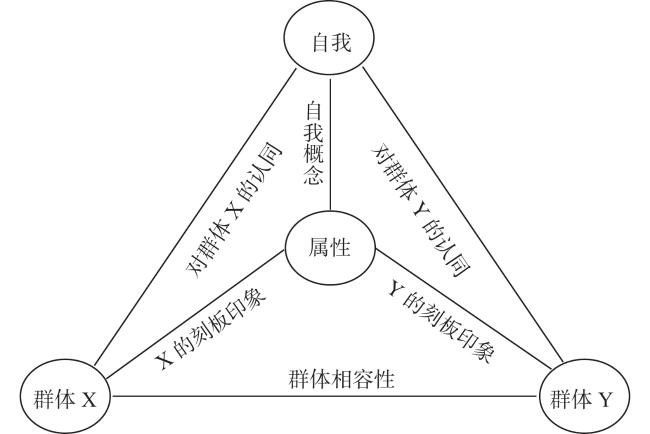
图1 基于认知一致性的再分类模型(Roth et al., 2018) |
2.2.1 自我−群体−属性到自我概念−群体认同−刻板印象
平衡认同理论(balanced identity theory, BIT)认为社会认同是个体基于认知平衡一致性原则将自我(self)、群体(group)、属性(attribute)关联并融入心理知识结构的过程(Greenwald et al., 2002)。自我、群体、属性都是个体心理知识结构的基本概念。自我指主体我(I)对客体我(me)的反思能力,个体可从不同视角思考自我。属性是指特性、特征与特点,是事物的性质与事物之间关系的统称。群体是由共同特征的个体组成的共同体。自我、群体、属性三者直接可以进行联结,关于自我的知识通过其属性与群体的联系产生共鸣,进而形成自我概念、群体认同和群体刻板印象。
自我概念是自我的认知结构,帮助个体理解并解释世界,是自我思考内容的具体体现(Oyserman et al., 2017)。基于认知一致性的再分类模型中,自我与属性之间的联结被形象地定义为自我概念,这也揭示了自我与自我概念之间的从属关系,例如“我”的属性有“强壮的”“柔弱的”等等。
群体认同也叫社会认同、身份认同,是个体对自身与外部“他者”关系的认知,包含对群体属性的认知、情感和行为倾向(Cikara & van Bavel, 2014),强调了群体融入自我概念的程度(Hogg et al., 2004),是群体与自我之间的重叠程度(van Veelen et al., 2016)。基于认知一致性的再分类模型中将它定义为自我与其共享属性的群体之间的关联。
刻板印象是指人们对某群体特定属性和特征的固定看法。基于认知一致性的再分类模型中,刻板印象可以视为属性与群体的联结,例如“男性”是“强壮的”,“女性”是“柔弱的”。积极刻板印象是对社会群体的积极属性的描述,消极刻板印象是对群体消极属性的描述。群际态度也可以通过一个群体(如女性)相对于另一个群体(男性)的相对评价来反映。内群体偏爱(in-group favoritism)这一典型的群体偏见就是内群体(相比于外群体)与更多的积极属性、更少的消极属性相关联的结果。
2.2.2 认知一致性原则:自我−群体−属性的联结逻辑
自我、群体、属性之间可以两两联结,也可以三者之间进行联结,如自我与属性的联结形成了自我概念,群体与属性的联结形成了刻板印象,自我与群体共享属性的联结形成了群体认同。但是这种联结并不是毫无章法,而是遵循着认知一致性原则—人们天生具有倾向避免做出相互矛盾判断的动机(Loughnane, 2024)。这一原则在基于认知一致性的再分类模型中有两层含义:
第一,保持平衡一致性原则(balance-congruity principle)。该原则依据平衡认同理论而来,当两个概念同时与第三个概念联系在一起时,这两个概念之间的联系就会加强。例如:如果“我”与“男性”群体相连且“我”与“强壮”属性相连(即自我概念包括强壮特质),则“男性”与“强壮”之间的联系也会加强(即男性群体刻板印象包括强壮特质)。这一原则解释了个体为何会在认知中抵制自我与群体间的矛盾。研究显示,个体倾向于认同与自我属性相符的群体(Dovidio & Gaertner, 2010),个体与某一群体的相似性越多,越会将自己归属于该群体,群体认同水平越高(Goldenberg et al., 2020)。内群体偏爱进一步支持这一观点,即个体对内群体表现出更多的善意和宽容,对外群体则更为猜忌、漠视、甚至敌意(Eckel et al., 2022; Li, 2020),原因是自我往往与积极属性关联(积极自我概念)(Yamaguchi et al., 2007)。
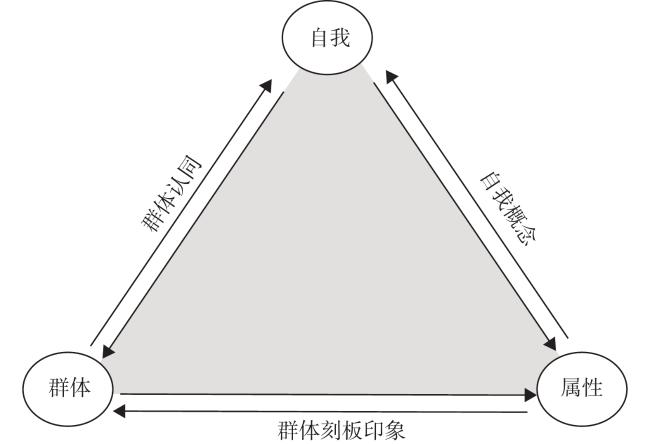
第二,双向性原则(mutual principles)。自我与群体、属性之间在联结方向上往往是双向并行的,见图2 。社会认同整合模型提出,社会认同的形成是内群体身份融入自我概念的过程, 即自我−内群体重叠(self-group overlap)的产生(van Veelen et al., 2016)。自我与内群体的重叠程度越高,社会认同水平越高。社会认同的形成有两条路径:一是自我刻板(self-stereotyping),个体会将内群体原型的信息投射到自我;二是自我锚定(self-anchoring),当内群体原型的信息无法获取时,个体往往依赖自我的信息来认识内群体。这两种路径分别自上而下(基于内群体推断自我)和自下而上(基于自我推断内群体)运作,尽管信息投射的方向相反,但能够平行存在并相互补充,共同提升社会认同水平(向洲 等, 2020; van Veelen et al., 2016)。相应地,在基于认知一致性的再分类模型中,个体的自我、群体与共享属性相互联结的过程既可以自上而下,也可以自下而上形成群体认同,这一结果也得到了大量实证证据的支持(Otten & Epstude, 2006; Yan et al., 2022)。自我与属性的关联形成了自我概念,而自我概念的形成受社会文化和家庭背景的外部影响,也可以通过自主调控来形成(Hogg et al., 2004)。群体与属性之间的关联形成了群体刻板印象,其形成过程同样是双向的,它能够在类别线索提示下自动激活,也可以在期望和信念驱动下提取(贾磊 等, 2010)。
2.2.3 群体相容性:群体−群体的联结基础
群体相容性(group compatibility)在基于认知一致性的再分类模型中占据重要地位,也是Roth等人(2018)的理论核心。群体相容性指的是群体身份变换后,旧群体与新群体身份之间的一致性,即两个群体在群体规范、价值观、群体刻板印象等方面的相似程度。当两个群体的这些特征一致时,则群体相容,不一致则不相容。
个体作为社会存在,通常生活在多个群体中,身份的复杂性与多重性使得个体可能因情境中的身份线索激活而短暂地从一种群体身份转变为另一种身份,或在生命历程中永久性地转换群体身份。无论是短暂或长期的群体身份变换,都可能导致群体认同的变化,甚至发生认同转移。新旧群体身份的相容性决定了群体认同转移的方向与强度。当旧群体与新群体身份相容时,它们会与自我强烈关联,个体对新身份群体的认同程度可能与旧身份群体的认同程度相同;若群体不相容,为保持认知一致性,个体通常只会认同其中一个群体,认同的方向取决于该群体与自我共享属性的联结程度。群体间的相容性同样遵循认知一致性原则,当旧身份与新身份相容时,会增强自我对这两个群体的联结程度,个体会像认同旧群体那样认同新的群体。
3 群体身份变换与群体认同:群体相容性的作用
3.1 相容的群体意味着认同边界的扩大
个体在群体身份变换时,若两群体相容或重叠,自我与二者关联度会增加,对新群体的认同感也会提升,即便该新群体曾是过去自我的外群体,如年轻人变老过程中会逐渐认同老年群体;美国族际通婚子女研究中混血儿的群体身份因与过去群体高度相容而获更多认同(Cheng & Lee, 2009)。Loughnane(2024)的三项研究同样证实了相容的群体会扩大个体自我的认同边界。第一项研究对269名刚毕业的新员工进行了调查,结果发现从学生到员工的身份变化后,高相容条件下新员工对新群体身份的认同更高,对新旧群体之间的态度更一致(Loughnane et al., 2021)。第二项研究发现群体相容性能够减少新的内群体与旧的上位内群体之间的群际偏见,且这一过程是通过对旧的上位内群体认同来中介的(Loughnane, 2024)。第三项研究应用于有冲突史的群体,同样发现群体相容性能够减少新旧内群体之间的群际偏见(Loughnane et al., 2023)。这三个研究都表明,两个不同的社会群体之间的高相容性与相同强度的认同水平、相似的群际态度有关。无论身份变换是长久性的还是短暂的因情境波动,只要使新的群体身份与以往群体身份相容,就能凸显新的群体身份的显著性,使个体同样像对以往群体那样认同新群体。
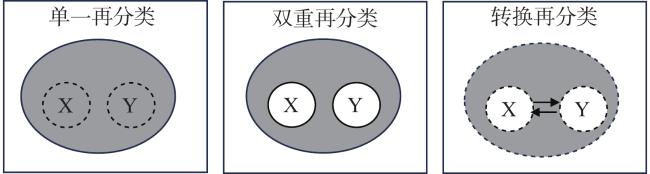
新群体与旧群体身份相容有三种方式:第一,直接消除群体间的边界,用一个上位共同内群体来取代新群体和以往群体的子群体身份,即单一再分类(single recategorization)。第二,构建一个包摄水平更高的上位共同内群体,使新的群体和旧群体身份成为该共同内群体的亚群体。此时个体既存在对以往群体的亚群体认同,也存在对新群体的亚群体认同。这种分类方式也称双重再分类(dual recategorization)。共同内群体认同理论就是基于这种方式(Cocco et al., 2023)。第三,发生身份变换。例如通过最简分类范式,通过抛硬币的方式使某个群体身份发生转变(温芳芳, 佐斌, 2018),此时短暂打破了这两个群体之间的群体边界,自我均与这两个群体发生了联结,使个体同样认同这两个群体,这种方式也可称为转换再分类(transformed recategorization)。这三种方式在基于认知一致性的再分类模型中可以根据群体X和群体Y之间的关系得以区分,见图3 。其中,群体相容的前两种方式强调了建构共同的上位群体,后一种不直接强调共同的上位群体,而是以一种抽象的方式隐含在以往群体和新的群体身份之外。它们都能够影响个体认同边界范围,扩大认同边界。


3.2 不相容的群体意味着群体认同的差异
当两个群体不相容时,个体为维持认知一致性会倾向于只认同其一,可能强烈认同某个群体而抵制或忽视另一个群体。Loughnane等人(2021)对毕业生研究发现,倘若他们认为学生与员工身份不相容时会显著偏向一方而忽视另一方。文化适应研究也表明,多重文化身份不相容时,个体面临更多适应压力,更倾向于强烈认同其中一个文化身份(Benet-Martínez, 2012; Benet-Martínez & Haritatos, 2005)。移民研究显示,感知文化身份不相容会导致个体感知更多的社会分歧(Matschke & Fehr, 2017)。
4 群体身份变换与群际态度
群际态度关乎个体对不同社会群体的评价,积极的群际态度对维护社会和谐稳定意义重大。在研究中,通常将参与者随机分为两组,使用自我报告或实验程序评估其对不同群体的态度(Otten & Moskowitz, 2000)。内群体偏爱往往是群际态度的基础,基于认知一致性原理,人们会更强烈地认同与自我共享积极属性的群体,相应地,与自我分离的群体(外群体)相比,与自我关联的群体(内群体)会得到更积极的评价。这种效应会随着人们自尊的积极效应而得到进一步增强。因此,对自我共享属性的群体要比和自我联系不那么紧密的社会群体态度更积极。
群体身份变换后,基于认知一致性原理,倘若这两个群体身份相容,那么会减少群体间的偏见;倘若这两个群体不相容,人们会表现出有利于与自我联系更紧密的群体的群际偏见。Sherif和Sherif(1953)的经典研究表明,当两个不同的亚群体共同面临有吸引力的上位群体目标时,群际冲突会减少。Crisp和Beck(2005)的实验也证实了群体重叠程度对群际偏见的影响,发现内群体与外群体有较大重叠时群际偏见减少。在其他条件相同的情况下,人们对认同度高的内群体身份态度更积极,且先前的内群体与新的内群体间偏见越大越不相容(Clement & Krueger, 2002; Sassenberg & Wieber, 2005)。
5 评价与展望
5.1 为多重身份研究提供新的视角
群体身份变换的研究源自于多重身份研究。全球化与社会流动性使个体具有多重复杂的社会身份,引发表征身份及多重身份影响群际态度与行为等问题。以往的理论认为认同整合取决于群体重叠性(Amiot et al., 2007)。当内群体的多重认同出现重叠时,个体将在诸多群体身份中保持一个相对简单和独立的群体,不重叠时则会产生精神冲突、歧视、幸福感下降等诸多问题(Amiot et al., 2015)。共同内群体认同理论和交叉分类理论分别通过构建上位群体和多类别维度交叉达成认知重叠实现认同整合。群体身份变换拓展了多重身份研究,认为即便群体不重叠,身份变换也可增加对这两个群体的认同,如身份变换能够提升年轻人对老年人的积极印象,提升对老年人认同(温芳芳 等, 2022)。
同时,它还扩展了共同内群体认同的形成条件。以往关于共同内群体认同的形成往往是采用单一再分类和双重再分类的方式(Moss, 2016),这两种方式都强调构建一个上位共同群体,而身份变换再分类通过身份变换保留了两种亚群体认同,抽象构建了一个虚拟上位共同群体,更具现实的可操作性,可以降低个体抵触,使共同内群体认同的形成具有更强的自主性和选择性。
交叉分类理论一定程度上支持了基于认知一致性的再分类模型,例如跨国移民研究中个体对两国评价积极是因为这两国都与自我发生联结,与只包括一个内群体和一个外群体的交叉分类相比,个体对两个内群体的评估更为积极(严磊 等, 2018)。但基于认知一致性的再分类模型认为,身份转换后倘若新旧内群体不相容,个体将只认同其中一个群体,这个结果和交叉分类理论的推断并不一致。交叉分类理论并没有考虑到新内群体与旧内群体的相容性,未来也需要更多实证研究进行探索,以深化对群体身份变换及相关理论关系的理解,为个体处理多重身份及群际关系提供更有利的指导。
5.2 为减少群际偏见提供新的路径
减少群际偏见在群际心理研究中占据关键地位。偏见源于人类认知加工的系统性错误。以往研究多从群体认同角度探讨减少群际偏见的方法(Kawakami et al., 2017),偏见的降低主要与消解或超越群体边界范围有关(Davies et al., 2011)。群际态度的干预策略主要是加强群际接触(Vezzali & Stathi, 2021)和形成共同内群体认同(Čehajić-Clancy et al., 2023)。共同内群体认同是构建共同体心理的底层逻辑,不管是中华民族共同体,亦或是人类命运共同体,都可以借助共同内群体认同的包容性力量提升群际帮助,改善群际态度,形成良好群际关系。基于认知一致性的再分类模型另辟蹊径,从群体身份变换提出第三条策略。
群体身份转换在生活中很常见,如移民、异地搬迁等等。基于认知一致性的再分类模型指出自我与群体关联的相对强度(即群体认同)并非群际偏见的唯一来源,任何有助于感知群体之间相似性(增加群体相容性)并与人们的自我相关联的干预措施,都可以有效地减少这些群体之间的群际偏见。因此,增加群体相容性成为了减少群体偏见的新路径,如留学生研究中发现增强国外留学生与国内学生间的相容性,可以有效降低对国外留学生的偏见(Sassenberg & Matschke, 2010)。这一路径也反映了观点采择对改善群际态度的影响。当人们换位思考,如站在其他群体立场时,群际偏见会降低(Husnu & Crisp, 2010; Libby et al., 2007);当人们感受到被理解时,个体更愿意与他人发展和维持关系,主观感受到的群体相容性增强,从而减少群际偏见(Livingstone et al., 2020)。同时,积极解释偏向也能够使个体以更开阔、更包容的姿态接纳外群体(Skinner et al., 2020),进而减少外群体偏见(Gonzalez-Saenz et al., 2017)。
5.3 未来发展方向
基于认知一致性的再分类模型探讨了群体身份变换对群体认同、群际态度的影响,虽然部分研究证实了其实效性(温芳芳 等, 2022; Loughnane, 2024; Roth et al., 2018),但仍需大量的实验研究检验其对群体认同和群际偏见的预测作用。
群体身份转变的动机和时间是影响自我与群体联结强度的重要因素。在动机方面,人们对群体身份的认同会受到身份动机(identity motive)的驱使(Vignoles, 2011)。个体会更强烈地与满足自尊、独特性、连续性和意义动机的群体联系更紧密(Szeto, 2021)。这些动机往往反映在人们自愿加入一个新的社会群体的程度上。基于共同动机能将群体成员更紧密地与群体身份结合起来,也会导致对外群体的强烈偏见(Bliuc et al., 2007)。在时间方面,与先前群体身份持续的时间也能够影响自我与群体的联系强度,长期联系使联结更稳固(Sanchez et al., 2007),短期的身份改变只可能在当下情境受线索影响凸显,自我和新的群体之间的联结是松散的,更容易被覆盖。先前群体身份的长期记忆延续,可能在个体离开该群体很久之后依然持续影响个体对原先群体的态度(Jetten & Hutchison, 2011)。未来的研究可以从群体身份转变的动机和群体身份的持续时间出发,进一步探索其对群体认同和群际态度的影响。