
心理与行为研究 ›› 2025, Vol. 23 ›› Issue (5): 620-626.DOI: 10.12139/j.1672-0628.2025.05.006
赵小军, 代晨辉, 石常秀*( ), 张含思
收稿日期:2023-12-05
出版日期:2025-09-20
发布日期:2025-09-20
通讯作者:
石常秀
基金资助:
Xiaojun ZHAO, Chenhui DAI, Changxiu SHI*(), Hansi ZHANG
Received:2023-12-05
Online:2025-09-20
Published:2025-09-20
Contact:
Changxiu SHI
摘要:
为探讨攻击规范信念和道德推脱在旁观者干预过程中的作用,本研究基于旁观者五步干预模型(注意、解释、责任、能力和干预),采用测验法对2107名初中生进行调查。结果发现:(1)对欺凌事件的注意会提高个体的攻击规范信念和道德推脱水平,进而影响干预过程的其他阶段;(2)班级层面攻击规范信念能够抑制旁观者干预过程的解释和责任,而对旁观者干预过程的能力和干预影响不显著。因此,制定反欺凌干预策略改善个体的攻击规范信念对于校园欺凌防治工作至关重要。
赵小军, 代晨辉, 石常秀, 张含思. 攻击规范信念和道德推脱在初中生欺凌旁观者干预过程中的作用:基于旁观者五步干预模型[J]. 心理与行为研究, 2025, 23(5): 620-626.
Xiaojun ZHAO, Chenhui DAI, Changxiu SHI, Hansi ZHANG. The Role of Normative Beliefs About Aggression and Moral Disengagement in the Intervention Process of Bullying Bystanders Among Middle School Students: Based on the Five-Step Bystander Intervention Model[J]. Studies of Psychology and Behavior, 2025, 23(5): 620-626.
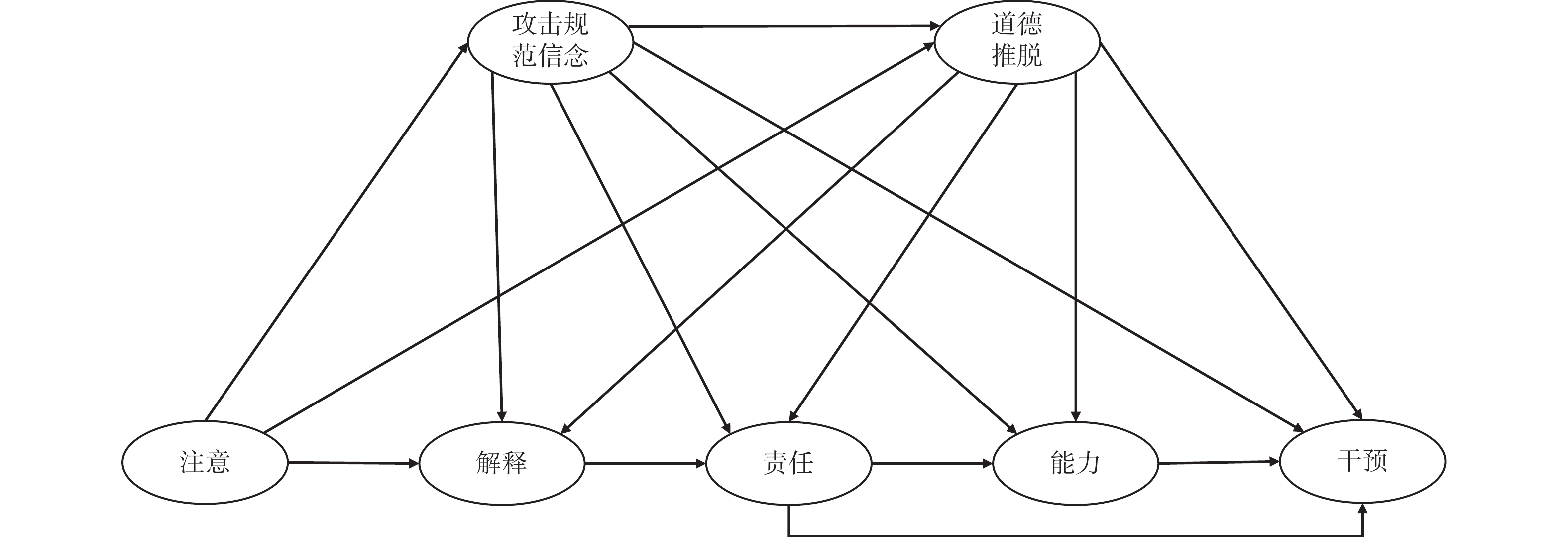
图1 攻击规范信念和道德推脱在旁观者干预过程中的作用
| 变量 | 1 | 2 | 3 | 4 | 5 | 6 | 7 |
| 1.攻击规范信念 | |||||||
| 2.道德推脱 | 0.46*** | ||||||
| 3.注意 | 0.17*** | 0.15*** | |||||
| 4.解释 | −0.15*** | −0.31*** | 0.004 | ||||
| 5.责任 | −0.21*** | −0.21*** | −0.14*** | 0.38*** | |||
| 6.能力 | −0.15*** | −0.06** | −0.20*** | 0.11*** | 0.41*** | ||
| 7.干预 | −0.23*** | −0.21*** | −0.23*** | 0.34*** | 0.53*** | 0.52*** | |
| M | 1.85 | 2.07 | 2.66 | 4.05 | 3.18 | 2.69 | 3.34 |
| SD | 0.52 | 0.55 | 1.08 | 0.80 | 0.95 | 0.87 | 0.81 |
表1 各变量的描述性统计及相关分析
| 变量 | 1 | 2 | 3 | 4 | 5 | 6 | 7 |
| 1.攻击规范信念 | |||||||
| 2.道德推脱 | 0.46*** | ||||||
| 3.注意 | 0.17*** | 0.15*** | |||||
| 4.解释 | −0.15*** | −0.31*** | 0.004 | ||||
| 5.责任 | −0.21*** | −0.21*** | −0.14*** | 0.38*** | |||
| 6.能力 | −0.15*** | −0.06** | −0.20*** | 0.11*** | 0.41*** | ||
| 7.干预 | −0.23*** | −0.21*** | −0.23*** | 0.34*** | 0.53*** | 0.52*** | |
| M | 1.85 | 2.07 | 2.66 | 4.05 | 3.18 | 2.69 | 3.34 |
| SD | 0.52 | 0.55 | 1.08 | 0.80 | 0.95 | 0.87 | 0.81 |
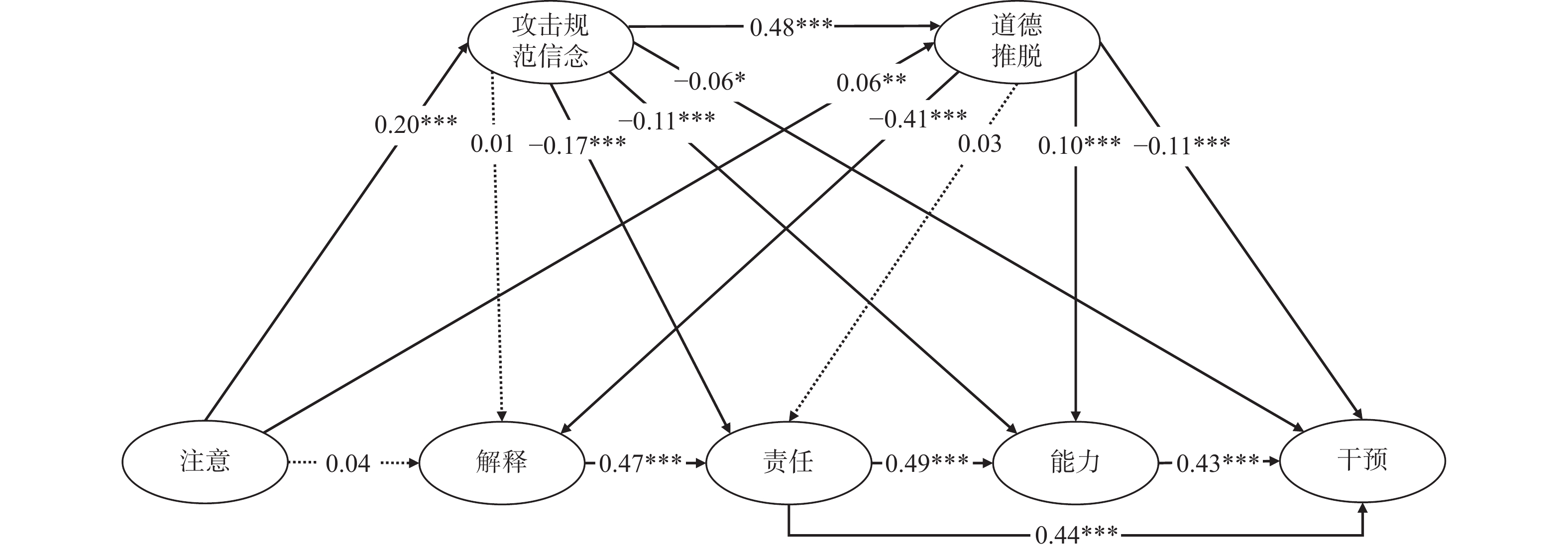
图2 攻击规范信念和道德推脱在旁观者干预五阶段中的作用(标准化系数)
| 路径 | 效应值 | 95%CI下限 | 95%CI上限 |
| 注意→攻击规范信念→解释 | 0.002 | −0.007 | 0.012 |
| 注意→攻击规范信念→责任 | −0.033 | −0.044 | −0.022 |
| 注意→攻击规范信念→能力 | −0.021 | −0.030 | −0.011 |
| 注意→攻击规范信念→干预 | −0.011 | −0.019 | −0.003 |
| 注意→道德推脱→解释 | −0.024 | −0.040 | −0.009 |
| 注意→道德推脱→责任 | 0.002 | −0.001 | 0.005 |
| 注意→道德推脱→能力 | 0.006 | 0.001 | 0.010 |
| 注意→道德推脱→干预 | −0.007 | −0.012 | −0.002 |
| 注意→攻击规范信念→道德推脱→解释 | −0.038 | −0.047 | −0.029 |
| 注意→攻击规范信念→道德推脱→责任 | 0.002 | −0.002 | 0.007 |
| 注意→攻击规范信念→道德推脱→能力 | 0.009 | 0.004 | 0.014 |
| 注意→攻击规范信念→道德推脱→干预 | −0.011 | −0.015 | −0.006 |
表2 各中介路径效应值及95%置信区间
| 路径 | 效应值 | 95%CI下限 | 95%CI上限 |
| 注意→攻击规范信念→解释 | 0.002 | −0.007 | 0.012 |
| 注意→攻击规范信念→责任 | −0.033 | −0.044 | −0.022 |
| 注意→攻击规范信念→能力 | −0.021 | −0.030 | −0.011 |
| 注意→攻击规范信念→干预 | −0.011 | −0.019 | −0.003 |
| 注意→道德推脱→解释 | −0.024 | −0.040 | −0.009 |
| 注意→道德推脱→责任 | 0.002 | −0.001 | 0.005 |
| 注意→道德推脱→能力 | 0.006 | 0.001 | 0.010 |
| 注意→道德推脱→干预 | −0.007 | −0.012 | −0.002 |
| 注意→攻击规范信念→道德推脱→解释 | −0.038 | −0.047 | −0.029 |
| 注意→攻击规范信念→道德推脱→责任 | 0.002 | −0.002 | 0.007 |
| 注意→攻击规范信念→道德推脱→能力 | 0.009 | 0.004 | 0.014 |
| 注意→攻击规范信念→道德推脱→干预 | −0.011 | −0.015 | −0.006 |
| 解释 | 责任 | 能力 | 干预 | ||||||||
| 零模型 | 模型1 | 零模型 | 模型2 | 零模型 | 模型3 | 零模型 | 模型4 | ||||
| 截距 | 4.04*** | 4.89*** | 3.17*** | 3.10*** | 2.69*** | 2.40*** | 3.34*** | 1.38*** | |||
| 班级变量 | |||||||||||
| 班级攻击规范信念 | −0.47* | −0.73** | −0.18 | −0.14 | |||||||
| 个体变量 | |||||||||||
| 注意 | 0.01 | −0.12*** | −0.11*** | −0.08*** | |||||||
| 解释 | 0.43*** | −0.06* | 0.19*** | ||||||||
| 责任 | 0.36*** | 0.25*** | |||||||||
| 能力 | 0.32*** | ||||||||||
| 组内方差 | 0.60 | 0.60 | 0.85 | 0.70 | 0.73 | 0.59 | 0.62 | 0.36 | |||
| 组间方差 | 0.05 | 0.14 | 0.06 | 0.32 | 0.01 | 0.20 | 0.04 | 0.14 | |||
| 模型误差 | 4966.92 | 4959.63 | 5702.38 | 5311.78 | 5363.06 | 4928.38 | 5043.61 | 3920.44 | |||
表3 班级层面攻击规范信念对解释、责任、能力和干预的影响
| 解释 | 责任 | 能力 | 干预 | ||||||||
| 零模型 | 模型1 | 零模型 | 模型2 | 零模型 | 模型3 | 零模型 | 模型4 | ||||
| 截距 | 4.04*** | 4.89*** | 3.17*** | 3.10*** | 2.69*** | 2.40*** | 3.34*** | 1.38*** | |||
| 班级变量 | |||||||||||
| 班级攻击规范信念 | −0.47* | −0.73** | −0.18 | −0.14 | |||||||
| 个体变量 | |||||||||||
| 注意 | 0.01 | −0.12*** | −0.11*** | −0.08*** | |||||||
| 解释 | 0.43*** | −0.06* | 0.19*** | ||||||||
| 责任 | 0.36*** | 0.25*** | |||||||||
| 能力 | 0.32*** | ||||||||||
| 组内方差 | 0.60 | 0.60 | 0.85 | 0.70 | 0.73 | 0.59 | 0.62 | 0.36 | |||
| 组间方差 | 0.05 | 0.14 | 0.06 | 0.32 | 0.01 | 0.20 | 0.04 | 0.14 | |||
| 模型误差 | 4966.92 | 4959.63 | 5702.38 | 5311.78 | 5363.06 | 4928.38 | 5043.61 | 3920.44 | |||
|
杜秀芳, 刘娜娜. 金钱刺激和决策者角色对个体道德决策的影响——基于过程分离范式. 心理科学, 2018, 41 (3): 667- 673.
|
|
|
段东园, 张学民, 魏柳青, 周义斌, 刘畅. 暴力媒体接触程度对攻击行为的影响——规范信念和移情的作用. 心理发展与教育, 2014, 30 (2): 185- 192.
|
|
|
方杰, 张敏强, 邱皓政. 基于阶层线性理论的多层级中介效应. 心理科学进展, 2010, 18 (8): 1329- 1338.
|
|
|
郭素然, 刘怡辰. 大学生暴力暴露与攻击规范信念的关系: 有调节的中介模型. 中国临床心理学杂志, 2023, 31 (2): 463- 466.
|
|
|
邵嵘, 王云强. 攻击规范信念量表在中学生群体中的信效度检验. 中国临床心理学杂志, 2017, 25 (6): 1035- 1038.
|
|
|
孙晓娟, 李梅, 赵悦彤, 张向葵, 邓小平, 曲普. 攻击行为规范信念对初中生欺负行为的影响: 道德推脱的中介作用. 中国临床心理学杂志, 2019, 27 (6): 1246- 1250.
|
|
|
汤丹丹, 温忠麟. 共同方法偏差检验: 问题与建议. 心理科学, 2020, 43 (1): 215- 223.
|
|
|
王跃鹏, 孟维杰. 班级欺凌规范对初中生旁观者行为的影响: 道德推脱的中介作用. 心理与行为研究, 2022, 20 (4): 522- 528.
|
|
|
杨继平, 王兴超. 道德推脱对青少年攻击行为的影响: 有调节的中介效应. 心理学报, 2012, 44 (8): 1075- 1085.
|
|
|
游志麒, 徐钰, 张陆. 校园欺凌旁观者干预量表在初中生群体中的信效度检验. 中国临床心理学杂志, 2020, 28 (1): 7- 10.
|
|
|
袁小芮, 邱越冬, 朱丹, 武碧云, 李放. 大学生暴力暴露与网络引战的关系: 负性自动思维和道德推脱的中介作用. 中国临床心理学杂志, 2024, 32 (6): 1270- 1274.
|
|
|
曾欣然, 汪玥, 丁俊浩, 周晖. 班级欺凌规范与欺凌行为: 群体害怕与同辈压力的中介作用. 心理学报, 2019, 51 (8): 935- 944.
|
|
|
张荣荣, 董莉. 校园欺凌中旁观者行为的作用机制. 心理技术与应用, 2019, 7 (2): 118- 128.
|
|
|
张文新. 欺凌的界定: 文化和发展的视角. 心理发展与教育, 2023, 39 (4): 590- 598.
|
|
|
郑清, 叶宝娟, 姚媛梅, 陈佳雯, 符皓皓, 雷希, 游雅媛. 攻击行为规范信念对大学生网络欺负的影响: 道德推脱与网络道德的中介作用. 中国临床心理学杂志, 2017, 25 (4): 727- 730.
|
|
|
Bandura, A. Moral disengagement in the perpetration of inhumanities. Personality and Social Psychology Review, 1999, 3 (3): 193- 209.
DOI |
|
|
Bandura, A., Barbaranelli, C., Caprara, G. V., & Pastorelli, C. Mechanisms of moral disengagement in the exercise of moral agency. Journal of Personality and Social Psychology, 1996, 71 (2): 364- 374.
DOI |
|
|
Casey, E. A., Lindhorst, T., & Storer, H. L. The situational-cognitive model of adolescent bystander behavior: Modeling bystander decision-making in the context of bullying and teen dating violence. Psychology of Violence, 2017, 7 (1): 33- 44.
DOI |
|
|
Darley, J. M., & Latané, B. Bystander intervention in emergencies: Diffusion of responsibility. Journal of Personality and Social Psychology, 1968, 8 (4): 377- 383.
DOI |
|
|
Dodge, K. A., & Coie, J. D. Social-information-processing factors in reactive and proactive aggression in children’s peer groups. Journal of Personality and Social Psychology, 1987, 53 (6): 1146- 1158.
DOI |
|
|
Dodge, K. A., Lansford, J. E., Burks, V. S., Bates, J. E., Pettit, G. S., Fontaine, R., & Price, J. M. Peer rejection and social information-processing factors in the development of aggressive behavior problems in children. Child Development, 2003, 74 (2): 374- 393.
DOI |
|
|
Huesmann, L. R., & Guerra, N. G. Children’s normative beliefs about aggression and aggressive behavior. Journal of Personality and Social Psychology, 1997, 72 (2): 408- 419.
DOI |
|
|
Jiang, H. B., Liang, H. Y., Zhou, H. L., & Zhang, B. Relationships among normative beliefs about aggression, moral disengagement, self-control and bullying in adolescents: A moderated mediation model. Psychology Research and Behavior Management, 2022, 15, 183- 192.
DOI |
|
|
Kozlowski, S. W. J., & Klein, K. J. (2000). A multilevel approach to theory and research in organizations: Contextual, temporal, and emergent processes. In K. J. Kline & S. W. Kozlowski (Eds.), Multilevel theory, research, and methods in organizations (pp. 3–90). San Francisco: Jossey-Bass.
|
|
|
Latané, B., & Darley, J. M. (1970). The unresponsive bystander: Why doesn’t he help? New York: Appleton Century Crofts Press.
|
|
|
Li, J. B., Nie, Y. G., Boardley, I. D., Dou, K., & Situ, Q. M. When do normative beliefs about aggression predict aggressive behavior? An application of I3 theory. Aggressive Behavior, 2015, 41 (6): 544- 555.
DOI |
|
|
Machackova, H., & Pfetsch, J. Bystanders’ responses to offline bullying and cyberbullying: The role of empathy and normative beliefs about aggression. Scandinavian Journal of Psychology, 2016, 57 (2): 169- 176.
DOI |
|
|
Nickerson, A. B., Aloe, A. M., Livingston, J. A., & Feeley, T. H. Measurement of the bystander intervention model for bullying and sexual harassment. Journal of Adolescence, 2014, 37 (4): 391- 400.
DOI |
|
|
Nickerson, A. B., Jenkins, L. N., Yang, Y. Y., & Harrison, D. S. Individual and contextual-level predictors of progression in the bystander intervention model. Aggressive Behavior, 2024, 50 (4): e22159.
DOI |
|
|
Nipedal, C., Nesdale, D., & Killen, M. Social group norms, school norms, and children’s aggressive intentions. Aggressive Behavior, 2010, 36 (3): 195- 204.
DOI |
|
|
Pettigrew, T. F. Normative theory in intergroup relations: Explaining both harmony and conflict. Psychology and Developing Societies, 1991, 3 (1): 3- 16.
DOI |
|
|
Salmivalli, C., Lagerspetz, K., Björkqvist, K., Österman, K., & Kaukiainen, A. Bullying as a group process: Participant roles and their relations to social status within the group. Aggressive Behavior, 1996, 22 (1): 1- 15.
|
|
|
Salmivalli, C., & Voeten, M. Connections between attitudes, group norms, and behaviour in bullying situations. International Journal of Behavioral Development, 2004, 28 (3): 246- 258.
DOI |
|
|
Teng, Z. J., Nie, Q., Guo, C., Zhang, Q., Liu, Y. L., & Bushman, B. J. A longitudinal study of link between exposure to violent video games and aggression in Chinese adolescents: The mediating role of moral disengagement. Developmental Psychology, 2019, 55 (1): 184- 195.
DOI |
|
|
van Reemst, L., Fischer, T. F. C., & Zwirs, B. W. C. (2016). Social information processing mechanisms and victimization: A literature review. Trauma, Violence, & Abuse, 17(1), 3–25.
|
|
|
Wood, L., Smith, J., Varjas, K., & Meyers, J. School personnel social support and nonsupport for bystanders of bullying: Exploring student perspectives. Journal of School Psychology, 2017, 61, 1- 17.
DOI |
|
|
Yun, H. Y. New approaches to defender and outsider roles in school bullying. Child Development, 2020, 91 (4): e814- e832.
|
| [1] | 金慧, 张雪, 王跃鹏, 孟维杰. 学校道德氛围对初中生作弊行为意向的影响:道德推脱的中介作用[J]. 心理与行为研究, 2026, 24(1): 138-144. |
| [2] | 许航, 史新广, 段锦云, 卢红旭. 感恩对恶意创造力的影响[J]. 心理与行为研究, 2024, 22(4): 470-477. |
| [3] | 王兴超, 田芳芳. 儿童期虐待与欺负行为:青少年道德推脱与父亲道德推脱的作用[J]. 心理与行为研究, 2024, 22(1): 108-115. |
| [4] | 王跃鹏, 孟维杰. 班级欺凌规范对初中生旁观者行为的影响:道德推脱的中介作用[J]. 心理与行为研究, 2022, 20(4): 522-528. |
| [5] | 丁倩, 罗星雨. 歧视知觉对留守青少年攻击行为的影响:多重中介效应分析[J]. 心理与行为研究, 2022, 20(3): 346-352. |
| [6] | 高玲, 花苏晴, 李沛沛, 杨继平, 王兴超. 同胞关系与青少年亲社会行为:道德推脱的中介作用和共情的调节作用[J]. 心理与行为研究, 2021, 19(2): 216-222. |
| [7] | 谭千保, 李佳圆, 刘旭. 累积生态风险对农村初中生攻击行为的影响:有调节的中介模型[J]. 心理与行为研究, 2020, 18(4): 489-495. |
| [8] | 胡卫平,刘佳. 小学生思维能力的培养:五年追踪研究*[J]. 心理与行为研究, 2015, 13(5): 648-654. |
| [9] | 刘裕, 唐薇, 张媛, 刘芳. 道德推脱对青少年外部问题行为的影响:有调节的中介效应[J]. 心理与行为研究, 2015, 13(2): 251-257. |
| [10] | 王兴超, 杨继平, 高玲. 公民道德推脱问卷的中文版修订[J]. 心理与行为研究, 2013, 11(6): 838-842. |
| [11] | 胡小勇, 车璐, 郭永玉. 依恋类型在重要他人影响目标追求过程中的调节作用[J]. 心理与行为研究, 2013, 11(5): 679-684. |
| [12] | 凌宇. 神经质人格调节青少年应激与抑郁症状的追踪研究[J]. 心理与行为研究, 2013, 11(3): 411-416. |
| 阅读次数 | ||||||
|
全文 |
|
|||||
|
摘要 |
|
|||||
