
Studies of Psychology and Behavior ›› 2026, Vol. 24 ›› Issue (4): 542-550.DOI: 10.12139/j.1672-0628.2026.04.014
• ? • Previous Articles Next Articles
Binbin LUO, Yixue JING, Xiaolei SONG*( )
)
Received:2024-05-16
Online:2026-07-21
Published:2026-07-20
Contact:
Xiaolei SONG
罗彬彬, 荆怡雪, 宋晓蕾*()
通讯作者:
宋晓蕾
基金资助:CLC Number:
Binbin LUO, Yixue JING, Xiaolei SONG. The Impact of Color Zoning and Guidance Sign Spacing on Wayfinding in Underground Spaces: A VR-Based Study[J]. Studies of Psychology and Behavior, 2026, 24(4): 542-550.
罗彬彬, 荆怡雪, 宋晓蕾. 颜色分区与导向标识间距对地下空间寻路的影响—一项VR研究[J]. 心理与行为研究, 2026, 24(4): 542-550.
Add to citation manager EndNote|Ris|BibTeX
URL: https://psybeh.tjnu.edu.cn/EN/10.12139/j.1672-0628.2026.04.014
| 题目 | 年龄 | 空间能力 | 到访频率 | 迷路频率 | 迷路程度 | 寻路难度 |
| 空间 能力 | −0.050 | |||||
| 到访 频率 | 0.144* | 0.313*** | ||||
| 迷路 频率 | 0.073 | −0.305*** | −0.295*** | |||
| 迷路 程度 | 0.062 | −0.195** | −0.374*** | 0.353*** | ||
| 寻路 难度 | 0.074 | 0.269*** | 0.176** | −0.359*** | −0.302*** | |
| 寻路 体验 | −0.026 | 0.264*** | 0.247*** | −0.259*** | −0.318*** | 0.263*** |
| 题目 | 年龄 | 空间能力 | 到访频率 | 迷路频率 | 迷路程度 | 寻路难度 |
| 空间 能力 | −0.050 | |||||
| 到访 频率 | 0.144* | 0.313*** | ||||
| 迷路 频率 | 0.073 | −0.305*** | −0.295*** | |||
| 迷路 程度 | 0.062 | −0.195** | −0.374*** | 0.353*** | ||
| 寻路 难度 | 0.074 | 0.269*** | 0.176** | −0.359*** | −0.302*** | |
| 寻路 体验 | −0.026 | 0.264*** | 0.247*** | −0.259*** | −0.318*** | 0.263*** |
| 题目 | 男性 | 女性 | t | p |
| 空间能力 | 2.78±1.22 | 2.63±1.09 | 0.904 | 0.343 |
| 到访频率 | 2.94±1.16 | 2.69±1.10 | 1.713 | 0.088 |
| 迷路频率 | 1.82±0.67 | 2.10±0.73 | −2.964 | 0.003 |
| 迷路程度 | 2.63±1.11 | 2.78±1.20 | −0.993 | 0.322 |
| 寻路难度 | 2.74±1.98 | 2.61±1.06 | 0.934 | 0.352 |
| 寻路体验 | 2.42±1.16 | 2.41±1.18 | 0.069 | 0.945 |
| 题目 | 男性 | 女性 | t | p |
| 空间能力 | 2.78±1.22 | 2.63±1.09 | 0.904 | 0.343 |
| 到访频率 | 2.94±1.16 | 2.69±1.10 | 1.713 | 0.088 |
| 迷路频率 | 1.82±0.67 | 2.10±0.73 | −2.964 | 0.003 |
| 迷路程度 | 2.63±1.11 | 2.78±1.20 | −0.993 | 0.322 |
| 寻路难度 | 2.74±1.98 | 2.61±1.06 | 0.934 | 0.352 |
| 寻路体验 | 2.42±1.16 | 2.41±1.18 | 0.069 | 0.945 |
| 迷路原因 | 响应(n) | 响应率(%) | 普及率(%) |
| 空间单一缺少参照物 | 138 | 22.3 | 60.3 |
| 道路复杂路口多 | 105 | 16.9 | 45.9 |
| 区域划分不清晰 | 93 | 15.0 | 40.6 |
| 很难找到导向标识 | 114 | 18.4 | 49.8 |
| 导向标识设置位置不合理 | 130 | 21.0 | 56.8 |
| 自身空间能力较弱 | 32 | 5.2 | 14.0 |
| 缺少对地下车库空间的整体认知 | 8 | 1.3 | 3.5 |
| 汇总 | 620 | 100.0 | 270.9 |
| 拟合优度检验:χ2=166.958,p<0.001 | |||
| 迷路原因 | 响应(n) | 响应率(%) | 普及率(%) |
| 空间单一缺少参照物 | 138 | 22.3 | 60.3 |
| 道路复杂路口多 | 105 | 16.9 | 45.9 |
| 区域划分不清晰 | 93 | 15.0 | 40.6 |
| 很难找到导向标识 | 114 | 18.4 | 49.8 |
| 导向标识设置位置不合理 | 130 | 21.0 | 56.8 |
| 自身空间能力较弱 | 32 | 5.2 | 14.0 |
| 缺少对地下车库空间的整体认知 | 8 | 1.3 | 3.5 |
| 汇总 | 620 | 100.0 | 270.9 |
| 拟合优度检验:χ2=166.958,p<0.001 | |||
| 倾向 | 响应(n) | 响应率(%) | 普及率(%) |
| 借助空间辨别方向性 | 133 | 17.9 | 27.6 |
| 借助导向标识系统 | 381 | 51.1 | 79.0 |
| 寻求他人帮助 | 231 | 31.0 | 47.9 |
| 汇总 | 745 | 100.0 | 154.5 |
| 拟合优度检验:χ2=126.548,p<0.001 | |||
| 倾向 | 响应(n) | 响应率(%) | 普及率(%) |
| 借助空间辨别方向性 | 133 | 17.9 | 27.6 |
| 借助导向标识系统 | 381 | 51.1 | 79.0 |
| 寻求他人帮助 | 231 | 31.0 | 47.9 |
| 汇总 | 745 | 100.0 | 154.5 |
| 拟合优度检验:χ2=126.548,p<0.001 | |||
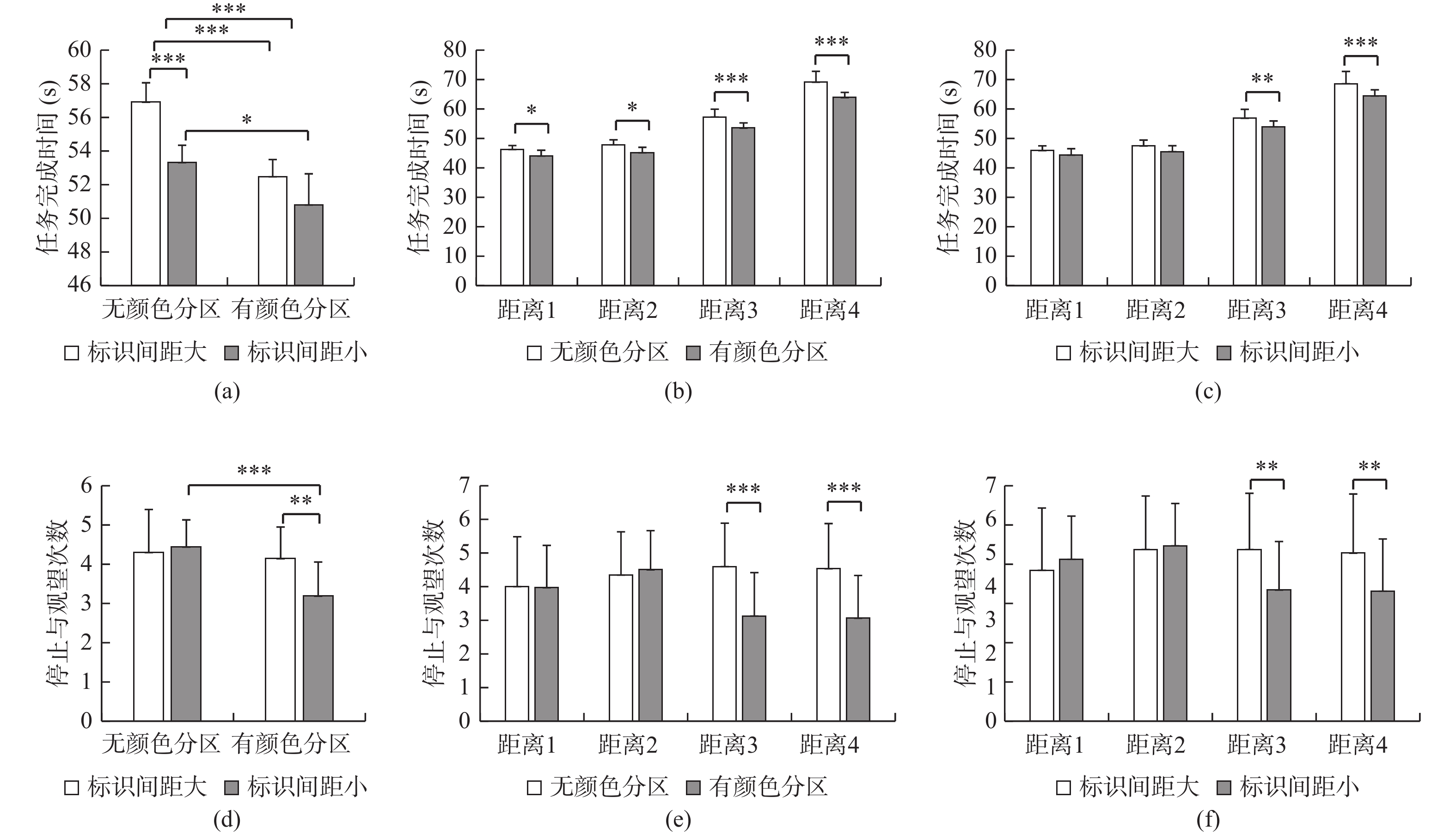
| 效应 | 任务完成时间 | 停止与观望次数 | |||||
| F | p | F | p | ||||
| 颜色分区 | 98.12 | <0.001 | 0.62 | 10.26 | 0.002 | 0.15 | |
| 标识间距 | 56.45 | <0.001 | 0.49 | 3.42 | 0.069 | 0.05 | |
| 距离 | 11881.43 | <0.001 | 0.995 | 6.48 | <0.001 | 0.10 | |
| 颜色分区×标识间距 | 7.46 | 0.008 | 0.11 | 6.21 | 0.016 | 0.09 | |
| 颜色分区×距离 | 54.74 | <0.001 | 0.48 | 16.07 | <0.001 | 0.21 | |
| 距离×标识间距 | 41.23 | <0.001 | 0.41 | 9.72 | <0.001 | 0.14 | |
| 三阶交互 | 45.68 | <0.001 | 0.43 | 12.93 | <0.001 | 0.18 | |
| 效应 | 任务完成时间 | 停止与观望次数 | |||||
| F | p | F | p | ||||
| 颜色分区 | 98.12 | <0.001 | 0.62 | 10.26 | 0.002 | 0.15 | |
| 标识间距 | 56.45 | <0.001 | 0.49 | 3.42 | 0.069 | 0.05 | |
| 距离 | 11881.43 | <0.001 | 0.995 | 6.48 | <0.001 | 0.10 | |
| 颜色分区×标识间距 | 7.46 | 0.008 | 0.11 | 6.21 | 0.016 | 0.09 | |
| 颜色分区×距离 | 54.74 | <0.001 | 0.48 | 16.07 | <0.001 | 0.21 | |
| 距离×标识间距 | 41.23 | <0.001 | 0.41 | 9.72 | <0.001 | 0.14 | |
| 三阶交互 | 45.68 | <0.001 | 0.43 | 12.93 | <0.001 | 0.18 | |
| 维度 | 被试组1 | 被试组2 | 被试组3 | 被试组4 |
| 维度1 | 0.866 | 0.768 | 0.756 | 0.872 |
| 维度2 | 0.805 | 0.828 | 0.784 | 0.831 |
| 维度3 | 0.610 | 0.405 | 0.674 | 0.621 |
| 维度 | 被试组1 | 被试组2 | 被试组3 | 被试组4 |
| 维度1 | 0.866 | 0.768 | 0.756 | 0.872 |
| 维度2 | 0.805 | 0.828 | 0.784 | 0.831 |
| 维度3 | 0.610 | 0.405 | 0.674 | 0.621 |
| 维度 | 实验条件 | M±SD | Mann-Whitney U | p |
| 维度1 | 有颜色分区 | 2.16±0.92 | 131.50 | <0.001 |
| 无颜色分区 | 3.53±0.62 | |||
| 标识间距小 | 2.50±1.05 | 326.50 | 0.009 | |
| 标识间距大 | 3.19±0.93 | |||
| 维度2 | 有颜色分区 | 3.66±1.01 | 261.00 | <0.001 |
| 无颜色分区 | 2.66±0.97 | |||
| 标识间距小 | 3.44±0.94 | 357.00 | 0.031 | |
| 标识间距大 | 2.87±1.21 | |||
| 维度3 | 有颜色分区 | 3.66±1.27 | 363.00 | 0.038 |
| 无颜色分区 | 3.06±0.91 | |||
| 标识间距小 | 3.50±1.24 | 418.50 | 0.194 | |
| 标识间距大 | 3.22±1.01 |
| 维度 | 实验条件 | M±SD | Mann-Whitney U | p |
| 维度1 | 有颜色分区 | 2.16±0.92 | 131.50 | <0.001 |
| 无颜色分区 | 3.53±0.62 | |||
| 标识间距小 | 2.50±1.05 | 326.50 | 0.009 | |
| 标识间距大 | 3.19±0.93 | |||
| 维度2 | 有颜色分区 | 3.66±1.01 | 261.00 | <0.001 |
| 无颜色分区 | 2.66±0.97 | |||
| 标识间距小 | 3.44±0.94 | 357.00 | 0.031 | |
| 标识间距大 | 2.87±1.21 | |||
| 维度3 | 有颜色分区 | 3.66±1.27 | 363.00 | 0.038 |
| 无颜色分区 | 3.06±0.91 | |||
| 标识间距小 | 3.50±1.24 | 418.50 | 0.194 | |
| 标识间距大 | 3.22±1.01 |
|
董波, 王成瑜, 张秀玲, 张天阳. 地面参照框架形成的连续表面整合加工假说. 心理科学进展, 2020, 28 (12): 2000- 2007.
|
|
|
房慧聪, 周琳. 性别、寻路策略与导航方式对寻路行为的影响. 心理学报, 2012, 44 (8): 1058- 1065.
DOI |
|
|
郝亚睿, 雷斌, 张源, 孙盈娅. 基于行人认知规律的地铁引导标识信息优化. 交通信息与安全, 2021, 39 (4): 99- 107.
|
|
|
雷升祥, 申艳军, 肖清华, 奚家米, 顾霖骏. 城市地下空间开发利用现状及未来发展理念. 地下空间与工程学报, 2019, 15 (4): 965- 979.
|
|
|
刘胧, 于瑞盟, 李伟岭. 指向标识设置间距及设置位置对寻路效率影响的虚拟研究. 人类工效学, 2011, 17 (3): 23- 26.
|
|
|
鲁娥. 地铁车站导向标识设置科学性评价与改进建议. 无锡商业职业技术学院学报, 2022, 22 (2): 54- 58.
|
|
|
米佳. (2007). 地下公共空间的认知和寻路实验研究——以上海市人民广场为例(硕士学位论文). 同济大学, 上海.
|
|
|
米佳, 徐磊青, 汤众. 地下公共空间的寻路实验和空间导向研究——以上海市人民广场为例. 建筑学报, 2007 (12): 66- 70.
|
|
|
王磊. 提高寻路绩效的导向标识系统连贯性设计研究. 包装工程, 2013, 34 (20): 8- 10,76.
|
|
|
吴健波, 岳伟涛, 王恩元. 2001—2023年中国城市地下空间开发利用研究特征与趋势——基于CiteSpace和VOSviewer知识图谱分析. 中国安全生产科学技术, 2025, 21 (2): 83- 89.
DOI |
|
|
徐磊青, 张玮娜, 汤众. 地铁站中标识布置特征对寻路效率影响的虚拟研究. 建筑学报, 2010 (增刊): 1- 4.
|
|
|
禹丹丹, 韩宝明, 李得伟. 北京南站静态导向标识布局评估研究. 铁道运输与经济, 2014, 36 (3): 65- 70.
DOI |
|
|
张凤翔, 陈美璇, 蒲艺, 孔祥祯. 空间导航能力个体差异的多层次形成机制. 心理科学进展, 2023, 31 (9): 1642- 1664.
|
|
|
张越, 葛贤亮, 田志强, 葛列众. 基于空间的一级和二级视角转换的行为研究及理论综述. 心理科学, 2018, 41 (2): 504- 510.
|
|
|
Backs, R. W., & Walrath, L. C. Eye movement and pupillary response indices of mental workload during visual search of symbolic displays. Applied Ergonomics, 1992, 23 (4): 243- 254.
DOI |
|
|
Balaban, C. Z., Karimpur, H., RöSer, F., & Hamburger, K. Turn left where you felt unhappy: How affect influences landmark-based wayfinding. Cognitive Processing, 2017, 18 (2): 135- 144.
DOI |
|
|
Chu, J. C., & Yeh, C. Y. Emergency evacuation guidance design for complex building geometries. Journal of Infrastructure Systems, 2012, 18 (4): 288- 296.
DOI |
|
|
Dong, W. H., Qin, T., Yang, T. Y., Liao, H., Liu, B., Meng, L. Q., & Liu, Y. Wayfinding behavior and spatial knowledge acquisition: Are they the same in virtual reality and in real-world environments. Annals of the American Association of Geographers, 2022, 112 (1): 226- 246.
DOI |
|
|
Feng, Y., Duives, D. C., & Hoogendoorn, S. P. Wayfinding behaviour in a multi-level building: A comparative study of HMD VR and Desktop VR. Advanced Engineering Informatics, 2022a, 51, 101475.
DOI |
|
|
Feng, Y., Duives, D. C., & Hoogendoorn, S. P. Development and evaluation of a VR research tool to study wayfinding behaviour in a multi-story building. Safety Science, 2022b, 147, 105573.
DOI |
|
|
Gehl, J., & Gemzøe, L. (1996). Public space, public life. Copenhagen, Denmark: The Danish Architectural Press.
|
|
|
Hamburger, K., & Röser, F. The role of landmark modality and familiarity in human wayfinding. Swiss Journal of Psychology, 2014, 73 (4): 205- 213.
DOI |
|
|
Hegarty, M., Richardson, A. E., Montello, D. R., Lovelace, K., & Subbiah, I. Development of a self-report measure of environmental spatial ability. Intelligence, 2002, 30 (5): 425- 447.
DOI |
|
|
Huang, H. J., Xia, T., Tian, Q., Liu, T. L., Wang, C. L., & Li, D. Q. Transportation issues in developing China’s urban agglomerations. Transport Policy, 2020, 85, A1- A22.
DOI |
|
|
Irshad, S., Perkis, A., & Azam, W. Wayfinding in virtual reality serious game: An exploratory study in the context of user perceived experiences. Applied Sciences, 2021, 11 (17): 7822.
DOI |
|
|
Jansen-Osmann, P., & Wiedenbauer, G. Wayfinding performance in and the spatial knowledge of a color-coded building for adults and children. Spatial Cognition & Computation, 2004, 4 (4): 337- 358.
DOI |
|
|
Kim, J. Y., Choi, J. K., Han, W. H., & Kim, J. H. The influence of users’ spatial familiarity on their emotional perception of space and wayfinding movement patterns. Sensors, 2021, 21 (8): 2583.
DOI |
|
|
Lin, J., Cao, L. J., & Li, N. How the completeness of spatial knowledge influences the evacuation behavior of passengers in metro stations: A VR-based experimental study. Automation in Construction, 2020, 113, 103136.
DOI |
|
|
Ohtsu, K. Spatial learning by egocentric updating during wayfinding in a real middle-scale environment: Effects of differences in route planning and following. Journal of Environmental Psychology, 2017, 50, 51- 59.
DOI |
|
|
Pazzaglia, F., & De Beni, R. Strategies of processing spatial information in survey and landmark-centred individuals. European Journal of Cognitive Psychology, 2001, 13 (4): 493- 508.
DOI |
|
|
Siegel, A. W., & White, S. H. The development of spatial representations of large-scale environments. Advances in Child Development and Behavior, 1975, 10, 9- 55.
DOI |
|
|
Tolman, E. C. Cognitive maps in rats and men. Psychological Review, 1948, 55 (4): 189- 208.
DOI |
|
|
Viaene, P., De Wulf, A., & De Maeyer, P. Indoor landmark-based path-finding utilising the expanded connectivity of an endpoint partition. Environment and Planning B: Urban Analytics and City Science, 2018, 45 (2): 233- 252.
DOI |
|
|
Vilar, E., Rebelo, F., & Noriega, P. Indoor human wayfinding performance using vertical and horizontal signage in virtual reality. Human Factors and Ergonomics in Manufacturing & Service Industries, 2014, 24 (6): 601- 615.
DOI |
|
|
Vilar, E., Rebelo, F., Noriega, P., Teles, J., & Mayhorn, C. The influence of environmental features on route selection in an emergency situation. Applied Ergonomics, 2013, 44 (4): 618- 627.
DOI |
|
|
Wang, D. C., Liang, S., Chen, B. B., & Wu, C. L. Investigation on the impacts of natural lighting on occupants’ wayfinding behavior during emergency evacuation in underground space. Energy and Buildings, 2022, 255, 111613.
DOI |
|
|
Wiener, J. M., Büchner, S. J., & Hölscher, C. Taxonomy of human wayfinding tasks: A knowledge-based approach. Spatial Cognition & Computation, 2009, 9 (2): 152- 165.
DOI |
|
|
Yang, Y. Y., Merrill, E. C., Robinson, T., & Wang, Q. The impact of moving entities on wayfinding performance. Journal of Environmental Psychology, 2018, 56, 20- 29.
DOI |
|
|
Zhong, J. Y., & Kozhevnikov, M. Relating allocentric and egocentric survey-based representations to the self-reported use of a navigation strategy of egocentric spatial updating. Journal of Environmental Psychology, 2016, 46, 154- 175.
DOI |
| [1] | Fang Huicong. The Effect of Spatial Anxiety and Navigational Support on Wayfinding Behaviour [J]. , 2012, 10(6): 413-418. |
| Viewed | ||||||
|
Full text |
|
|||||
|
Abstract |
|
|||||
