
心理与行为研究 ›› 2026, Vol. 24 ›› Issue (3): 312-319.DOI: 10.12139/j.1672-0628.2026.03.004
罗品超*,1,2,3,4( ), 罗佳娴1,2,3,4, 陆子秀5, 李显哲*,1,2,3,4()
收稿日期:2024-11-15
出版日期:2026-05-20
发布日期:2026-05-20
通讯作者:
罗品超, 李显哲
基金资助:
Pinchao LUO*,1,2,3,4(), Jiaxian LUO1,2,3,4, Zixiu LU5, Xianzhe LI*,1,2,3,4()
Received:2024-11-15
Online:2026-05-20
Published:2026-05-20
Contact:
Pinchao LUO, Xianzhe LI
摘要:
为了解高低攻击特质青少年在情绪表情知觉敏感性上的差异以及社会排斥对其的影响,使用中性与情绪表情的渐变视频作为实验材料,通过情绪表情识别任务实验,研究高低攻击特质两组被试的识别反应时差异,以及社会排斥之后两组被试的识别反应时变化状况。结果发现,与低攻击组相比,高攻击组对愤怒表情识别更快,但对悲伤表情识别较慢;经历社会排斥后,低攻击组对愤怒和惊讶表情的识别速度显著提升,而高攻击组在保持对愤怒表情高敏感的同时,对悲伤和惊讶表情的识别也明显加快。通过探讨高低攻击青少年在情绪表情知觉敏感性上的差异,深入揭示青少年攻击性与情绪知觉的关系。研究结果不仅丰富了青少年心理健康领域关于情绪加工的研究内容,还为攻击性个体的情绪反应模式提供科学依据。
中图分类号:
罗品超, 罗佳娴, 陆子秀, 李显哲. 社会排斥对高低攻击特质青少年情绪表情知觉敏感性的影响[J]. 心理与行为研究, 2026, 24(3): 312-319.
Pinchao LUO, Jiaxian LUO, Zixiu LU, Xianzhe LI. The Effect of Social Exclusion on Perceptual Sensitivity to Emotional Expressions in High and Low Aggression Adolescents[J]. Studies of Psychology and Behavior, 2026, 24(3): 312-319.
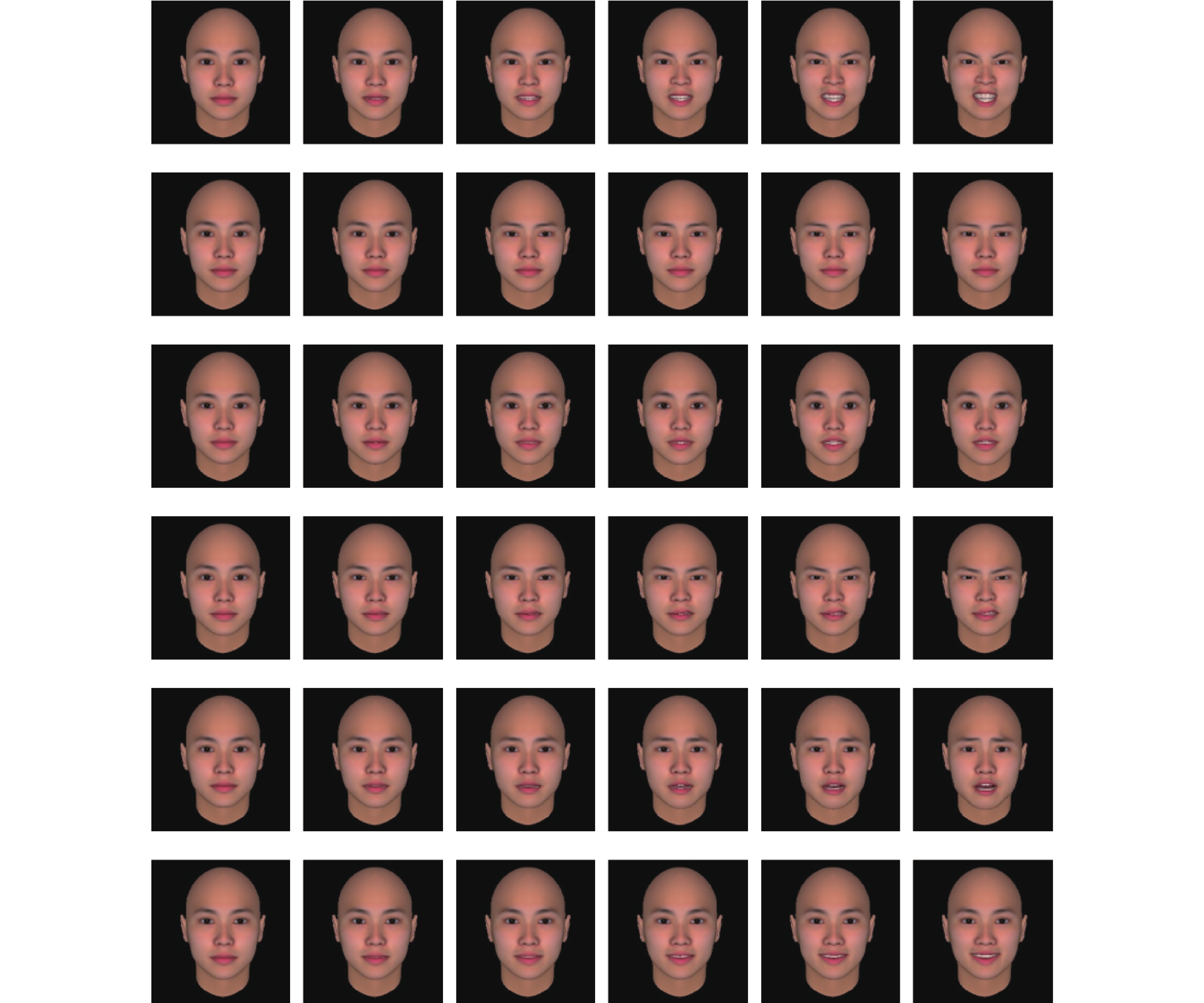
图1 实验1表情材料
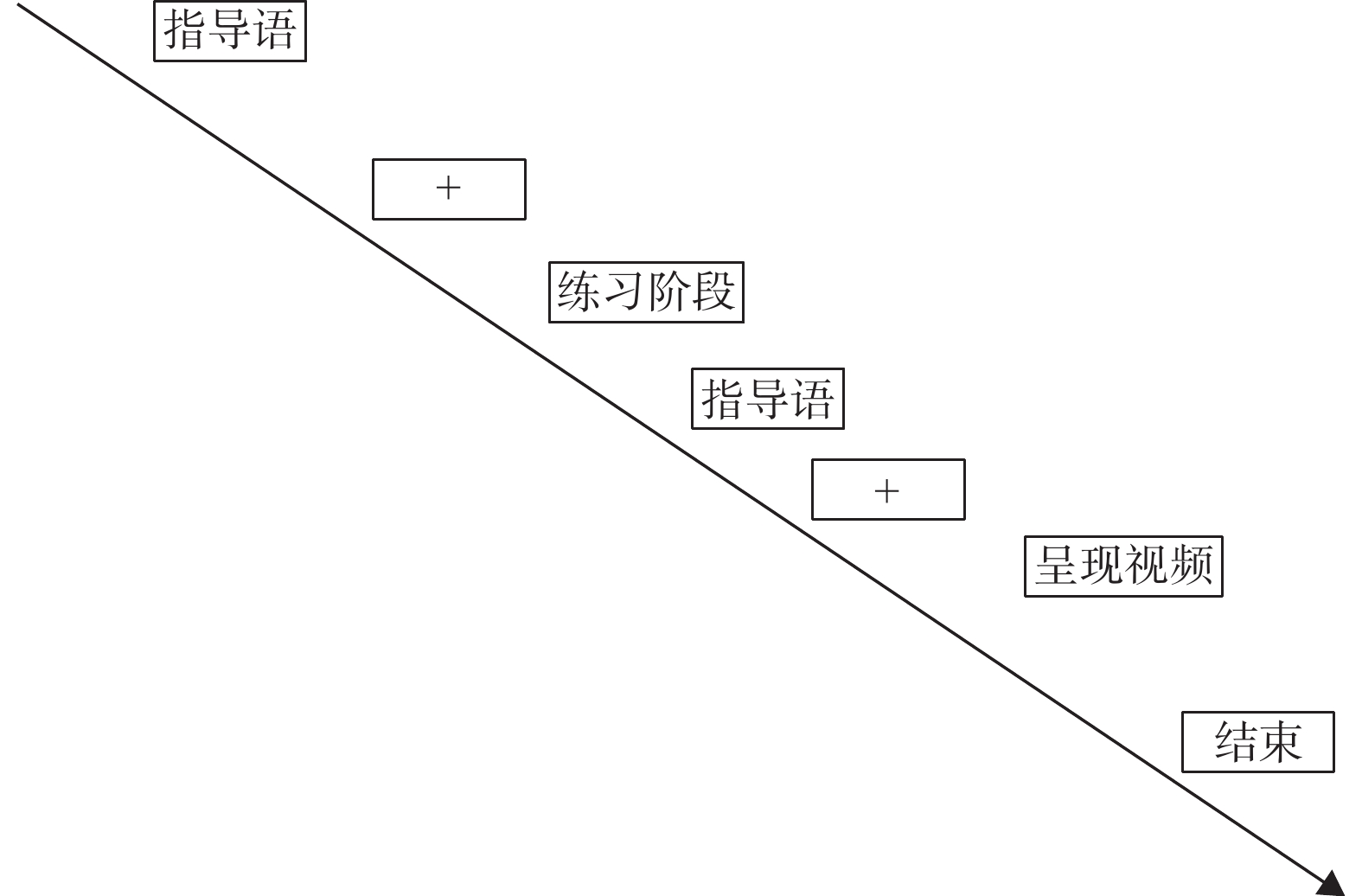
图2 实验1流程图
| 组别 | 性别 | 愤怒 | 悲伤 | 惊讶 | 厌恶 | 恐惧 | 快乐 | 总体 |
| 低攻击 | 男 | 3402±1387 | 5613±1666 | 4353±2102 | 3980±1136 | 4543±1830 | 4363±1698 | 4376±1186 |
| 女 | 3844±2467 | 4530±2184 | 4971±2610 | 3893±2132 | 3766±2339 | 3394±2348 | 4066±1892 | |
| 高攻击 | 男 | 3071±1820 | 6872±2147 | 5003±2300 | 3869±1540 | 4938±2408 | 4631±2600 | 4731±1731 |
| 女 | 2027±1084 | 6158±2181 | 3337±1062 | 4183±2388 | 4159±2594 | 3358±2705 | 3870±1688 |
表1 高低攻击和不同性别被试的情绪识别反应时(ms)(M±SD)
| 组别 | 性别 | 愤怒 | 悲伤 | 惊讶 | 厌恶 | 恐惧 | 快乐 | 总体 |
| 低攻击 | 男 | 3402±1387 | 5613±1666 | 4353±2102 | 3980±1136 | 4543±1830 | 4363±1698 | 4376±1186 |
| 女 | 3844±2467 | 4530±2184 | 4971±2610 | 3893±2132 | 3766±2339 | 3394±2348 | 4066±1892 | |
| 高攻击 | 男 | 3071±1820 | 6872±2147 | 5003±2300 | 3869±1540 | 4938±2408 | 4631±2600 | 4731±1731 |
| 女 | 2027±1084 | 6158±2181 | 3337±1062 | 4183±2388 | 4159±2594 | 3358±2705 | 3870±1688 |
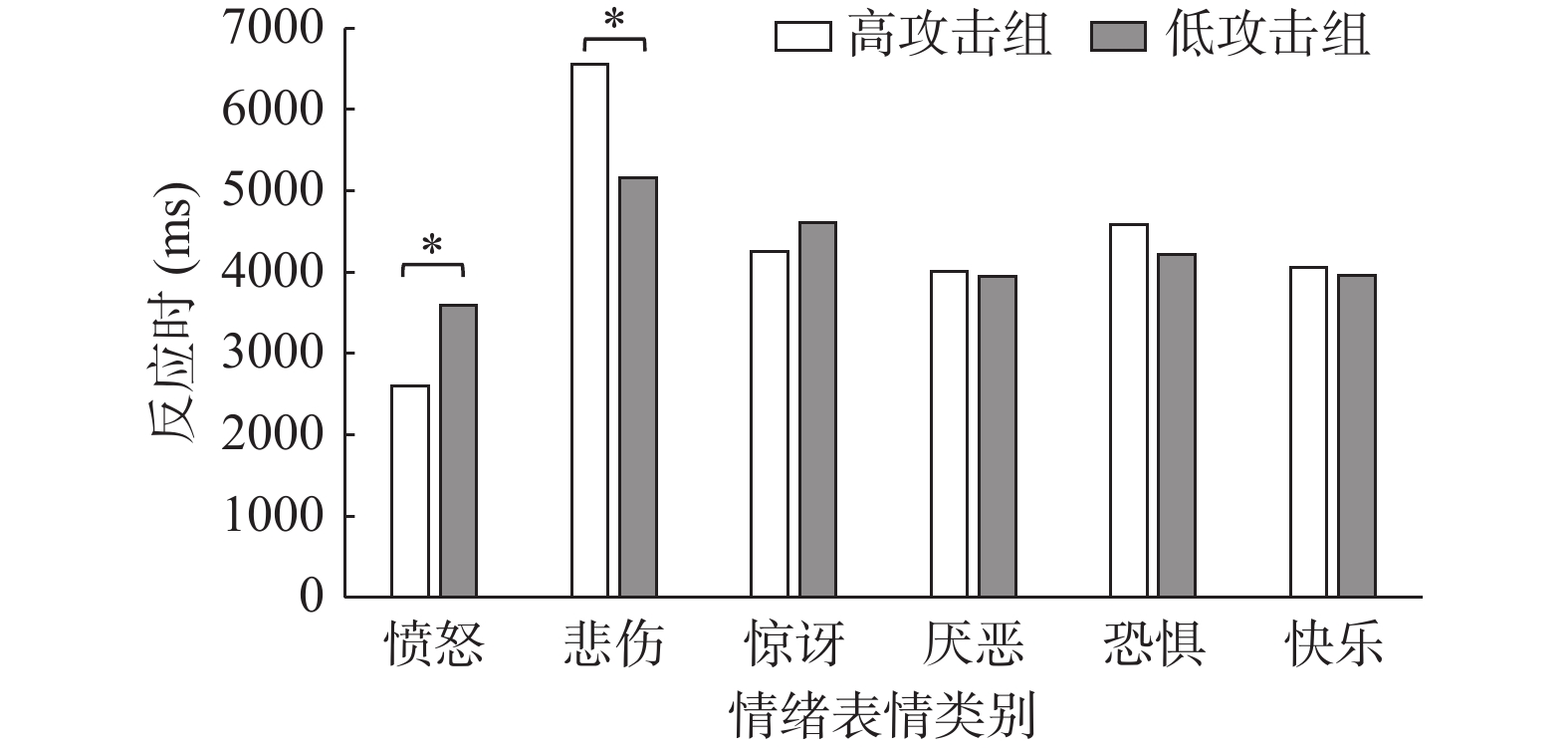
图3 六种情绪表情上高低攻击被试的识别反应时比较 注:*p<0.05。
| 情绪类型 | 低攻击 | 高攻击 | |||
| M | SD | M | SD | ||
| 中性→愤怒 | 3587 | 1890 | 2603 | 1599 | |
| 中性→悲伤 | 5159 | 1943 | 6552 | 2154 | |
| 中性→惊讶 | 4612 | 2308 | 4256 | 2007 | |
| 中性→厌恶 | 3944 | 1597 | 4010 | 1934 | |
| 中性→恐惧 | 4217 | 2059 | 4589 | 2479 | |
| 中性→快乐 | 3957 | 2018 | 4060 | 2678 | |
表2 高低攻击被试六种情绪的识别反应时(ms)
| 情绪类型 | 低攻击 | 高攻击 | |||
| M | SD | M | SD | ||
| 中性→愤怒 | 3587 | 1890 | 2603 | 1599 | |
| 中性→悲伤 | 5159 | 1943 | 6552 | 2154 | |
| 中性→惊讶 | 4612 | 2308 | 4256 | 2007 | |
| 中性→厌恶 | 3944 | 1597 | 4010 | 1934 | |
| 中性→恐惧 | 4217 | 2059 | 4589 | 2479 | |
| 中性→快乐 | 3957 | 2018 | 4060 | 2678 | |
| 条件 | M±SD | df | t | p |
| 中性→愤怒前 | 3587±1890 | 30 | 2.31 | 0.028 |
| 中性→愤怒后 | 2868±1262 | |||
| 中性→悲伤前 | 5159±1943 | 30 | 1.92 | 0.065 |
| 中性→悲伤后 | 4505±1834 | |||
| 中性→惊讶前 | 4612±2308 | 30 | 3.02 | 0.005 |
| 中性→惊讶后 | 3391±1388 | |||
| 中性→厌恶前 | 3944±1597 | 30 | 1.23 | 0.229 |
| 中性→厌恶后 | 3507±1110 | |||
| 中性→恐惧前 | 4217±2059 | 30 | 1.11 | 0.276 |
| 中性→恐惧后 | 3793±1420 | |||
| 中性→快乐前 | 3957±2018 | 30 | 1.97 | 0.059 |
| 中性→快乐后 | 3241±1569 |
表3 社会排斥前后低攻击组被试对识别六种情绪表情的反应时比较(ms)
| 条件 | M±SD | df | t | p |
| 中性→愤怒前 | 3587±1890 | 30 | 2.31 | 0.028 |
| 中性→愤怒后 | 2868±1262 | |||
| 中性→悲伤前 | 5159±1943 | 30 | 1.92 | 0.065 |
| 中性→悲伤后 | 4505±1834 | |||
| 中性→惊讶前 | 4612±2308 | 30 | 3.02 | 0.005 |
| 中性→惊讶后 | 3391±1388 | |||
| 中性→厌恶前 | 3944±1597 | 30 | 1.23 | 0.229 |
| 中性→厌恶后 | 3507±1110 | |||
| 中性→恐惧前 | 4217±2059 | 30 | 1.11 | 0.276 |
| 中性→恐惧后 | 3793±1420 | |||
| 中性→快乐前 | 3957±2018 | 30 | 1.97 | 0.059 |
| 中性→快乐后 | 3241±1569 |
| 条件 | M±SD | df | t | p |
| 中性→愤怒前 | 2603±1599 | 28 | 0.19 | 0.853 |
| 中性→愤怒后 | 2558±1550 | |||
| 中性→悲伤前 | 6552±2153 | 28 | 4.05 | <0.001 |
| 中性→悲伤后 | 5481±2129 | |||
| 中性→惊讶前 | 4256±2007 | 28 | 2.07 | 0.048 |
| 中性→惊讶后 | 3690±2153 | |||
| 中性→厌恶前 | 4010±1934 | 28 | 1.02 | 0.316 |
| 中性→厌恶后 | 3679±1364 | |||
| 中性→恐惧前 | 4589±2479 | 28 | −0.44 | 0.665 |
| 中性→恐惧后 | 4812±2335 | |||
| 中性→快乐前 | 4060±2678 | 28 | 0.22 | 0.826 |
| 中性→快乐后 | 3923±2274 |
表4 社会排斥前后高攻击组被试对识别六种情绪表情的反应时比较(ms)
| 条件 | M±SD | df | t | p |
| 中性→愤怒前 | 2603±1599 | 28 | 0.19 | 0.853 |
| 中性→愤怒后 | 2558±1550 | |||
| 中性→悲伤前 | 6552±2153 | 28 | 4.05 | <0.001 |
| 中性→悲伤后 | 5481±2129 | |||
| 中性→惊讶前 | 4256±2007 | 28 | 2.07 | 0.048 |
| 中性→惊讶后 | 3690±2153 | |||
| 中性→厌恶前 | 4010±1934 | 28 | 1.02 | 0.316 |
| 中性→厌恶后 | 3679±1364 | |||
| 中性→恐惧前 | 4589±2479 | 28 | −0.44 | 0.665 |
| 中性→恐惧后 | 4812±2335 | |||
| 中性→快乐前 | 4060±2678 | 28 | 0.22 | 0.826 |
| 中性→快乐后 | 3923±2274 |
|
程苏, 刘璐, 郑涌. 社会排斥的研究范式与理论模型. 心理科学进展, 2011, 19 (6): 905- 915.
|
|
|
高鑫艳. 社会排斥后的行为反应研究综述. 心理学进展, 2022, 12 (4): 997- 1004.
DOI |
|
|
加尼亚·赛力克. (2020). 网络排斥引发大学生更多攻击行为: 安全依恋的中介作用(硕士学位论文). 华东师范大学, 上海.
|
|
|
李献云, 费立鹏, 张亚利, 牛雅娟, 童永胜, 杨少杰. Buss和Perry攻击问卷中文版的修订和信效度. 中国神经精神疾病杂志, 2011, 37 (10): 607- 613.
DOI |
|
|
彭艳燕, 胡喆, 陆艳平, 朱冬梅, 魏强. 我国攻击性个体情绪识别的研究变迁: 基于CiteSpace的可视化分析. 心理学进展, 2023, 13 (9): 4043- 4054.
|
|
|
邱方晖, 罗跃嘉, 贾世伟. 个体攻击性对愤怒表情类别知觉的影响. 心理学报, 2016, 48 (8): 946- 956.
DOI |
|
|
孙丽君, 牛更枫, 李俊一, 杜红芹, 衡书鹏, 胡祥恩, 罗艳艳. 高低特质攻击个体对威胁面部表情识别的差异研究——来自ERP的证据. 心理科学, 2020, 43 (5): 1026- 1033.
DOI |
|
|
陶明, 高静芳. 修订焦虑自评量表(SAS-CR)的信度及效度. 中国神经精神疾病杂志, 1994, 20 (5): 301- 303.
|
|
|
王斯文. (2020). 小学高年级面部表情知觉与攻击行为的关系及其干预研究(硕士学位论文). 吉林师范大学, 四平.
|
|
|
杨静, 陶嵘, 陈锐娟. 不同情绪状态下自动表达抑制对情绪及表情知觉敏感性的影响. 心理科学, 2013, 36 (5): 1085- 1092.
|
|
|
杨晓莉, 信同童, 毛玉翠. 社会排斥的研究范式述评及其对结果的影响. 中国临床心理学杂志, 2019, 27 (2): 237- 241.
DOI |
|
|
Adesanya, D. O., Johnson, J., & Galanter, C. A. Assessing and treating aggression in children and adolescents. Pediatric Medicine, 2022, 5, 18.
DOI |
|
|
Blakemore, S. J. The social brain in adolescence. Nature Reviews Neuroscience, 2008, 9 (4): 267- 277.
DOI |
|
|
Buckley, K. E., Winkel, R. E., & Leary, M. R. Reactions to acceptance and rejection: Effects of level and sequence of relational evaluation. Journal of Experimental Social Psychology, 2004, 40 (1): 14- 28.
DOI |
|
|
Cannavò, M., Zomparelli, W., Carta, M. G., Romano, F., & La Torre, G. Effectiveness of a training on the recognition of subtle facial emotions in health and social workers. Rivista Di Psichiatria, 2021, 56 (6): 334- 339.
DOI |
|
|
Carr, M. B., & Lutjemeier, J. A. The relation of facial affect recognition and empathy to delinquency in youth offenders. Adolescence, 2005, 40 (159): 601- 619.
|
|
|
Chen, Z. S., Dewall, C. N., Poon, K. T., & Chen, E. W. When destiny hurts: Implicit theories of relationships moderate aggressive responses to ostracism. Journal of Experimental Social Psychology, 2012, 48 (5): 1029- 1036.
DOI |
|
|
Daudelin-Peltier, C., Forget, H., Blais, C., Deschênes, A., & Fiset, D. The effect of acute social stress on the recognition of facial expression of emotions. Scientific Reports, 2017, 7 (1): 1036.
DOI |
|
|
Dou, H., Lei, Y., Cheng, X., Wang, J., & Leppänen, P. Social exclusion influences conditioned fear acquisition and generalization: A mediating effect from the medial prefrontal cortex. NeuroImage, 2020, 218, 116735.
DOI |
|
|
Ekman, P., & Friesen, W. V. Constants across cultures in the face and emotion. Journal of Personality and Social Psychology, 1971, 17 (2): 124- 129.
DOI |
|
|
Engelskirchen, L., Asbrand, J., & Tuschen-Caffier, B. Investigating social exclusion, affect and emotion regulation in young people using the ostracism online paradigm. Scientific Reports, 2025, 15 (1): 24110.
DOI |
|
|
Fontaine, J. R. J., Scherer, K. R., Roesch, E. B., & Ellsworth, P. C. The world of emotions is not two-dimensional. Psychological Science, 2007, 18 (12): 1050- 1057.
DOI |
|
|
Hartgerink, C. H. J., van Beest, I., Wicherts, J. M., & Williams, K. D. The ordinal effects of ostracism: A meta-analysis of 120 Cyberball studies. PLoS One, 2015, 10 (5): e0127002.
DOI |
|
|
Lawrence, K., Campbell, R., & Skuse, D. Age, gender, and puberty influence the development of facial emotion recognition. Frontiers in Psychology, 2015, 6, 761.
DOI |
|
|
Leary, M. R., Kowalski, R. M., Smith, L., & Phillips, S. Teasing, rejection, and violence: Case studies of the school shootings. Aggressive Behavior, 2003, 29 (3): 202- 214.
DOI |
|
|
Leary, M. R., Twenge, J. M., & Quinlivan, E. Interpersonal rejection as a determinant of anger and aggression. Personality and Social Psychology Review, 2006, 10 (2): 111- 132.
DOI |
|
|
Malone, A., Carroll, A., & Murphy, B. P. Facial affect recognition deficits: A potential contributor to aggression in psychotic illness. Aggression and Violent Behavior, 2012, 17 (1): 27- 35.
DOI |
|
|
Marsh, A. A., & Blair, R. J. R. Deficits in facial affect recognition among antisocial populations: A meta-analysis. Neuroscience & Biobehavioral Reviews, 2008, 32 (3): 454- 465.
DOI |
|
|
Molden, D. C., Lucas, G. M., Gardner, W. L., Dean, K., & Knowles, M. L. Motivations for prevention or promotion following social exclusion: Being rejected versus being ignored. Journal of Personality and Social Psychology, 2009, 96 (2): 415- 431.
DOI |
|
|
Neath, K., Nilsen, E. S., Gittsovich, K., & Itier, R. J. Attention orienting by gaze and facial expressions across development. Emotion, 2013, 13 (3): 397- 408.
DOI |
|
|
Niu, G. F., Shi, X. H., Yao, L. S., Yang, W. C., Jin, S. Y., & Xu, L. Social exclusion and depression among undergraduate students: The mediating roles of rejection sensitivity and social self-efficacy. Current Psychology, 2023, 42 (28): 24198- 24207.
DOI |
|
|
Nyline, B., Softas-Nall, L., Peterson, E., Peake, M., & Woods, C. J. Inaccuracies in facial recognition of fear and sadness for male domestic violence offenders. Open Journal of Social Sciences, 2018, 6 (2): 37- 51.
DOI |
|
|
Pickett, C. L., Gardner, W. L., & Knowles, M. Getting a cue: The need to belong and enhanced sensitivity to social cues. Personality and Social Psychology Bulletin, 2004, 30 (9): 1095- 1107.
DOI |
|
|
Pozzi, E., Vijayakumar, N., Rakesh, D., & Whittle, S. Neural correlates of emotion regulation in adolescents and emerging adults: A meta-analytic study. Biological Psychiatry, 2021, 89 (2): 194- 204.
DOI |
|
|
Rajchert, J., Konopka, K., & Huesmann, L. R. It is more than thought that counts: The role of readiness for aggression in the relationship between ostracism and displaced aggression. Current Psychology, 2017, 36 (3): 417- 427.
DOI |
|
|
Said, C. P., Dotsch, R., & Todorov, A. The amygdala and FFA track both social and non-social face dimensions. Neuropsychologia, 2010, 48 (12): 3596- 3605.
DOI |
|
|
Schönenberg, M., & Jusyte, A. Investigation of the hostile attribution bias toward ambiguous facial cues in antisocial violent offenders. European Archives of Psychiatry and Clinical Neuroscience, 2014, 264 (1): 61- 69.
DOI |
|
|
Silvers, J. A., McRae, K., Gabrieli, J. D. E., Gross, J. J., Remy, K. A., & Ochsner, K. N. Age-related differences in emotional reactivity, regulation, and rejection sensitivity in adolescence. Emotion, 2012, 12 (6): 1235- 1247.
DOI |
|
|
Sun, L. J., Li, J. Y., Niu, G. F., Zhang, L., & Chang, H. J. Reactive aggression affects response inhibition to angry expressions in adolescents: An event-related potential study using the emotional Go/No-Go paradigm. Frontiers in Psychology, 2020, 11, 558461.
DOI |
|
|
Twenge, J. M., Baumeister, R. F., Tice, D. M., & Stucke, T. S. If you can’t join them, beat them: Effects of social exclusion on aggressive behavior. Journal of Personality and Social Psychology, 2001, 81 (6): 1058- 1069.
DOI |
|
|
Vetter, N. C., Drauschke, M., Thieme, J., & Altgassen, M. Adolescent basic facial emotion recognition is not influenced by puberty or own-age bias. Frontiers in Psychology, 2018, 9, 956.
DOI |
|
|
Wilkowski, B. M., & Robinson, M. D. When aggressive individuals see the world more accurately: The case of perceptual sensitivity to subtle facial expressions of anger. Personality and Social Psychology Bulletin, 2012, 38 (4): 540- 553.
DOI |
|
|
Williams, K. D. (2001). Ostracism: The power of silence. New York: Guilford Press.
|
| [1] | 赵海燕, 马燕, 周爱保. 青少年心理复原力的发展趋势及性别的作用:基于动态发展视角[J]. 心理与行为研究, 2026, 24(3): 335-342. |
| [2] | 杨海波, 李奕康, 郭雅雯, 刘冰洁. 不同网络游戏成瘾程度青少年对游戏信息注意偏向的差异[J]. 心理与行为研究, 2026, 24(3): 401-409. |
| [3] | 王惠惠, 唐慎佩, 赵双祐, 黄向圆, 兰松. 内在自我与外界眼光:自我评价与反射性评价一致性对青少年心理健康问题的影响[J]. 心理与行为研究, 2026, 24(2): 187-194. |
| [4] | 樊雪戎, 段依凡, 邢晓沛. 温暖的亲子感知差异与青少年内化问题的关系:基于二项式回归的响应面分析[J]. 心理与行为研究, 2026, 24(2): 195-203. |
| [5] | 张一林, 牛更枫, 白旭青, 辛素飞, 孙晓军. 社会逆境感知与青少年社交媒体成瘾的双向关系:控制感的作用[J]. 心理与行为研究, 2026, 24(2): 258-264. |
| [6] | 丁晓茜, 刘华语. 社会排斥影响个体社交行为的双路径机制:消极完美主义与注意偏向的作用[J]. 心理与行为研究, 2026, 24(1): 51-59. |
| [7] | 张野, 刘致宏, 赵丽云. 青少年网络社会排斥、敌意归因偏向与网络偏差行为的关系:一项纵向研究[J]. 心理与行为研究, 2026, 24(1): 60-68. |
| [8] | 曾子豪, 何震, 袁言云, 赵纤, 印利红, 谭嵘, 常梦梦, 胡义秋. HPA轴系统多基因−亲子关系交互对青少年抑郁发展影响及性别差异[J]. 心理与行为研究, 2026, 24(1): 78-86. |
| [9] | 杨昕珠, 王腾飞, 郑晓龙. 青少年社会情感能力与学业倦怠的双向预测作用:一项交叉滞后研究[J]. 心理与行为研究, 2025, 23(6): 789-797. |
| [10] | 谷莉, 黄晓彤, 梁广华, 蔡頠, 郭丰波. 核心自我评价与青少年自伤行为的关系:有调节的中介模型[J]. 心理与行为研究, 2025, 23(6): 798-805. |
| [11] | 张春妹, 骆玉冰, 温冬雪, 郑航. 青少年逆反心理与偏差行为的关系:偏差同伴联系和偏差群体同一性的链式中介作用[J]. 心理与行为研究, 2025, 23(5): 645-652. |
| [12] | 刘鑫, 刘衍玲, 曾晋逸. 心理需要挫折与青少年抑郁症状的纵向联系:心理素质的调节作用[J]. 心理与行为研究, 2025, 23(4): 496-503. |
| [13] | 鲍振宙, 刘花, 于明申. 青少年校园欺凌旁观行为与焦虑抑郁症状的关系:基于纵向网络分析法[J]. 心理与行为研究, 2025, 23(4): 504-512. |
| [14] | 刘佳, 高培晋, 李楠, 孙敏, 白学军. 社会变化程度感知对青少年社会公平感的影响[J]. 心理与行为研究, 2025, 23(4): 551-559. |
| [15] | 张庆吉, 郭丰波, 涂叶满, 卿再花, 宋凤. 劳动价值观对青少年心理健康潜在类别及其转换的影响:双因素模型视角[J]. 心理与行为研究, 2025, 23(4): 569-576. |
| 阅读次数 | ||||||
|
全文 |
|
|||||
|
摘要 |
|
|||||
