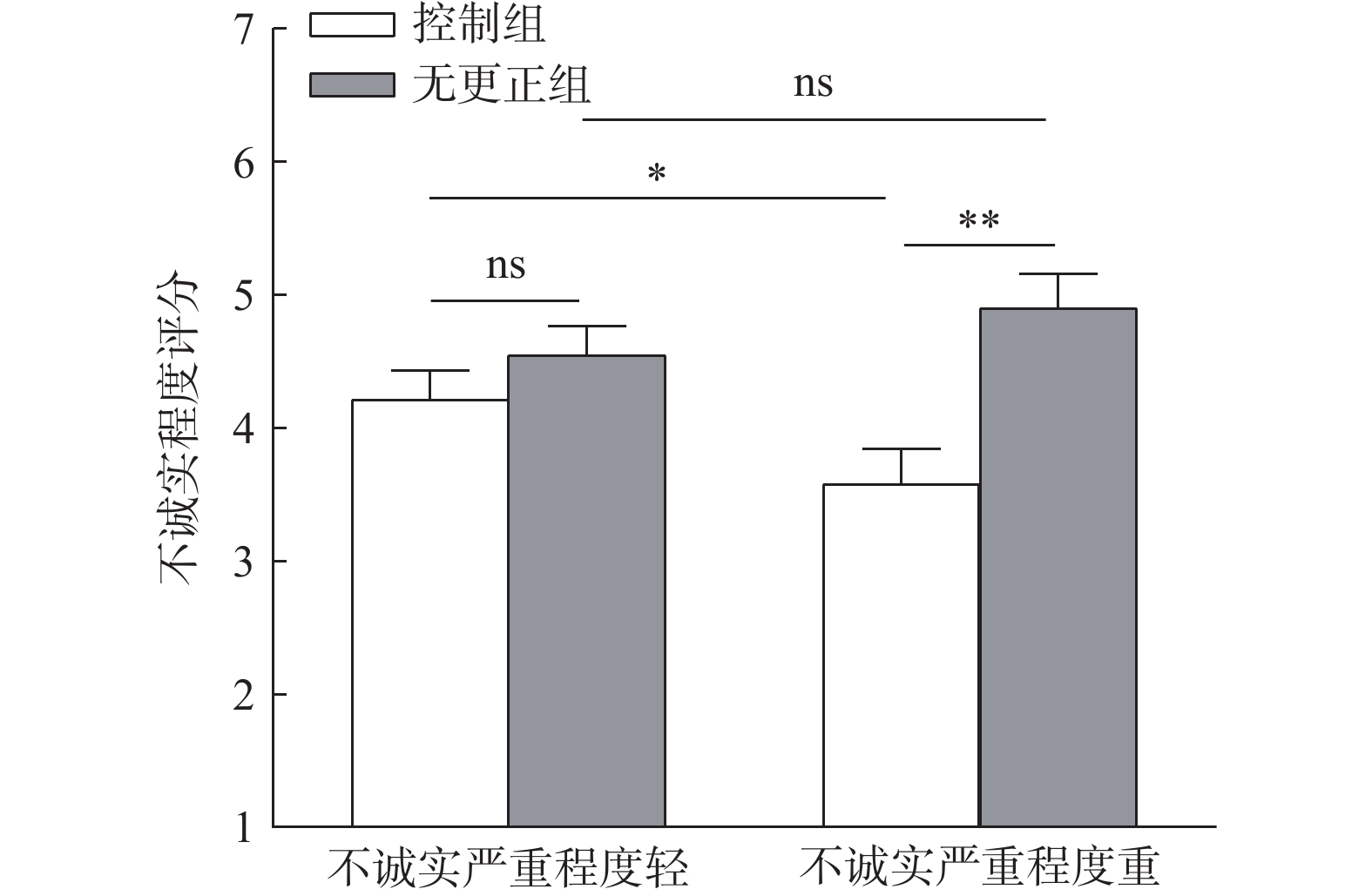
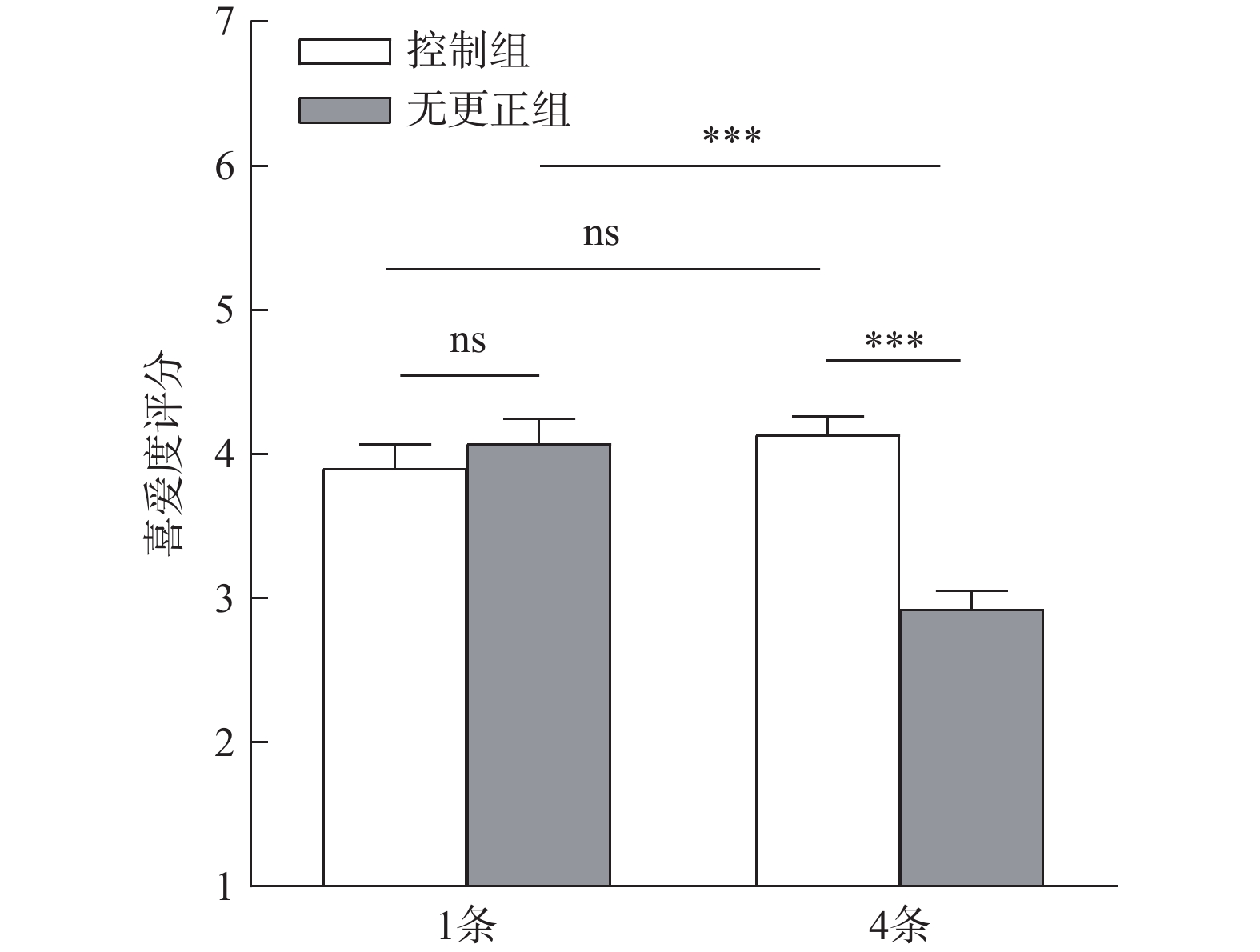
|
金花, 贾丽娜, 阴晓娟, 严世振, 魏士琳, 陈俊涛. 错误信息持续影响效应的神经基础. 心理学报, 2022, 54 (4): 343- 354.
|
|
Brambilla, M., Carraro, L., Castelli, L., & Sacchi, S. Changing impressions: Moral character dominates impression updating. Journal of Experimental Social Psychology, 2019, 82, 64- 73.
DOI
|
|
Cobb, M. D. (2007). Knowing the truth is not enough: The resilience of discredited information. Paper presented at the 2007 Annual Meeting of the International Society of Political Psychology, Portland, OR.
|
|
Cohen, M. S., Halewicz, V., Yildirim, E., & Kable, J. W. Continued influence of false accusations in forming impressions of political candidates. PNAS Nexus, 2024, 3 (11): 490- 501.
DOI
|
|
Davidson, A. R., Yantis, S., Norwood, M., & Montano, D. E. Amount of information about the attitude object and attitude-behavior consistency. Journal of Personality and Social Psychology, 1985, 49 (5): 1184- 1198.
DOI
|
|
De Keersmaecker, J., & Roets, A. ‘Fake news’: Incorrect, but hard to correct. The role of cognitive ability on the impact of false information on social impressions. Intelligence, 2017, 65, 107- 110.
DOI
|
|
Ecker, U. K. H., & Rodricks, A. E. Do false allegations persist? Retracted misinformation does not continue to influence explicit person impressions. Journal of Applied Research in Memory and Cognition, 2020, 9 (4): 587- 601.
DOI
|
|
Ferrari, C., Vecchi, T., Todorov, A., & Cattaneo, Z. (2016). Interfering with activity in the dorsomedial prefrontal cortex via TMS affects social impressions updating. Cognitive, Affective, & Behavioral Neuroscience, 16(4), 626–634.
|
|
Haidt, J. (2012). The righteous mind: Why good people are divided by politics and religion. New York: Pantheon.
|
|
Hofmann, W., Wisneski, D. C., Brandt, M. J., & Skitka, L. J. Morality in everyday life. Science, 2014, 345 (6202): 1340- 1343.
DOI
|
|
Hovland, C. I., Janis, I. L., & Kelley, H. H. (1953). Communication and persuasion: Psychological studies of opinion change. New Haven, CT: Yale University Press.
|
|
Johnson, H. M., & Seifert, C. M. (1994). Sources of the continued influence effect: When misinformation in memory affects later inferences. Journal of Experimental Psychology: Learning, Memory, and Cognition, 20(6), 1420–1436.
|
|
Kim, M. J., Mende-Siedlecki, P., Anzellotti, S., & Young, L. Theory of mind following the violation of strong and weak prior beliefs. Cerebral Cortex, 2021, 31 (2): 884- 898.
DOI
|
|
Leach, C. W., Bilali, R., & Pagliaro, S. (2015). Groups and morality. In M. Mikulincer, P. R. Shaver, J. F. Dovidio, & J. A. Simpson (Eds.), APA handbook of personality and social psychology: Vol. 2: Group processes (pp. 123–149). Washington DC: American Psychological Association.
|
|
Mickelberg, A., Walker, B., Ecker, U., Howe, P. D. L., Perfors, A., & Fay, N. Does mud really stick? No evidence for continued influence of misinformation on newly formed person impressions. Collabra: Psychology, 2024, 10 (1): 92332.
DOI
|
|
Reeder, G. D., & Coovert, M. D. Revising an impression of morality. Social Cognition, 1986, 4 (1): 1- 17.
DOI
|
|
Reysen, S. Construction of a new scale: The Reysen Likability Scale. Social Behavior and Personality: An International Journal, 2005, 33 (2): 201- 208.
DOI
|
|
Shen, X., Mann, T. C., & Ferguson, M. J. Beware a dishonest face?: Updating face-based implicit impressions using diagnostic behavioral information. Journal of Experimental Social Psychology, 2020, 86, 103888.
DOI
|
|
Thorson, E. Belief echoes: The persistent effects of corrected misinformation. Political Communication, 2016, 33 (3): 460- 480.
DOI
|
|
Wilkes, A. L., & Leatherbarrow, M. Editing episodic memory following the identification of error. The Quarterly Journal of Experimental Psychology Section A, 1988, 40 (2): 361- 387.
DOI
|
|
Willis, J., & Todorov, A. First impressions: Making up your mind after a 100 ms exposure to a face. Psychological Science, 2006, 17 (7): 592- 598.
DOI
|
|
Wilson, T. D., Lindsey, S., & Schooler, T. Y. A model of dual attitudes. Psychological Review, 2000, 107 (1): 101- 126.
DOI
|

 )
)