
Studies of Psychology and Behavior ›› 2025, Vol. 23 ›› Issue (3): 407-414.DOI: 10.12139/j.1672-0628.2025.03.016
• ? • Previous Articles Next Articles
Hexu YE1,2, Dahua WANG*,1( )
)
Received:2024-11-11
Online:2025-05-20
Published:2025-05-20
Contact:
Dahua WANG
叶和旭1,2, 王大华*,1()
通讯作者:
王大华
基金资助:Hexu YE, Dahua WANG. Cognitive Emotion Regulation Strategies and Marital Satisfaction in Older Couples: The Moderating Role of General Cognitive Abilities[J]. Studies of Psychology and Behavior, 2025, 23(3): 407-414.
叶和旭, 王大华. 老年夫妻认知情绪调节策略与婚姻满意度的关系:一般认知能力的调节作用[J]. 心理与行为研究, 2025, 23(3): 407-414.
Add to citation manager EndNote|Ris|BibTeX
URL: https://psybeh.tjnu.edu.cn/EN/10.12139/j.1672-0628.2025.03.016
| M | SD | 1 | 2 | 3 | 4 | 5 | 6 | 7 | 8 | 9 | |
| 1 | 40.35 | 6.41 | |||||||||
| 2 | 18.06 | 5.72 | −0.06 | ||||||||
| 3 | 15.12 | 3.14 | −0.004 | 0.19 | |||||||
| 4 | 6.24 | 1.23 | −0.05 | 0.22 | 0.01 | ||||||
| 5 | 4.71 | 1.03 | −0.33*** | 0.02 | −0.07 | 0.50*** | |||||
| 6 | 39.40 | 6.45 | 0.29*** | 0.01 | −0.001 | 0.07 | −0.10 | ||||
| 7 | 19.94 | 7.02 | −0.06 | 0.22 | 0.07 | 0.10 | 0.11 | 0.05 | |||
| 8 | 14.20 | 3.32 | 0.21 | 0.20 | 0.13 | 0.01 | −0.07 | −0.03 | 0.18 | ||
| 9 | 5.32 | 1.34 | 0.09 | 0.18 | −0.06 | 0.01 | −0.10 | −0.18 | 0.04 | 0.02 | |
| 10 | 4.09 | 1.18 | −0.04 | 0.11 | −0.06 | −0.05 | −0.03 | −0.33*** | −0.06 | −0.11 | 0.61*** |
| M | SD | 1 | 2 | 3 | 4 | 5 | 6 | 7 | 8 | 9 | |
| 1 | 40.35 | 6.41 | |||||||||
| 2 | 18.06 | 5.72 | −0.06 | ||||||||
| 3 | 15.12 | 3.14 | −0.004 | 0.19 | |||||||
| 4 | 6.24 | 1.23 | −0.05 | 0.22 | 0.01 | ||||||
| 5 | 4.71 | 1.03 | −0.33*** | 0.02 | −0.07 | 0.50*** | |||||
| 6 | 39.40 | 6.45 | 0.29*** | 0.01 | −0.001 | 0.07 | −0.10 | ||||
| 7 | 19.94 | 7.02 | −0.06 | 0.22 | 0.07 | 0.10 | 0.11 | 0.05 | |||
| 8 | 14.20 | 3.32 | 0.21 | 0.20 | 0.13 | 0.01 | −0.07 | −0.03 | 0.18 | ||
| 9 | 5.32 | 1.34 | 0.09 | 0.18 | −0.06 | 0.01 | −0.10 | −0.18 | 0.04 | 0.02 | |
| 10 | 4.09 | 1.18 | −0.04 | 0.11 | −0.06 | −0.05 | −0.03 | −0.33*** | −0.06 | −0.11 | 0.61*** |
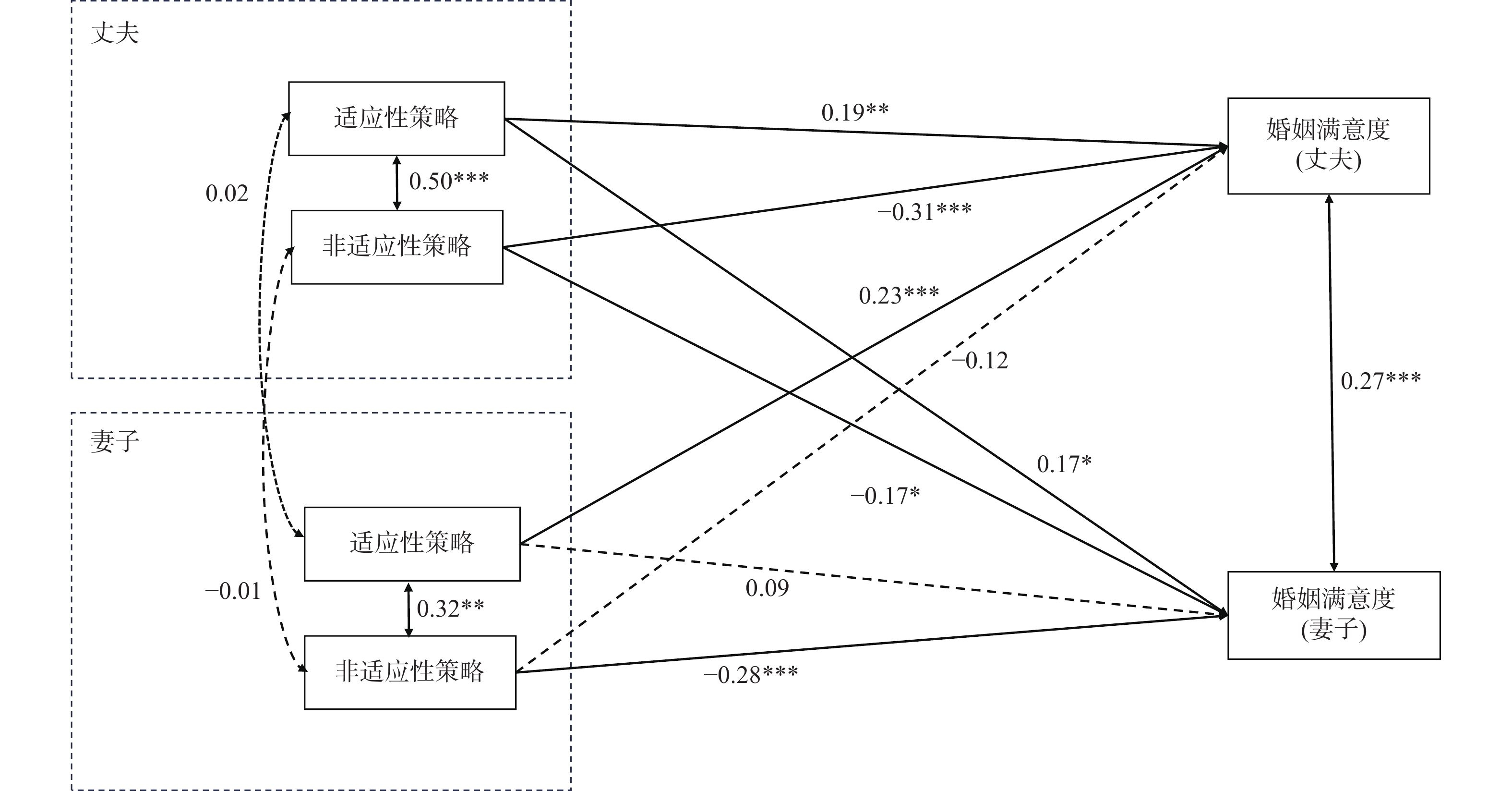
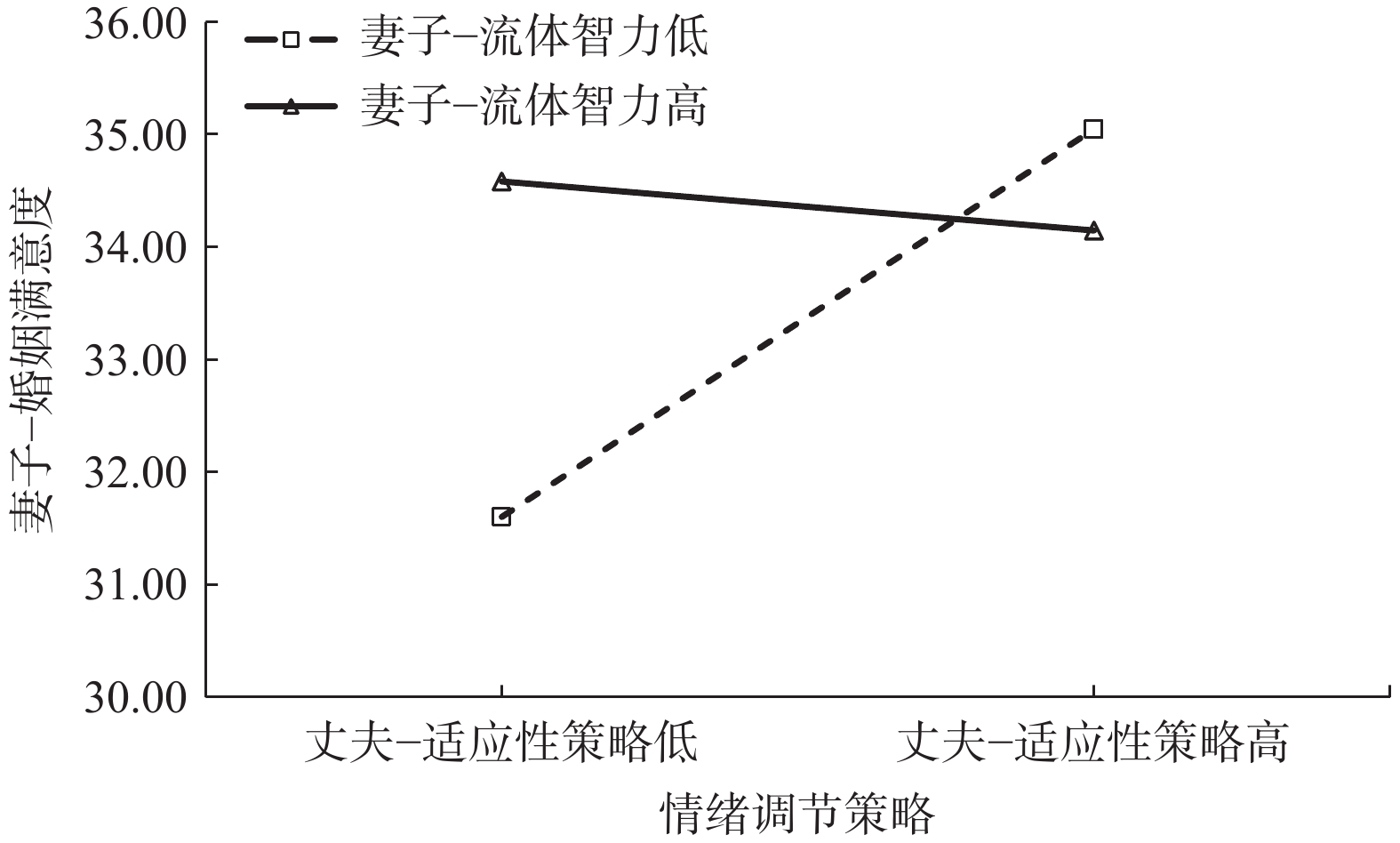
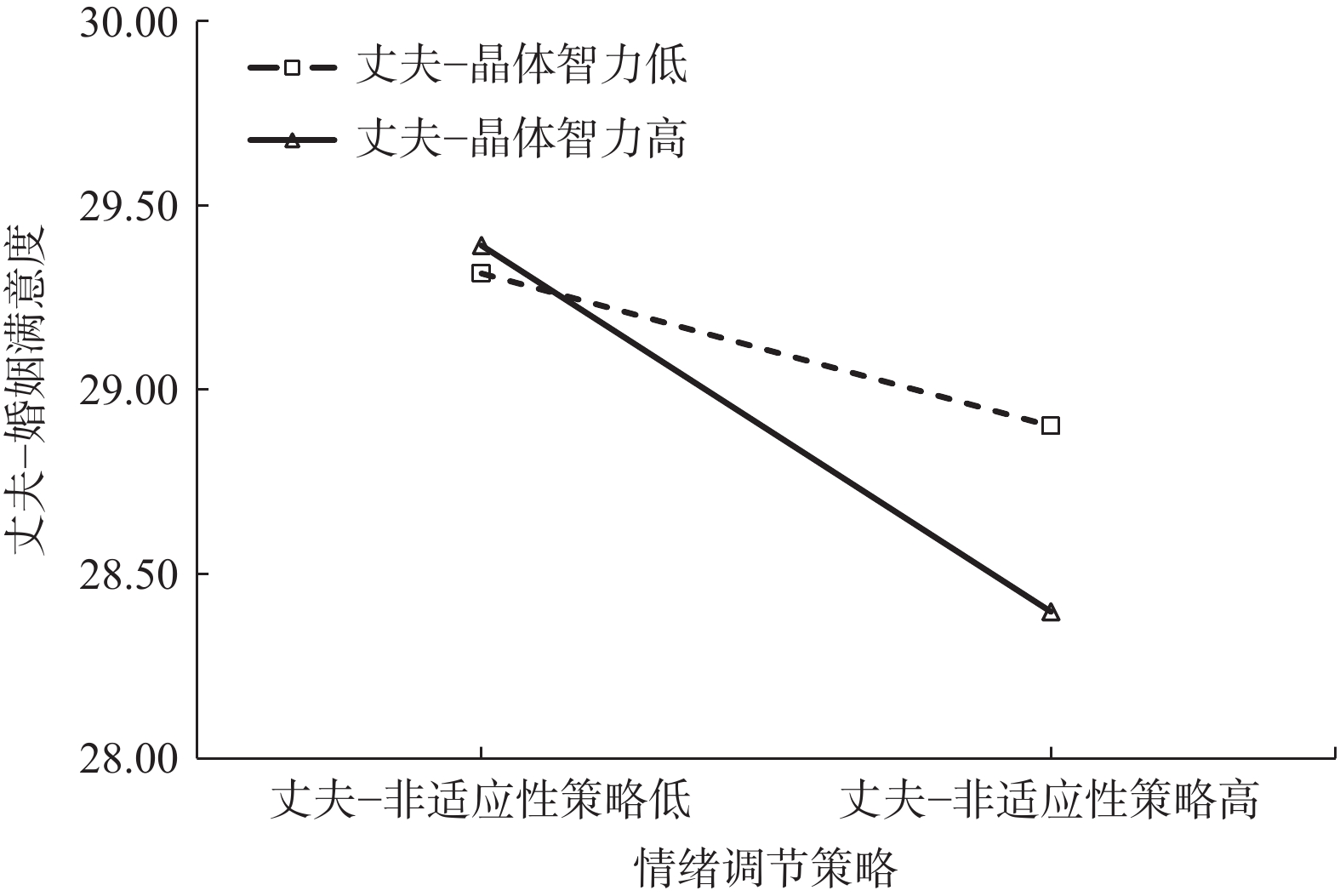
|
陈华帅. 老人婚姻满意度的影响因素研究. 人口与经济, 2009, (6): 67- 72.
|
|
|
陈思伊. (2023). 夫妻冲突会话研究(博士学位论文). 中国社会科学院大学, 北京.
|
|
|
董光恒, 朱艳新, 杨丽珠, Xia, M Z. 认知情绪调节问卷中文版的应用. 中国健康心理学杂志, 2008, 16 (4): 456- 458.
DOI |
|
|
琚晓燕, 李晓敏, 谢庆红, 曹洪健, 方晓义. 新婚夫妻互动行为对婚姻质量的即时效应和状态效应. 心理与行为研究, 2015, 13 (2): 162- 170.
DOI |
|
|
琚晓燕, 谢庆红, 曹洪健, 方晓义, 刘宣文. 夫妻互动行为差异及其对婚姻质量的影响——基于一项观察研究. 中国临床心理学杂志, 2013, 21 (5): 790- 794, 799.
|
|
|
李德明, 陈天勇. 认知功能年老化的特点、理论及干预. 中国老年学杂志, 2003, 23 (12): 805- 806.
DOI |
|
|
李静, 卢家楣. 不同情绪调节方式对记忆的影响. 心理学报, 2007, 39 (6): 1084- 1092.
|
|
|
李凌江. (1999). Olson婚姻质量问卷(ENRICH). 见 汪向东, 王希林, 马弘 (编). 心理卫生评定量表手册(增订版) (pp. 153–159). 北京: 中国心理卫生杂志社.
|
|
|
李翔, 汤丹. 退休会提升老年生活幸福感吗?——基于断点回归方法的分析. 当代经济管理, 2023, 45 (10): 55- 66.
|
|
|
刘芳, 霍瑞, 韩铖铖, 王美沂, 杨海波. 执行功能对个体情绪调节策略使用倾向和调节效果的影响. 心理与行为研究, 2022, 20 (3): 382- 389.
DOI |
|
|
卢凤, 许定远, 刘电芝, 朱传林. 青年夫妻冲突应对方式性别差异的扎根理论分析. 中国临床心理学杂志, 2021, 29 (1): 109- 117.
|
|
|
马琦峰, 杜鹏. “历久弥新”还是“归于平淡”: 结婚时长、夫妻共识与中老年人婚姻满意度. 西北人口, 2024, 45 (5): 39- 50.
|
|
|
孟超, 张新卿, 王姮, 孙厚亮, 刘宏军, 汤哲, 陈彪. 画钟测验检测认知功能损害. 中国神经精神疾病杂志, 2004, 30 (6): 452- 454.
DOI |
|
|
彭华茂, 王大华, 申继亮, 林崇德. 老年期语义理解能力与空间定向能力的交叉滞后分析. 心理学报, 2009, 41 (7): 624- 629.
|
|
|
申继亮, 王大华, 彭华茂, 唐丹. 基本心理能力老化的中介变量. 心理学报, 2003, 35 (6): 802- 809.
|
|
|
吴婷, 李逢战, 王大华, 李云川. 老年夫妻沟通的特点及其与婚姻满意度的关系. 中国临床心理学杂志, 2016, 24 (2): 321- 326.
|
|
|
修订韦氏成人智力量表全国协作组. 韦氏成人智力量表的修订. 心理学报, 1983, 15 (3): 362- 370.
|
|
|
杨阿丽, 方晓义. 婚姻冲突、应对策略及其与婚姻满意度的关系. 心理学探新, 2009, 29 (1): 87- 92.
DOI |
|
|
杨小龙, 梁文佳, 赵鑫, 霍小宁. 老年人认知能力对抑郁情绪的影响: 日常生活能力的中介作用. 国际精神病学杂志, 2023, 50 (4): 744- 748.
|
|
|
叶婉青, 李晓彤, 王大华. 老年人对夫妻间负性事件的认知性情绪调节策略及其与婚姻满意度的关系: 交叉滞后分析. 心理学报, 2018, 50 (4): 426- 435.
|
|
|
袁加锦, 汪宇, 鞠恩霞, 李红. 情绪加工的性别差异及神经机制. 心理科学进展, 2010, 18 (12): 1899- 1908.
|
|
|
张荣. (2020). 老年夫妻婚姻质量对婚姻稳性的影响——基于主客体互倚模型的研究(硕士学位论文). 天津师范大学.
|
|
|
Acitelli, L. K., & Antonucci, T. C. Gender differences in the link between marital support and satisfaction in older couples. Journal of Personality and Social Psychology, 1994, 67 (4): 688- 698.
DOI |
|
|
Ball, F. L., Cowan, P., & Cowan, C. P. Who’s got the power? Gender differences in partners’ perceptions of influence during marital problem-solving discussions. Family Process, 1995, 34 (3): 303- 321.
DOI |
|
|
Berg, C. A., Schindler, I., Smith, T. W., Skinner, M., & Beveridge, R. M. Perceptions of the cognitive compensation and interpersonal enjoyment functions of collaboration among middle-aged and older married couples. Psychology and Aging, 2011, 26 (1): 167- 173.
DOI |
|
|
Bloch, L., Haase, C. M., & Levenson, R. W. Emotion regulation predicts marital satisfaction: More than a wives’ tale. Emotion, 2014, 14 (1): 130- 144.
DOI |
|
|
Carr, D., Freedman, V. A., Cornman, J. C., & Schwarz, N. Happy marriage, happy life? Marital quality and subjective well-being in later life. Journal of Marriage and Family, 2014, 76 (5): 930- 948.
DOI |
|
|
Charles, S. T. Strength and vulnerability integration: A model of emotional well-being across adulthood. Psychological Bulletin, 2010, 136 (6): 1068- 1091.
DOI |
|
|
Diehr, P. H., Thielke, S. M., Newman, A. B., Hirsch, C., & Tracy, R. Decline in health for older adults: Five-year change in 13 key measures of standardized health. The Journals of Gerontology. Series A: Biomedical Sciences and Medical Sciences, 2013, 68 (9): 1059- 1067.
DOI |
|
|
Donato, S., Parise, M., Iafrate, R., Bertoni, A., Finkenauer, C., & Bodenmann, G. Dyadic coping responses and partners’ perceptions for couple satisfaction: An actor-partner interdependence analysis. Journal of Social and Personal Relationships, 2015, 32 (5): 580- 600.
DOI |
|
|
Ferrer, E., & Nesselroade, J. R. Modeling affective processes in dyadic relations via dynamic factor analysis. Emotion, 2003, 3 (4): 344- 360.
DOI |
|
|
Fraley, R. C., Niedenthal, P. M., Marks, M., Brumbaugh, C., & Vicary, A. Adult attachment and the perception of emotional expressions: Probing the hyperactivating strategies underlying anxious attachment. Journal of Personality, 2006, 74 (4): 1163- 1190.
DOI |
|
|
Gallagher, E. A., & Stokes, J. E. Cognitive functioning, gender, and marital quality among older married couples: A dyadic approach. Journal of Women & Aging, 2021, 33 (2): 137- 152.
|
|
|
Garnefski, N., & Kraaij, V. Relationships between cognitive emotion regulation strategies and depressive symptoms: A comparative study of five specific samples. Personality and Individual Differences, 2006, 40 (8): 1659- 1669.
DOI |
|
|
Garnefski, N., Kraaij, V., & Spinhoven, P. Negative life events, cognitive emotion regulation and emotional problems. Personality and Individual Differences, 2001, 30 (8): 1311- 1327.
DOI |
|
|
Garnefski, N., Teerds, J., Kraaij, V., Legerstee, J., & van den Kommer, T. Cognitive emotion regulation strategies and depressive symptoms: Differences between males and females. Personality and Individual Differences, 2004, 36 (2): 267- 276.
DOI |
|
|
Gottman, J. M., & Levenson, R. W. Marital processes predictive of later dissolution: Behavior, physiology, and health. Journal of Personality and Social Psychology, 1992, 63 (2): 221- 233.
DOI |
|
|
Gross, J. J. Emotion regulation: Taking stock and moving forward. Emotion, 2013, 13 (3): 359- 365.
DOI |
|
|
Growney, C. M., & English, T. (2023). Age and cognitive ability predict emotion regulation strategy use. The Journals of Gerontology. Series B: Psychological Sciences and Social Sciences, 78(6), 987–997.
|
|
|
Horn, J. L., & Cattell, R. B. Age differences in fluid and crystallized intelligence. Acta Psychologica, 1967, 26, 107- 129.
DOI |
|
|
Hu, L. T., & Bentler, P. M. Cutoff criteria for fit indexes in covariance structure analysis: Conventional criteria versus new alternatives. Structural Equation Modeling, 1999, 6 (1): 1- 55.
DOI |
|
|
Jackson, J. B., Miller, R. B., Oka, M., & Henry, R. G. Gender differences in marital satisfaction: A meta-analysis. Journal of Marriage and Family, 2014, 76 (1): 105- 129.
DOI |
|
|
Kim, S. M., & Lee, S. L. Relationship between spouse’s covert narcissism and marital satisfaction: Mediating effect of cognitive emotion regulation strategies. The Journal of the Korea Contents Association, 2018, 18 (4): 186- 201.
|
|
|
King, D. B., & DeLongis, A. When couples disconnect: Rumination and withdrawal as maladaptive responses to everyday stress. Journal of Family Psychology, 2014, 28 (4): 460- 469.
DOI |
|
|
Lu, R. H., Xi, J., Zhang, X. L., & Shi, J. N. High fluid intelligence is characterized by flexible allocation of attentional resources: Evidence from EEG. Neuropsychologia, 2022, 164, 108094.
DOI |
|
|
Malhotra, N. K., Kim, S. S., & Patil, A. Common method variance in IS research: A comparison of alternative approaches and a reanalysis of past research. Management Science, 2006, 52 (12): 1865- 1883.
DOI |
|
|
Marsh, H. W., Wen, Z. L., & Hau, K. T. Structural equation models of latent interactions: Evaluation of alternative estimation strategies and indicator construction. Psychological Methods, 2004, 9 (3): 275- 300.
DOI |
|
|
McRae, K., Ochsner, K. N., Mauss, I. B., Gabrieli, J. J. D., & Gross, J. J. Gender differences in emotion regulation: An fMRI study of cognitive reappraisal. Group Processes & Intergroup Relations, 2008, 11 (2): 143- 162.
|
|
|
Nasiri, P., Mousavi, S. F., & Mollazadeh, J. Mediating role of cognitive emotion regulation strategies in the relationship between brain-behavioral system activity and marital satisfaction. Iranian Journal of Psychiatry and Clinical Psychology, 2022, 27 (4): 474- 491.
DOI |
|
|
Olson, D. H., Russell, C. S., & Sprenkle, D. H. Circumplex model of marital and family systems: VI. Theoretical update. Family Process, 1983, 22 (1): 69- 83.
DOI |
|
|
Opitz, P. C., Lee, I. A., Gross, J. J., & Urry, H. L. Fluid cognitive ability is a resource for successful emotion regulation in older and younger adults. Frontiers in Psychology, 2014, 5, 609.
|
|
|
Potthoff, S., Garnefski, N., Miklósi, M., Ubbiali, A., Domínguez-Sánchez, F. J., Martins, E. C., … Kraaij, V. Cognitive emotion regulation and psychopathology across cultures: A comparison between six European countries. Personality and Individual Differences, 2016, 98, 218- 224.
DOI |
|
|
Rusu, P. P., Bodenmann, G., & Kayser, K. Cognitive emotion regulation and positive dyadic outcomes in married couples. Journal of Social and Personal Relationships, 2019, 36 (1): 359- 376.
DOI |
|
|
Salthouse, T. A. The processing-speed theory of adult age differences in cognition. Psychological Review, 1996, 103 (3): 403- 428.
DOI |
|
|
Schmeichel, B. J., & Demaree, H. A. Working memory capacity and spontaneous emotion regulation: High capacity predicts self-enhancement in response to negative feedback. Emotion, 2010, 10 (5): 739- 744.
DOI |
|
|
Schmeichel, B. J., Volokhov, R. N., & Demaree, H. A. Working memory capacity and the self-regulation of emotional expression and experience. Journal of Personality and Social Psychology, 2008, 95 (6): 1526- 1540.
DOI |
|
|
Scott, K., & Straus, M. Denial, minimization, partner blaming, and intimate aggression in dating partners. Journal of Interpersonal Violence, 2007, 22 (7): 851- 871.
DOI |
|
|
Shulman, K. I., Shedletsky, R., & Silver, I. L. The challenge of time: Clock-drawing and cognitive function in the elderly. International Journal of Geriatric Psychiatry, 1986, 1 (2): 135- 140.
DOI |
|
|
Steiger, J. H. Structural model evaluation and modification: An interval estimation approach. Multivariate Behavioral Research, 1990, 25 (2): 173- 180.
DOI |
|
|
Tasmin, R., & Woods, P. (2008). Linking knowledge management and innovation: A structural equation modeling approach. Retrieved April 9, 2025, from https://core.ac.uk/reader/12005600
|
|
|
Urry, H. L., & Gross, J. J. Emotion regulation in older age. Current Directions in Psychological Science, 2010, 19 (6): 352- 357.
DOI |
| Viewed | ||||||
|
Full text |
|
|||||
|
Abstract |
|
|||||
