
Studies of Psychology and Behavior ›› 2025, Vol. 23 ›› Issue (6): 782-788.DOI: 10.12139/j.1672-0628.2025.06.008
• ? • Previous Articles Next Articles
Linfei SU1,2, Tao LIU1,3, Ling WEI*,1( )
)
Received:2024-10-14
Online:2025-11-20
Published:2025-11-20
Contact:
Ling WEI
苏林菲1,2, 刘涛1,3, 魏玲*,1()
通讯作者:
魏玲
基金资助:Linfei SU, Tao LIU, Ling WEI. Children with Autism Spectrum Disorder Prefer Viewing Social Scenes from a Third-Person Perspective: Evidence from Eye Movements[J]. Studies of Psychology and Behavior, 2025, 23(6): 782-788.
苏林菲, 刘涛, 魏玲. 孤独症儿童更喜欢从第三视角观看社会性场景:来自眼动的证据[J]. 心理与行为研究, 2025, 23(6): 782-788.
Add to citation manager EndNote|Ris|BibTeX
URL: https://psybeh.tjnu.edu.cn/EN/10.12139/j.1672-0628.2025.06.008
| ASD(n=22) | TD(n=22) | t | |
| 生理年龄(岁) | 12.63±2.30 | 3.46±0.51 | 19.60*** |
| PPVT原始分 | 32.81±23.13 | 31.36±21.00 | 0.27 |
| CARS得分 | 31.70±4.47 | 15.30±0.48 | 17.64*** |
| ASD(n=22) | TD(n=22) | t | |
| 生理年龄(岁) | 12.63±2.30 | 3.46±0.51 | 19.60*** |
| PPVT原始分 | 32.81±23.13 | 31.36±21.00 | 0.27 |
| CARS得分 | 31.70±4.47 | 15.30±0.48 | 17.64*** |
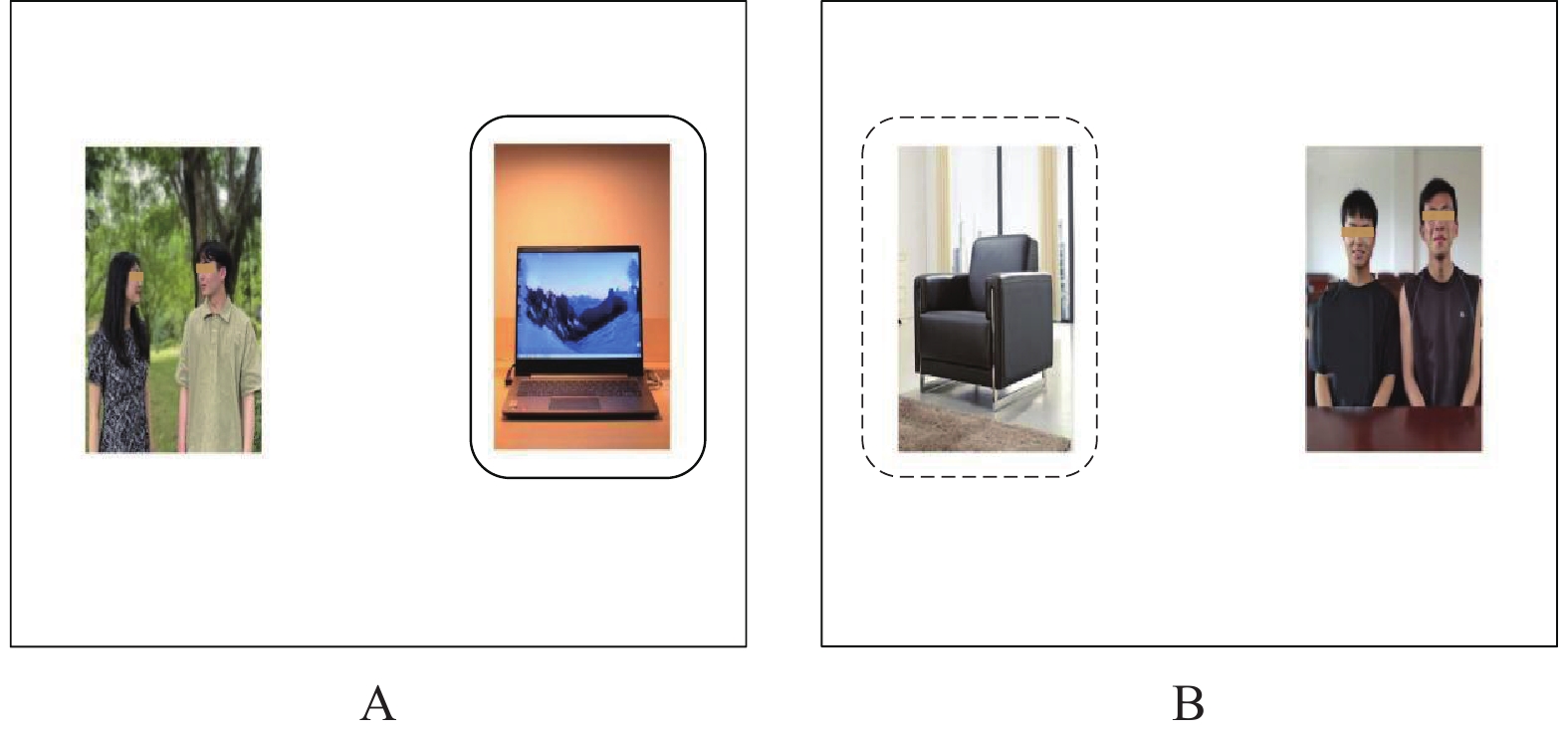
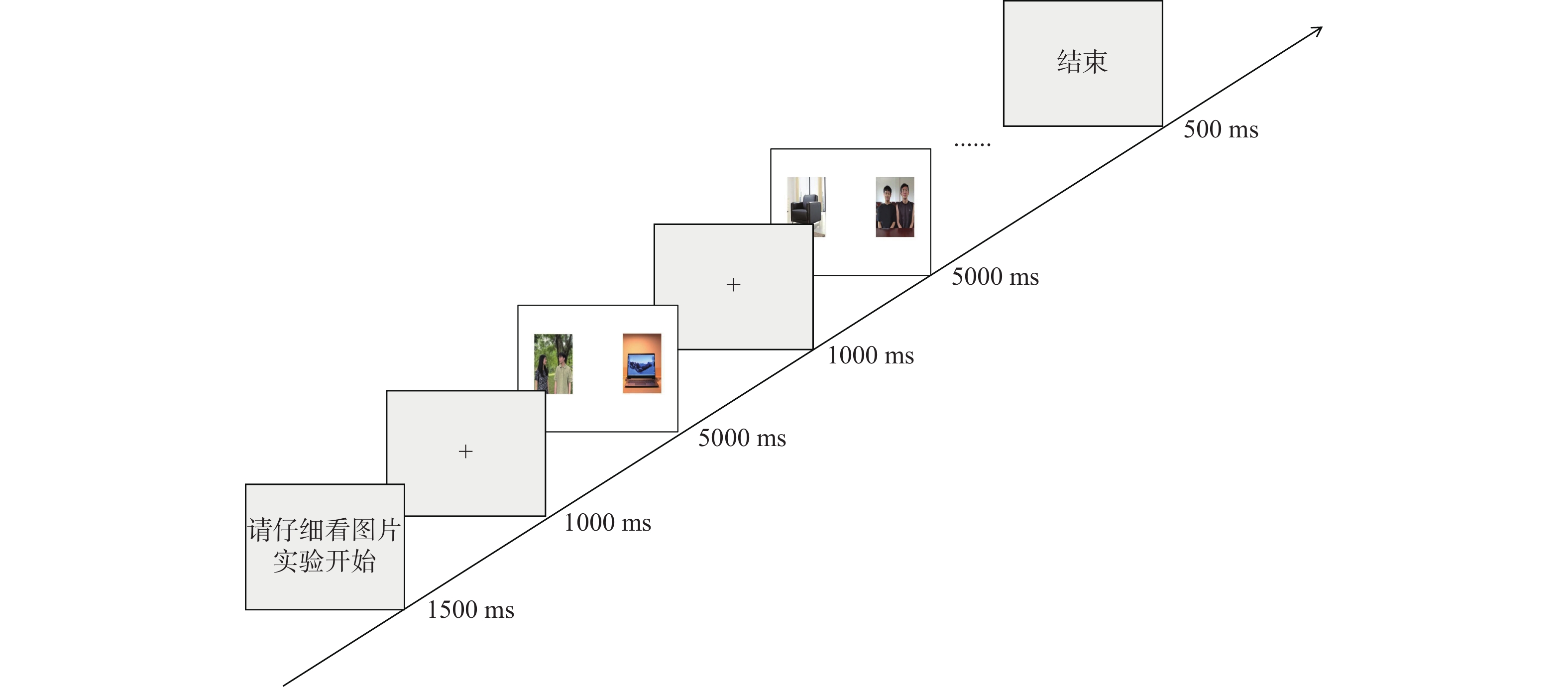
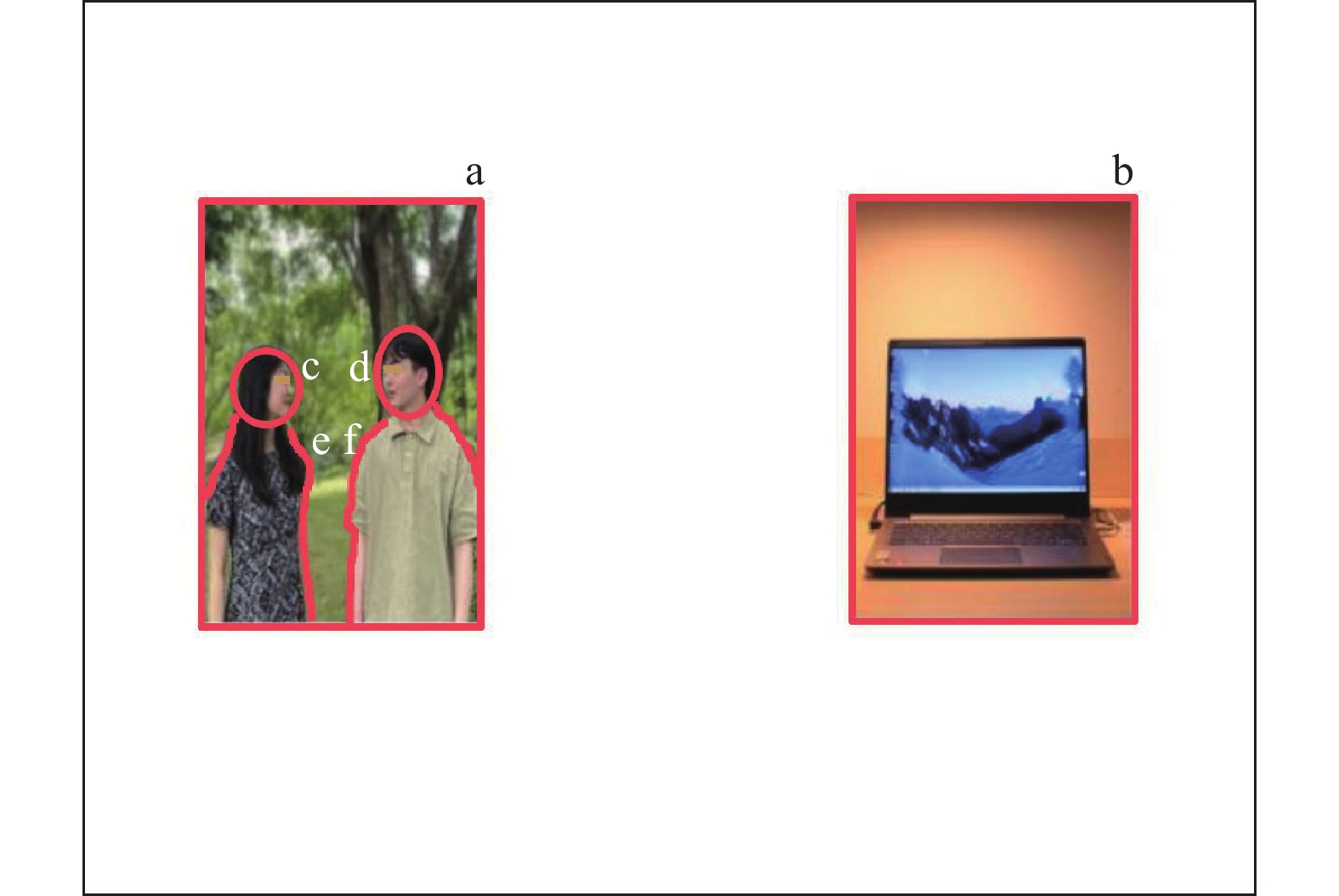
| 眼动 指标 | 被试 | 场景 信息 | 第一视角 | 第三视角 | |||
| CI | CO | CI | CO | ||||
| 凝视时间 (ms) | TD | 人 | 1415±862 | 1545±1110 | 1080±714 | 982±694 | |
| 物 | 820±393 | 1070±757 | 1020±747 | 1382±580 | |||
| ASD | 人 | 1081±673 | 1337±711 | 1351±1019 | 1455±856 | ||
| 物 | 898±540 | 997±701 | 1028±689 | 1018±638 | |||
| 注视次数 | TD | 人 | 6.66±4.41 | 7.17±5.14 | 4.14±2.40 | 4.45±2.45 | |
| 物 | 3.92±1.60 | 4.33±2.71 | 4.81±3.24 | 5.92±2.66 | |||
| ASD | 人 | 4.47±2.58 | 5.84±2.94 | 6.64±4.68 | 6.94±4.07 | ||
| 物 | 3.99±2.65 | 4.07±2.41 | 4.64±2.90 | 4.42±2.44 | |||
| 眼动 指标 | 被试 | 场景 信息 | 第一视角 | 第三视角 | |||
| CI | CO | CI | CO | ||||
| 凝视时间 (ms) | TD | 人 | 1415±862 | 1545±1110 | 1080±714 | 982±694 | |
| 物 | 820±393 | 1070±757 | 1020±747 | 1382±580 | |||
| ASD | 人 | 1081±673 | 1337±711 | 1351±1019 | 1455±856 | ||
| 物 | 898±540 | 997±701 | 1028±689 | 1018±638 | |||
| 注视次数 | TD | 人 | 6.66±4.41 | 7.17±5.14 | 4.14±2.40 | 4.45±2.45 | |
| 物 | 3.92±1.60 | 4.33±2.71 | 4.81±3.24 | 5.92±2.66 | |||
| ASD | 人 | 4.47±2.58 | 5.84±2.94 | 6.64±4.68 | 6.94±4.07 | ||
| 物 | 3.99±2.65 | 4.07±2.41 | 4.64±2.90 | 4.42±2.44 | |||
| 被试 | 兴趣区 | 第一视角 | 第三视角 | |||
| CI | CO | CI | CO | |||
| TD | 身体 | 1.00±0.85 | 1.12±1.07 | 1.17±0.55 | 2.86±1.36 | |
| 头部 | 4.53±1.54 | 3.12±2.73 | 8.51±3.24 | 6.67±2.22 | ||
| ASD | 身体 | 1.90±1.52 | 1.68±1.44 | 1.22±0.63 | 2.35±1.88 | |
| 头部 | 4.85±0.93 | 3.97±1.45 | 6.16±1.84 | 3.92±1.34 | ||
| 被试 | 兴趣区 | 第一视角 | 第三视角 | |||
| CI | CO | CI | CO | |||
| TD | 身体 | 1.00±0.85 | 1.12±1.07 | 1.17±0.55 | 2.86±1.36 | |
| 头部 | 4.53±1.54 | 3.12±2.73 | 8.51±3.24 | 6.67±2.22 | ||
| ASD | 身体 | 1.90±1.52 | 1.68±1.44 | 1.22±0.63 | 2.35±1.88 | |
| 头部 | 4.85±0.93 | 3.97±1.45 | 6.16±1.84 | 3.92±1.34 | ||
|
汪巧玲. (2013). 视线方向对自闭症儿童目光加工的影响(硕士学位论文). 闽南师范大学, 漳州.
|
|
|
王崇颖, 刘云婷, 孙凌. 社交情境类型对孤独症儿童响应性共同注意心理过程的影响. 心理与行为研究, 2024, 22 (4): 538- 544.
DOI |
|
|
魏玲, 王静, 余宥依, 刘人豪, 白学军. 自闭症谱系障碍儿童对面孔加工的同龄偏向效应. 心理科学, 2023, 46 (1): 72- 81.
DOI |
|
|
魏玲, 余宥依, 刘人豪, 程一智. 场景的年龄特征会影响自闭症谱系障碍儿童的注视模式. 心理与行为研究, 2020, 18 (5): 679- 685.
DOI |
|
|
袁甜, 纪皓月, 于祎雯, 王莉, 蒋毅. 面孔社会信息对注视提示效应的调制及其神经机制. 生物化学与生物物理进展, 2022, 49 (6): 986- 1003.
DOI |
|
|
American Psychiatric Association. (2013). Diagnostic and statistical manual of mental disorders: DSM-5™ (5th ed.). Washington, DC: American Psychiatric Publishing, Inc.
|
|
|
Baron-Cohen, S., & Wheelwright, S. ‘Obsessions’ in children with autism or Asperger syndrome: Content analysis in terms of core domains of cognition. The British Journal of Psychiatry, 1999, 175 (5): 484- 490.
DOI |
|
|
Brown, C. E., Bernardin, C. J., Beauchamp, M. T., Kanne, S. M., & Nowell, K. P. More similar than different: Characterizing special interests in autistic boys and girls based on caregiver report. Autism Research, 2024, 17 (11): 2333- 2345.
DOI |
|
|
Chawarska, K., Macari, S., & Shic, F. Decreased spontaneous attention to social scenes in 6-month-old infants later diagnosed with autism spectrum disorders. Biological Psychiatry, 2013, 74 (3): 195- 203.
DOI |
|
|
Chevallier, C., Kohls, G., Troiani, V., Brodkin, E. S., & Schultz, R. T. The social motivation theory of autism. Trends in Cognitive Sciences, 2012, 16 (4): 231- 239.
DOI |
|
|
Chita-Tegmark, M. Social attention in ASD: A review and meta-analysis of eye-tracking studies. Research in Developmental Disabilities, 2016, 48, 79- 93.
DOI |
|
|
Dubey, I., Ropar, D., & de C Hamilton, A. F. Measuring the value of social engagement in adults with and without autism. Molecular Autism, 2015, 6 (1): 35.
DOI |
|
|
Dunn, L. M., & Dunn, D. M. (2007). Peabody picture vocabulary test (4th ed.). Minneapolis, MN: NCS Pearson, Inc.
|
|
|
Falck-Ytter, T., & von Hofsten, C. How special is social looking in ASD: A review. Progress in Brain Research, 2011, 189, 209- 222.
|
|
|
Fletcher-Watson, S., Leekam, S. R., Benson, V., Frank, M. C., & Findlay, J. M. Eye-movements reveal attention to social information in autism spectrum disorder. Neuropsychologia, 2009, 47 (1): 248- 257.
DOI |
|
|
Frazier, T. W., Strauss, M., Klingemier, E. W., Zetzer, E. E., Hardan, A. Y., Eng, C., & Youngstrom, E. A. A meta-analysis of gaze differences to social and nonsocial information between individuals with and without autism. Journal of the American Academy of Child & Adolescent Psychiatry, 2017, 56 (7): 546- 555.
|
|
|
Harrison, A. J., & Slane, M. M. Examining how types of object distractors distinctly compete for facial attention in autism spectrum disorder using eye tracking. Journal of Autism and Developmental Disorders, 2020, 50 (3): 924- 934.
DOI |
|
|
Hernandez, R. N., Feinberg, R. L., Vaurio, R., Passanante, N. M., Thompson, R. E., & Kaufmann, W. E. (2009). Autism spectrum disorder in fragile X syndrome: A longitudinal evaluation. American Journal of Medical Genetics Part A, 149(6), 1125–1137.
|
|
|
Higashida, N. (2013). The reason I jump: The inner voice of a thirteen-year-old boy with autism. New York: Random House.
|
|
|
Klin, A., Lin, D. J., Gorrindo, P., Ramsay, G., & Jones, W. Two-year-olds with autism orient to non-social contingencies rather than biological motion. Nature, 2009, 459 (7244): 257- 261.
DOI |
|
|
Kuhn, G., Benson, V., Fletcher-Watson, S., Kovshoff, H., McCormick, C. A., Kirkby, J., & Leekam, S. R. Eye movements affirm: Automatic overt gaze and arrow cueing for typical adults and adults with autism spectrum disorder. Experimental Brain Research, 2010, 201 (2): 155- 165.
DOI |
|
|
Latrèche, K., Kojovic, N., Franchini, M., & Schaer, M. Attention to face as a predictor of developmental change and treatment outcome in young children with autism spectrum disorder. Biomedicines, 2021, 9 (8): 942.
DOI |
|
|
Leekam, S. R., Prior, M. R., & Uljarevic, M. Restricted and repetitive behaviors in autism spectrum disorders: A review of research in the last decade. Psychological Bulletin, 2011, 137 (4): 562- 593.
DOI |
|
|
Moriuchi, J. M., Klin, A., & Jones, W. Mechanisms of diminished attention to eyes in autism. American Journal of Psychiatry, 2017, 174 (1): 26- 35.
DOI |
|
|
Mouga, S., Castelhano, J., Café, C., Sousa, D., Duque, F., Oliveira, G., & Castelo-Branco, M. Social attention deficits in children with autism spectrum disorder: Task dependence of objects vs. faces observation bias. Frontiers in Psychiatry, 2021, 12, 640599.
DOI |
|
|
Peng, X. Y., Li, T. B., Liu, G. F., Ni, W., & Yi, L. Enhanced neural synchronization during social communications between dyads with high autistic traits. Cerebral Cortex, 2024, 34 (13): 104- 111.
DOI |
|
|
Saitovitch, A., Bargiacchi, A., Chabane, N., Phillipe, A., Brunelle, F., Boddaert, N., ... Zilbovicius, M. Studying gaze abnormalities in autism: Which type of stimulus to use. Open Journal of Psychiatry, 2013, 3, 32- 38.
|
|
|
Schopler, E., Reichler, R. J., DeVellis, R. F., & Daly, K. Toward objective classification of childhood autism: Childhood Autism Rating Scale (CARS). Journal of Autism and Developmental Disorders, 1980, 10 (1): 91- 103.
DOI |
|
|
Shic, F., Bradshaw, J., Klin, A., Scassellati, B., & Chawarska, K. Limited activity monitoring in toddlers with autism spectrum disorder. Brain Research, 2011, 1380, 246- 254.
DOI |
|
|
Su, L. F., Li, Y. Y., Wen, M. Y., Zhao, Y. Q., Yang, F., & Wei, L. (2025). An fNIRS study of the effects of sound in real scenes on joint attention among individuals with autistic traits in China. Psychological Reports. Advance online publication. https://doi.org/10.1177/00332941251323260
|
|
|
Tanaka, J. W., & Sung, A. The “eye avoidance” hypothesis of autism face processing. Journal of Autism and Developmental Disorders, 2015, 46 (5): 1538- 1552.
|
|
|
Wang, Y. G., Peng, S., Shao, Z., & Feng, T. Y. Active viewing facilitates gaze to the eye region in young children with autism spectrum disorder. Journal of Autism and Developmental Disorders, 2023, 53 (3): 1082- 1090.
DOI |
|
|
Wieckowski, A. T., Hamner, T., Nanovic, S., Porto, K. S., Coulter, K. L., Eldeeb, S. Y., ... Robins, D. L. Early and repeated screening detects autism spectrum disorder. The Journal of Pediatrics, 2021, 234, 227- 235.
DOI |
|
|
Yi, L., Fan, Y. B., Quinn, P. C., Feng, C., Huang, D., Li, J., … Lee, K. Abnormality in face scanning by children with autism spectrum disorder is limited to the eye region: Evidence from multi-method analyses of eye tracking data. Journal of Vision, 2013, 13 (10): 5.
DOI |
|
|
Yi, L., Wang, Q. D., Song, C., & Han, Z. R. Hypo- or hyperarousal? The mechanisms underlying social information processing in autism. Child Development Perspectives, 2022, 16 (4): 215- 222.
DOI |
| [1] | Zhu CHEN, Li FANG, Bingbing LI. The Relationship Between Future Time Perspective and Sleep Quality of High School Students: Multiple Mediation of Perceived Stress and Coping Style [J]. Studies of Psychology and Behavior, 2026, 24(2): 220-226. |
| [2] | Xiaoxiao WANG, Yimeng WANG, Fengyan WANG. Awe and Wise Reasoning: The Differential Mechanism of Positive and Negative Valence [J]. Studies of Psychology and Behavior, 2025, 23(1): 17-24. |
| [3] | Haoyue XIAO, Shan ZHANG, Haiping HAO, Houchao LYU. The Longitudinal Relationship Between Internet Addiction and Future Time Perspective Among High School Students: The Mediating Role of Depression [J]. Studies of Psychology and Behavior, 2024, 22(5): 673-681. |
| [4] | Chongying WANG, Yunting LIU, Ling SUN. How Social Scenes Impact Responding Joint Attention Process in Children with Autism Spectrum Disorder [J]. Studies of Psychology and Behavior, 2024, 22(4): 538-544. |
| [5] | Chengshi LI, Hongjun JIANG, Jinsheng HU. Attention Bias of Emotional Body Language in Autism Spectrum Disorders [J]. Studies of Psychology and Behavior, 2023, 21(3): 296-303. |
| [6] | ZHOU Song, LENG Man, JIANG Tao, SUN Yihan, GUAN Qingli, LI Shiyi. Perspective Taking in Gaze-Liking-Effect [J]. Studies of Psychology and Behavior, 2023, 21(2): 185-192. |
| [7] | ZHANG Zhen. The Relationship Between Narcissism and Aggression: The Moderating Effects of Perspective Taking and Empathy Concern [J]. Studies of Psychology and Behavior, 2021, 19(1): 131-136. |
| [8] | Wei Ling, Yu Youyi, Liu Renhao, Cheng Yizhi. The Age Characteristics of the Scene Affect the Gaze Pattern of Children with ASD [J]. Studies of Psychology and Behavior, 2020, 18(5): 679-685. |
| [9] | ZHANG Zhen, QI Chunhui, YANG Shaofeng, ZHAO Zhijun, GAO Xiaolei, XIONG Jianping. Influence of Value Orientation on Generalized Trust: Analysis of Multiple Mediation Effect [J]. Studies of Psychology and Behavior, 2019, 17(1): 63-67,90. |
| [10] | ZUO Tingting, HU Qingfen. The Automaticity of Adults' Spatial Perspective-taking [J]. Studies of Psychology and Behavior, 2018, 16(2): 170-179. |
| [11] | Wei Ling, Lian Rong, Yu Youyi, Sun Chao. Eye Movements of Attention Patterns in Different Social Scenes for Children with Autism Spectrum Disorders [J]. Studies of Psychology and Behavior, 2017, 15(4): 536-543. |
| [12] | Zuo Enling, Zhang Xiangkui, Tian Jinlai, Zhao Yuetong. The Characteristics and Differences of Social Information Processing of Different Subtypes of Social Withdrawal Children in Four Story Situations [J]. Studies of Psychology and Behavior, 2017, 15(4): 506-514. |
| [13] | Chen Shunsen, Lin Caiyun, Ren Jie. Motion Features of Target Stimuli Modulate Smooth Pursuit Eye Movement of Children with Autism Spectrum Disorder [J]. Studies of Psychology and Behavior, 2017, 15(3): 392-399. |
| [14] | Li Yaqiang, Chen Chaoyang, Su Yongqiang, Yang Linlin, Yang Yong. The Effects of Power on Social Perspective Taking: Moderating of Power Motivation [J]. Studies of Psychology and Behavior, 2016, 14(3): 399-405. |
| [15] | Guo Wenbin, Fang Junming. The Mapping Knowledge Domains Based on Hotspots Research of Face Recognition of the ASD Patients in China [J]. Studies of Psychology and Behavior, 2014, 12(4): 490-495. |
| Viewed | ||||||
|
Full text |
|
|||||
|
Abstract |
|
|||||
