
Studies of Psychology and Behavior ›› 2026, Vol. 24 ›› Issue (1): 40-50.DOI: 10.12139/j.1672-0628.2026.01.005
• ? • Previous Articles Next Articles
Yimeng WANG1, Hao CHENG*,2( )
)
Received:2024-12-30
Online:2026-01-20
Published:2026-01-20
Contact:
Hao CHENG
王伊萌1, 程昊*,2()
通讯作者:
程昊
基金资助:Yimeng WANG, Hao CHENG. Personal Growth Initiative and Mental Health Among College Students: A Wisdom-Based Path Analysis[J]. Studies of Psychology and Behavior, 2026, 24(1): 40-50.
王伊萌, 程昊. 个人成长主动性与大学生心理健康:智慧的路径分析[J]. 心理与行为研究, 2026, 24(1): 40-50.
Add to citation manager EndNote|Ris|BibTeX
URL: https://psybeh.tjnu.edu.cn/EN/10.12139/j.1672-0628.2026.01.005
| 变量 | M | SD | 1 | 2 | 3 | 4 | 5 | 6 | 7 | 8 | 9 | 10 | 11 | 12 | 13 | 14 | 15 | 16 | 17 | 18 | 19 | 20 | 21 | 22 |
| 1.年龄 | 20.50 | 1.48 | ||||||||||||||||||||||
| 2.性别 | –0.00 | |||||||||||||||||||||||
| 3.社会阶层 | 4.77 | 2.49 | –0.09*** | −0.01 | ||||||||||||||||||||
| 4.计划性 | 4.38 | 0.90 | 0.05 | 0.03 | 0.01 | |||||||||||||||||||
| 5.对改变的准备 | 4.41 | 0.88 | 0.05 | 0.02 | −0.00 | 0.90*** | ||||||||||||||||||
| 6.主动行为 | 4.57 | 0.87 | 0.03 | 0.05 | 0.04 | 0.84*** | 0.81*** | |||||||||||||||||
| 7.利用资源 | 4.51 | 0.86 | 0.03 | 0.06* | −0.00 | 0.78*** | 0.76*** | 0.79*** | ||||||||||||||||
| 8.个人成长主动性 | 4.46 | 0.82 | 0.04 | 0.04 | 0.01 | 0.96*** | 0.94*** | 0.93*** | 0.88*** | |||||||||||||||
| 9.焦虑 | 40.63 | 9.73 | −0.04 | −0.03 | −0.00 | −0.45*** | −0.45*** | −0.46*** | −0.41*** | −0.48*** | ||||||||||||||
| 10.抑郁 | 42.73 | 11.16 | −0.05 | −0.02 | −0.01 | −0.56*** | −0.55*** | −0.56*** | −0.50*** | −0.59*** | 0.81*** | |||||||||||||
| 11.生活满意度 | 3.66 | 0.88 | −0.02 | −0.01 | 0.03 | 0.54*** | 0.51*** | 0.49*** | 0.46*** | 0.54*** | −0.35*** | −0.47*** | ||||||||||||
| 12.主观幸福感 | 4.45 | 1.05 | 0.00 | 0.07** | 0.02 | 0.65*** | 0.63*** | 0.65*** | 0.59*** | 0.68*** | −0.54*** | −0.68*** | 0.67*** | |||||||||||
| 13.一般幸福感 | 4.05 | 0.88 | −0.01 | 0.04 | 0.02 | 0.66*** | 0.63*** | 0.63*** | 0.58*** | 0.67*** | −0.50*** | −0.64*** | 0.90*** | 0.93*** | ||||||||||
| 14.仁爱 | 5.09 | 0.72 | 0.06* | 0.07** | −0.00 | 0.51*** | 0.50*** | 0.56*** | 0.53*** | 0.56*** | −0.44*** | −0.52*** | 0.29*** | 0.45*** | 0.41*** | |||||||||
| 15.公正 | 4.61 | 0.70 | 0.01 | 0.03 | −0.00 | 0.48*** | 0.48*** | 0.49*** | 0.45*** | 0.51*** | −0.40*** | −0.46*** | 0.27*** | 0.39*** | 0.37*** | 0.69*** | ||||||||
| 16.节制 | 4.81 | 0.72 | 0.06* | 0.08** | 0.01 | 0.62*** | 0.60*** | 0.66*** | 0.58*** | 0.66*** | −0.49*** | −0.58*** | 0.32*** | 0.51*** | 0.46*** | 0.74*** | 0.72*** | |||||||
| 17.责任 | 4.15 | 0.90 | 0.06* | −0.02 | 0.01 | 0.63*** | 0.60*** | 0.59*** | 0.49*** | 0.63*** | −0.37*** | −0.50*** | 0.49*** | 0.51*** | 0.55*** | 0.49*** | 0.50*** | 0.56*** | ||||||
| 18.诚信 | 4.79 | 0.74 | −0.00 | −0.00 | −0.00 | 0.42*** | 0.43*** | 0.46*** | 0.45*** | 0.47*** | −0.30*** | −0.38*** | 0.23*** | 0.32*** | 0.30*** | 0.73*** | 0.63*** | 0.62*** | 0.45*** | |||||
| 19.辩证思维 | 5.14 | 0.72 | 0.05 | 0.05 | 0.01 | 0.42*** | 0.43*** | 0.47*** | 0.45*** | 0.47*** | −0.40*** | −0.46*** | 0.19*** | 0.34*** | 0.30*** | 0.78*** | 0.66*** | 0.68*** | 0.39*** | 0.72*** | ||||
| 20.反省思维 | 4.58 | 0.75 | 0.07** | −0.00 | −0.01 | 0.56*** | 0.57*** | 0.55*** | 0.51*** | 0.59*** | −0.30*** | −0.39*** | 0.26*** | 0.34*** | 0.33*** | 0.61*** | 0.58*** | 0.62*** | 0.52*** | 0.62*** | 0.62*** | |||
| 21.创新思维 | 4.18 | 0.78 | 0.02 | −0.09*** | −0.02 | 0.49*** | 0.49*** | 0.45*** | 0.42*** | 0.50*** | −0.19*** | −0.31*** | 0.30*** | 0.32*** | 0.34*** | 0.44*** | 0.39*** | 0.41*** | 0.50*** | 0.52*** | 0.44*** | 0.65*** | ||
| 22.批判思维 | 3.82 | 0.62 | 0.03 | −0.08** | −0.02 | 0.37*** | 0.37*** | 0.31*** | 0.28*** | 0.37*** | −0.11*** | −0.19*** | 0.22*** | 0.21*** | 0.24*** | 0.31*** | 0.33*** | 0.29*** | 0.41*** | 0.39*** | 0.32*** | 0.51*** | 0.70*** | |
| 23.智慧 | 4.57 | 0.57 | 0.05 | 0.00 | −0.00 | 0.65*** | 0.65*** | 0.66*** | 0.60*** | 0.69*** | −0.43*** | −0.54*** | 0.37*** | 0.49*** | 0.48*** | 0.83*** | 0.79*** | 0.81*** | 0.70*** | 0.82*** | 0.81*** | 0.83*** | 0.73*** | 0.61*** |
| 变量 | M | SD | 1 | 2 | 3 | 4 | 5 | 6 | 7 | 8 | 9 | 10 | 11 | 12 | 13 | 14 | 15 | 16 | 17 | 18 | 19 | 20 | 21 | 22 |
| 1.年龄 | 20.50 | 1.48 | ||||||||||||||||||||||
| 2.性别 | –0.00 | |||||||||||||||||||||||
| 3.社会阶层 | 4.77 | 2.49 | –0.09*** | −0.01 | ||||||||||||||||||||
| 4.计划性 | 4.38 | 0.90 | 0.05 | 0.03 | 0.01 | |||||||||||||||||||
| 5.对改变的准备 | 4.41 | 0.88 | 0.05 | 0.02 | −0.00 | 0.90*** | ||||||||||||||||||
| 6.主动行为 | 4.57 | 0.87 | 0.03 | 0.05 | 0.04 | 0.84*** | 0.81*** | |||||||||||||||||
| 7.利用资源 | 4.51 | 0.86 | 0.03 | 0.06* | −0.00 | 0.78*** | 0.76*** | 0.79*** | ||||||||||||||||
| 8.个人成长主动性 | 4.46 | 0.82 | 0.04 | 0.04 | 0.01 | 0.96*** | 0.94*** | 0.93*** | 0.88*** | |||||||||||||||
| 9.焦虑 | 40.63 | 9.73 | −0.04 | −0.03 | −0.00 | −0.45*** | −0.45*** | −0.46*** | −0.41*** | −0.48*** | ||||||||||||||
| 10.抑郁 | 42.73 | 11.16 | −0.05 | −0.02 | −0.01 | −0.56*** | −0.55*** | −0.56*** | −0.50*** | −0.59*** | 0.81*** | |||||||||||||
| 11.生活满意度 | 3.66 | 0.88 | −0.02 | −0.01 | 0.03 | 0.54*** | 0.51*** | 0.49*** | 0.46*** | 0.54*** | −0.35*** | −0.47*** | ||||||||||||
| 12.主观幸福感 | 4.45 | 1.05 | 0.00 | 0.07** | 0.02 | 0.65*** | 0.63*** | 0.65*** | 0.59*** | 0.68*** | −0.54*** | −0.68*** | 0.67*** | |||||||||||
| 13.一般幸福感 | 4.05 | 0.88 | −0.01 | 0.04 | 0.02 | 0.66*** | 0.63*** | 0.63*** | 0.58*** | 0.67*** | −0.50*** | −0.64*** | 0.90*** | 0.93*** | ||||||||||
| 14.仁爱 | 5.09 | 0.72 | 0.06* | 0.07** | −0.00 | 0.51*** | 0.50*** | 0.56*** | 0.53*** | 0.56*** | −0.44*** | −0.52*** | 0.29*** | 0.45*** | 0.41*** | |||||||||
| 15.公正 | 4.61 | 0.70 | 0.01 | 0.03 | −0.00 | 0.48*** | 0.48*** | 0.49*** | 0.45*** | 0.51*** | −0.40*** | −0.46*** | 0.27*** | 0.39*** | 0.37*** | 0.69*** | ||||||||
| 16.节制 | 4.81 | 0.72 | 0.06* | 0.08** | 0.01 | 0.62*** | 0.60*** | 0.66*** | 0.58*** | 0.66*** | −0.49*** | −0.58*** | 0.32*** | 0.51*** | 0.46*** | 0.74*** | 0.72*** | |||||||
| 17.责任 | 4.15 | 0.90 | 0.06* | −0.02 | 0.01 | 0.63*** | 0.60*** | 0.59*** | 0.49*** | 0.63*** | −0.37*** | −0.50*** | 0.49*** | 0.51*** | 0.55*** | 0.49*** | 0.50*** | 0.56*** | ||||||
| 18.诚信 | 4.79 | 0.74 | −0.00 | −0.00 | −0.00 | 0.42*** | 0.43*** | 0.46*** | 0.45*** | 0.47*** | −0.30*** | −0.38*** | 0.23*** | 0.32*** | 0.30*** | 0.73*** | 0.63*** | 0.62*** | 0.45*** | |||||
| 19.辩证思维 | 5.14 | 0.72 | 0.05 | 0.05 | 0.01 | 0.42*** | 0.43*** | 0.47*** | 0.45*** | 0.47*** | −0.40*** | −0.46*** | 0.19*** | 0.34*** | 0.30*** | 0.78*** | 0.66*** | 0.68*** | 0.39*** | 0.72*** | ||||
| 20.反省思维 | 4.58 | 0.75 | 0.07** | −0.00 | −0.01 | 0.56*** | 0.57*** | 0.55*** | 0.51*** | 0.59*** | −0.30*** | −0.39*** | 0.26*** | 0.34*** | 0.33*** | 0.61*** | 0.58*** | 0.62*** | 0.52*** | 0.62*** | 0.62*** | |||
| 21.创新思维 | 4.18 | 0.78 | 0.02 | −0.09*** | −0.02 | 0.49*** | 0.49*** | 0.45*** | 0.42*** | 0.50*** | −0.19*** | −0.31*** | 0.30*** | 0.32*** | 0.34*** | 0.44*** | 0.39*** | 0.41*** | 0.50*** | 0.52*** | 0.44*** | 0.65*** | ||
| 22.批判思维 | 3.82 | 0.62 | 0.03 | −0.08** | −0.02 | 0.37*** | 0.37*** | 0.31*** | 0.28*** | 0.37*** | −0.11*** | −0.19*** | 0.22*** | 0.21*** | 0.24*** | 0.31*** | 0.33*** | 0.29*** | 0.41*** | 0.39*** | 0.32*** | 0.51*** | 0.70*** | |
| 23.智慧 | 4.57 | 0.57 | 0.05 | 0.00 | −0.00 | 0.65*** | 0.65*** | 0.66*** | 0.60*** | 0.69*** | −0.43*** | −0.54*** | 0.37*** | 0.49*** | 0.48*** | 0.83*** | 0.79*** | 0.81*** | 0.70*** | 0.82*** | 0.81*** | 0.83*** | 0.73*** | 0.61*** |
| 结果变量 | 前因变量 | 效应量 | 上限精确度 | p | ||
| CE-FDH | CR-FDH | CE-FDH | CR-FDH | |||
| 抑郁 | 个人成长主动性 | 0.105 | 0.176 | 99.60 | 0.002 | 0.008 |
| 焦虑 | 0.130 | 0.178 | 99.70 | 0.005 | 0.010 | |
| 一般幸福感 | 0.300 | 0.266 | 99.40 | 0.000 | 0.000 | |
| 智慧 | 个人成长主动性 | 0.186 | 0.194 | 99.30 | 0.000 | 0.000 |
| 抑郁 | 智慧 | 0.047 | 0.026 | 99.70 | 0.002 | 0.002 |
| 焦虑 | 0.075 | 0.065 | 99.70 | 0.005 | 0.004 | |
| 一般幸福感 | 0.199 | 0.173 | 99.60 | 0.000 | 0.000 | |
| 结果变量 | 前因变量 | 效应量 | 上限精确度 | p | ||
| CE-FDH | CR-FDH | CE-FDH | CR-FDH | |||
| 抑郁 | 个人成长主动性 | 0.105 | 0.176 | 99.60 | 0.002 | 0.008 |
| 焦虑 | 0.130 | 0.178 | 99.70 | 0.005 | 0.010 | |
| 一般幸福感 | 0.300 | 0.266 | 99.40 | 0.000 | 0.000 | |
| 智慧 | 个人成长主动性 | 0.186 | 0.194 | 99.30 | 0.000 | 0.000 |
| 抑郁 | 智慧 | 0.047 | 0.026 | 99.70 | 0.002 | 0.002 |
| 焦虑 | 0.075 | 0.065 | 99.70 | 0.005 | 0.004 | |
| 一般幸福感 | 0.199 | 0.173 | 99.60 | 0.000 | 0.000 | |

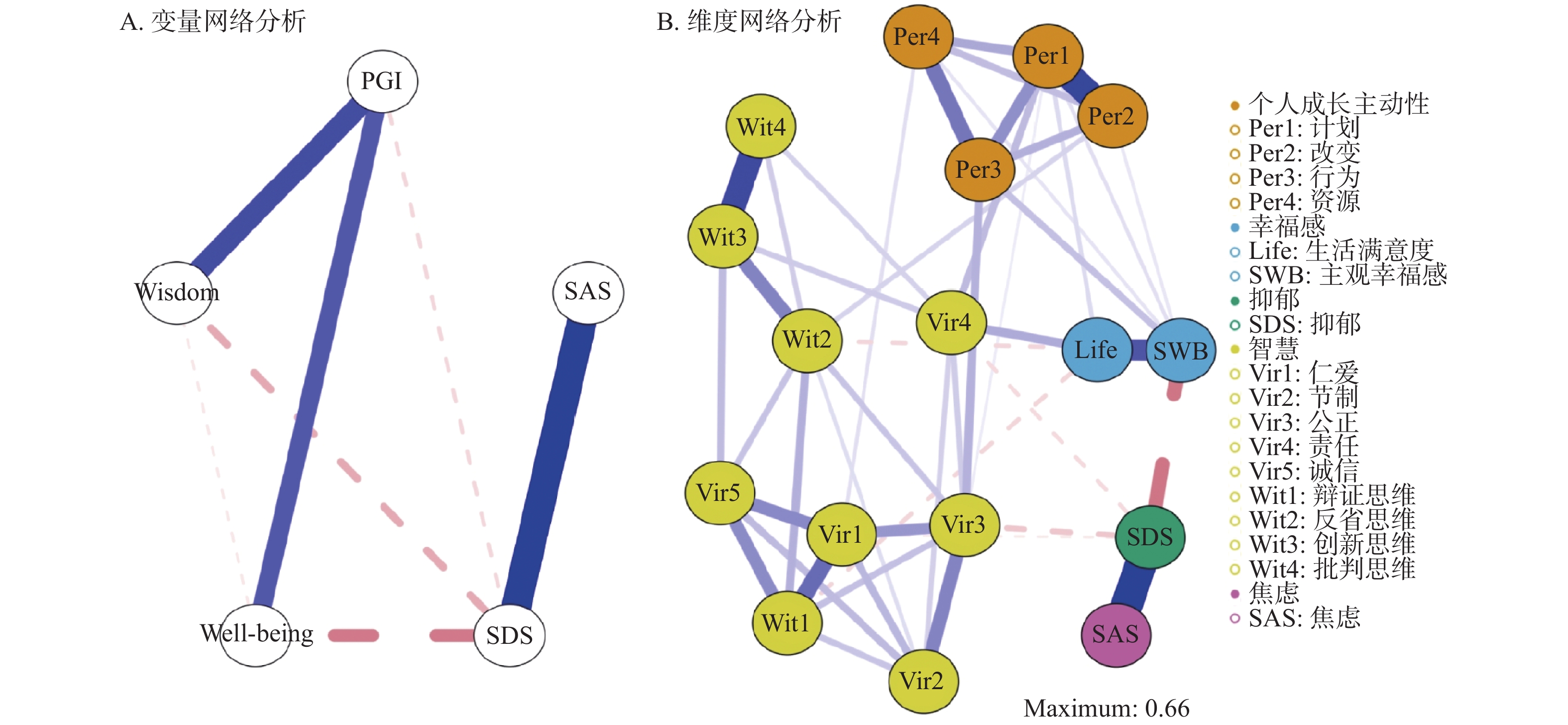
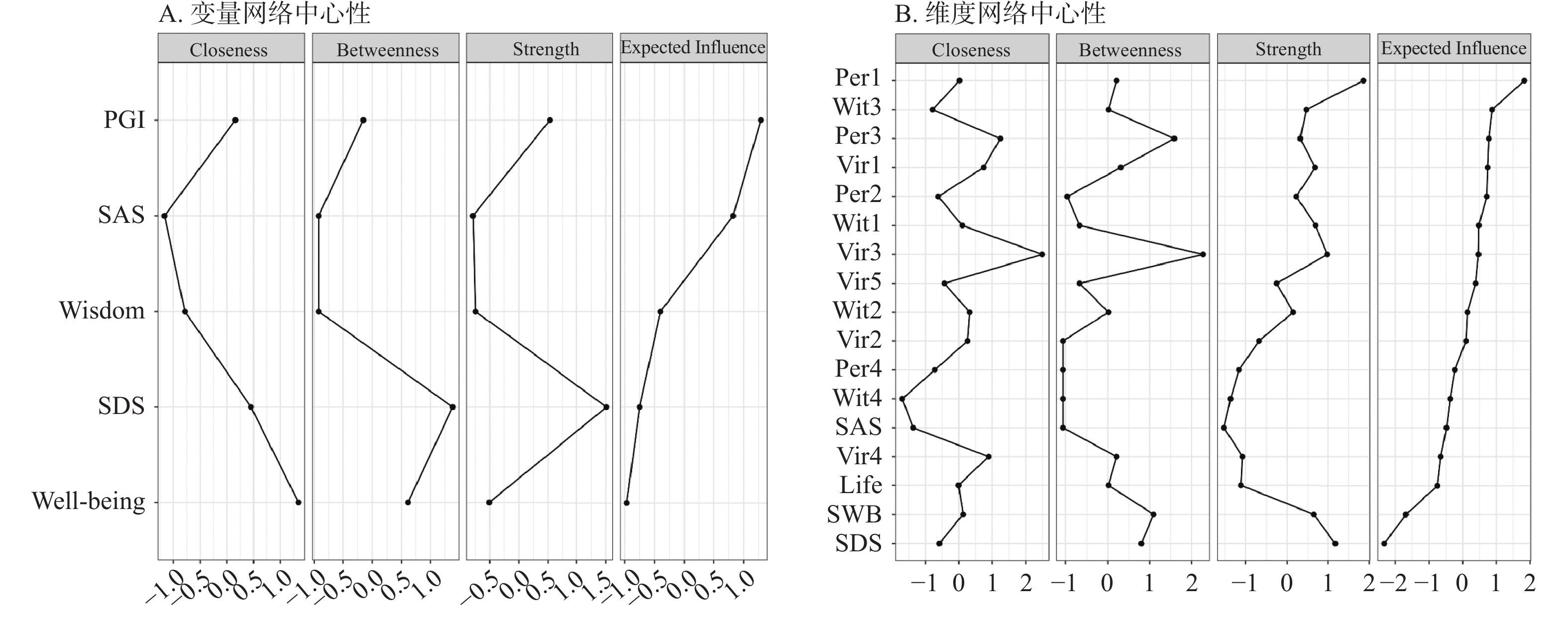
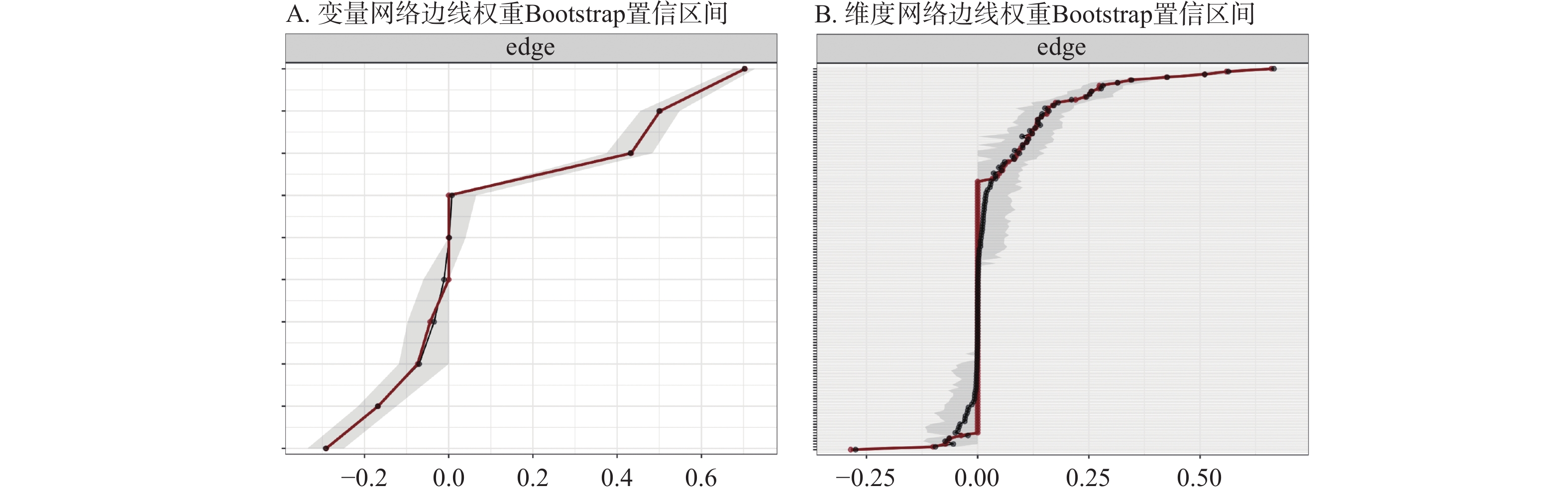
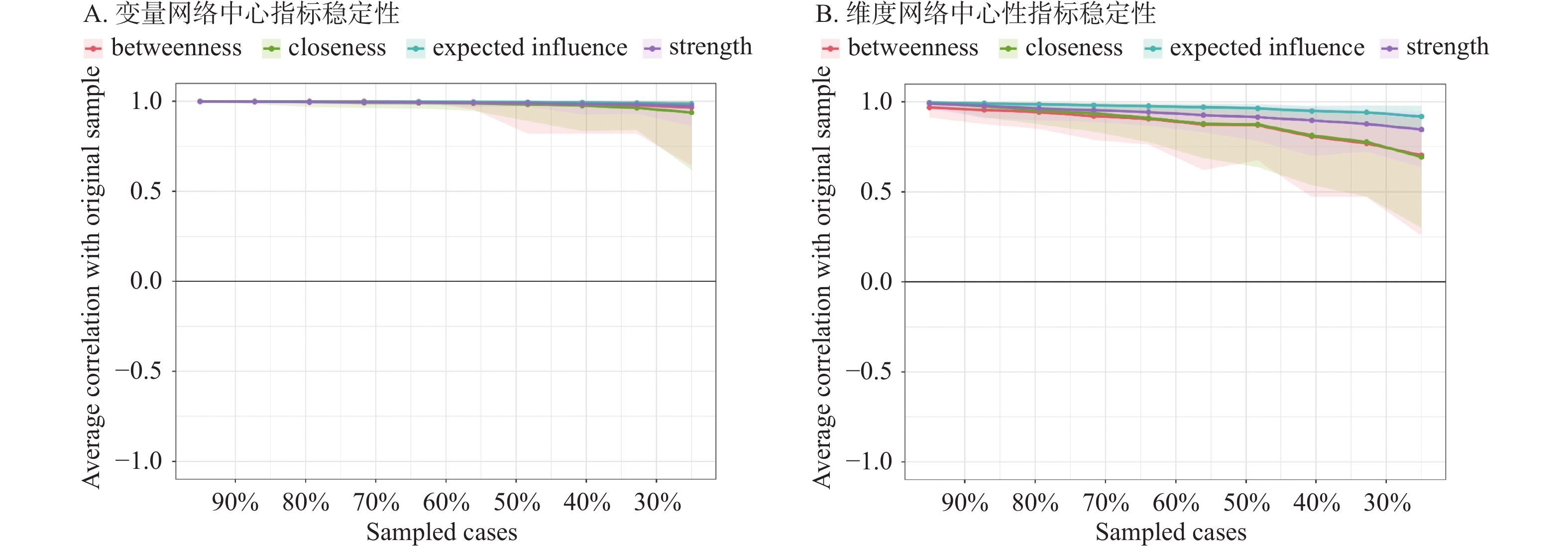
| 结果变量 | 路径 | b | SE | z | p | 95%CI | R2 |
| 一般幸福感 | 直接效应 | 0.71 | 0.03 | 20.96 | <0.001 | [0.639, 0.774] | 0.46*** |
| 间接效应 | 0.02 | 0.02 | 0.81 | 0.416 | [−0.025, 0.064] | ||
| 总效应 | 0.73 | 0.02 | 32.97 | <0.001 | [0.685, 0.770] | ||
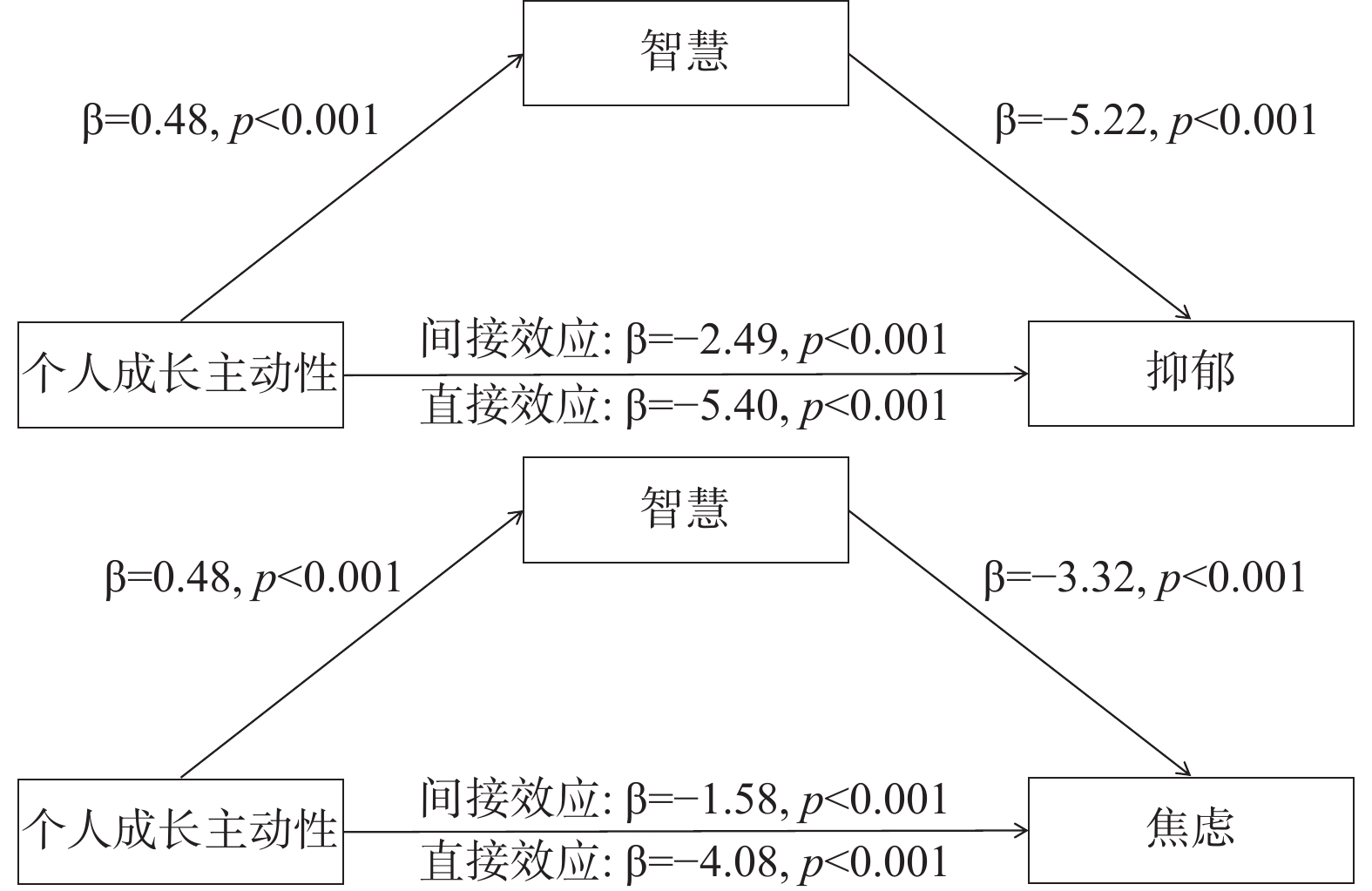
| 抑郁 | 直接效应 | −4.08 | 0.41 | −9.99 | <0.001 | [−4.923, −3.319] | 0.25*** |
| 间接效应 | −1.58 | 0.29 | −5.44 | <0.001 | [−2.159, −1.005] | ||
| 总效应 | −5.67 | 0.28 | −19.95 | <0.001 | [−6.214, −5.092] | ||
| 焦虑 | 直接效应 | −5.50 | 0.45 | −12.36 | <0.001 | [−6.378, −4.633] | 0.38*** |
| 间接效应 | −2.49 | 0.32 | −7.83 | <0.001 | [−3.144, −1.880] | ||
| 总效应 | −7.98 | 0.29 | −27.31 | <0.001 | [−8.571, −7.440] |
| 结果变量 | 路径 | b | SE | z | p | 95%CI | R2 |
| 一般幸福感 | 直接效应 | 0.71 | 0.03 | 20.96 | <0.001 | [0.639, 0.774] | 0.46*** |
| 间接效应 | 0.02 | 0.02 | 0.81 | 0.416 | [−0.025, 0.064] | ||
| 总效应 | 0.73 | 0.02 | 32.97 | <0.001 | [0.685, 0.770] | ||
| 抑郁 | 直接效应 | −4.08 | 0.41 | −9.99 | <0.001 | [−4.923, −3.319] | 0.25*** |
| 间接效应 | −1.58 | 0.29 | −5.44 | <0.001 | [−2.159, −1.005] | ||
| 总效应 | −5.67 | 0.28 | −19.95 | <0.001 | [−6.214, −5.092] | ||
| 焦虑 | 直接效应 | −5.50 | 0.45 | −12.36 | <0.001 | [−6.378, −4.633] | 0.38*** |
| 间接效应 | −2.49 | 0.32 | −7.83 | <0.001 | [−3.144, −1.880] | ||
| 总效应 | −7.98 | 0.29 | −27.31 | <0.001 | [−8.571, −7.440] |
|
傅绪荣, 汪凤炎. 整合智慧量表的编制及信效度检验. 心理学探新, 2020, 40 (1): 50- 57.
|
|
|
傅绪荣, 汪凤炎, 魏新东. 智慧问题解决能力的结构与测量. 心理研究, 2021, 14 (4): 305- 314.
|
|
|
傅绪荣, 魏新东, 王予灵, 汪凤炎. 智慧与幸福感的关系: 基于多元幸福取向的视角. 心理科学进展, 2019, 27 (3): 544- 556.
|
|
|
孙灯勇, 王倩, 王梅, 满丛英. 个人成长主动性的概念、测量及影响. 心理科学进展, 2014, 22 (9): 1413- 1422.
|
|
|
汪凤炎, 郑红. (2022). 智慧心理学. 上海: 上海教育出版社.
|
|
|
王宝鑫. 身体社会学视域下“脆皮大学生”现象省思. 中国青年研究, 2024 (11): 88- 94.
|
|
|
王伊萌, 王振东, 汪凤炎. 正念与大学生智慧推理的关系: 个人成长主动性的部分中介作用. 心理科学, 2022, 45 (1): 54- 60.
|
|
|
王伊萌, 王振东, 汪凤炎. “当局者迷”破解之道: 智慧的正念干预研究——个人成长主动性与反思的作用. 心理发展与教育, 2024, 40 (1): 142- 152.
|
|
|
张凯丽, 郑红, 汪凤炎. “一个序曲”与“两个阶段”: 智慧心理学近50年研究历程的写照. 心理科学进展, 2023, 31 (5): 721- 735.
|
|
|
周浩, 龙立荣. 共同方法偏差的统计检验与控制方法. 心理科学进展, 2004, 12 (6): 942- 950.
|
|
|
Adler, N. E., Epel, E. S., Castellazzo, G., & Ickovics, J. R. Relationship of subjective and objective social status with psychological and physiological functioning: Preliminary data in healthy, White women. Health Psychology, 2000, 19 (6): 586- 592.
DOI |
|
|
Ardelt, M. Are older adults wiser than college students? A comparison of two age cohorts. Journal of Adult Development, 2010, 17 (4): 193- 207.
DOI |
|
|
Asif, A., Yasin, H., & Iqrar, L. Personal growth initiative, resilience and psychological wellbeing in young adults of Pakistan. Journal of Asian Development Studies, 2024, 13 (1): 412- 421.
DOI |
|
|
Baltes, P. B., & Staudinger, U. M. Wisdom: A metaheuristic (pragmatic) to orchestrate mind and virtue toward excellence. American Psychologist, 2000, 55 (1): 122- 136.
DOI |
|
|
Bech, P., Gudex, C., & Johansen, K. S. The WHO (Ten) Well-Being Index: Validation in diabetes. Psychotherapy and Psychosomatics, 1996, 65 (4): 183- 190.
DOI |
|
|
Cohen, L., Manion, L., & Morrison, K. (2017). Tests. In Research methods in education (8th ed., pp. 563–585). London: Routledge.
|
|
|
Daniels, L. R., Boehnlein, J., & McCallion, P. Aging, depression, and wisdom: A pilot study of life-review intervention and PTSD treatment with two groups of Vietnam veterans. Journal of Gerontological Social Work, 2015, 58 (4): 420- 436.
DOI |
|
|
de Freitas, C. P. P., Damásio, B. F., Tobo, P. R., Kamei, H. H., & Koller, S. H. Revisión sistemática sobre iniciativa de crecimiento personal. Anales de Psicología/Annals of Psychology, 2016, 32 (3): 770- 782.
|
|
|
Deci, E. L., & Ryan, R. M. The “what” and “why” of goal pursuits: Human needs and the self-determination of behavior. Psychological Inquiry, 2000, 11 (4): 227- 268.
DOI |
|
|
Diener, E., Diener, M., & Diener, C. Factors predicting the subjective well-being of nations. Journal of Personality and Social Psychology, 1995, 69 (5): 851- 864.
DOI |
|
|
Diener, E., Emmons, R. A., Larsen, R. J., & Griffin, S. The satisfaction with life scale. Journal of Personality Assessment, 1985, 49 (1): 71- 75.
DOI |
|
|
Dul, J., van der Laan, E., & Kuik, R. A statistical significance test for necessary condition analysis. Organizational Research Methods, 2020, 23 (2): 385- 395.
DOI |
|
|
Effendy, N., & Widianingtanti, L. T. Peran meaning dan personal growth initiative (PGI) pada pandemi COVID-19 (tatanan dunia baru). Buletin Psikologi, 2020, 28 (2): 166- 181.
DOI |
|
|
Etezadi, S., & Pushkar, D. Why are wise people happier? An explanatory model of wisdom and emotional well-being in older adults. Journal of Happiness Studies, 2013, 14 (3): 929- 950.
DOI |
|
|
Ghaderi, F., Kajbaf, M. B., & Shokrollahi, M. The structural relationship of personality virtues, authentic personality and personal growth initiative with wisdom in students. Research in Psychological Health, 2018, 11 (4): 1- 15.
|
|
|
Grossmann, I., Oakes, H., & Santos, H. C. Wise reasoning benefits from emodiversity, irrespective of emotional intensity. Journal of Experimental Psychology: General, 2019, 148 (5): 805- 823.
DOI |
|
|
Halim, R., Satiadarma, M. P., & Wati, L. The influence of personal growth initiative on student grit during the pandemic. International Journal of Application on Social Science and Humanities, 2023, 1 (1): 595- 605.
DOI |
|
|
Hayes, A. F. (2018). Introduction to mediation, moderation, and conditional process analysis: A regression-based approach (2nd ed.). New York: Guilford Press.
|
|
|
Hinton, P. R., McMurray, I., & Brownlow, C. (2014). SPSS explained (2nd ed., pp. 339–354). London: Routledge.
|
|
|
Kadri, A., Leddy, A., Gracey, F., & Laidlaw, K. Wisdom enhancement and life skills to augment CBT outcomes for depression in later life: A series of N-of-1 trials. Behavioural and Cognitive Psychotherapy, 2022, 50 (5): 508- 527.
DOI |
|
|
Leung, J. P., & Leung, K. Life satisfaction, self-concept, and relationship with parents in adolescence. Journal of Youth and Adolescence, 1992, 21 (6): 653- 665.
DOI |
|
|
Li, J. Exploration of the value of a positive psychology perspective for developing resilience in academic underachievement students in secondary school. BCP Education & Psychology, 2022, 4, 112- 119.
|
|
|
Mathura, R., & Sharma, S. A study of well-being and its positive concomitants. Indian Journal of Positive Psychology, 2014, 5 (4): 534- 539.
|
|
|
Meier-Credner, A., Linden, M. & Muschalla, B. Wisdom-related attitudes in psychosomatic patients and in a convenience sample. Cogent Psychology, 2023, 10 (1): 2227443.
DOI |
|
|
Mousa Almatar, N., Jayawickreme, N., Foote, W. G., Demaske, A., & Jayawickreme, E. Examining associations between personal growth initiative and subjective trajectories of life satisfaction among survivors of ethnopolitical violence in Rwanda and Sri Lanka. Applied Psychology: Health and Well-Being, 2023, 15 (2): 499- 515.
DOI |
|
|
Noor, A. M., Govindasamy, P., & Isa, N. J. M. Personal growth initiative in relation to life satisfaction among university students: Inisiatif pertumbuhan personal dan perkaitannya dengan kepuasan hidup dalam kalangan pelajar universiti. EDUCATUM Journal of Social Sciences, 2020, 6 (2): 42- 49.
DOI |
|
|
Robitschek, C. Personal growth initiative: The construct and its measure. Measurement and Evaluation in Counseling and Development, 1998, 30 (4): 183- 198.
DOI |
|
|
Robitschek, C., Ashton, M. W., Spering, C. C., Geiger, N., Byers, D., Schotts, G. C., & Thoen, M. A. Development and psychometric evaluation of the Personal Growth Initiative Scale-II. Journal of Counseling Psychology, 2012, 59 (2): 274- 287.
DOI |
|
|
Robitschek, C., Cukrowicz, K., Brown, S. L., & Ciavaglia, A. Personal growth initiative as a buffer against suicide ideation severity in psychotherapy outpatients with depressive symptoms. Journal of Clinical Psychology, 2022, 78 (9): 1752- 1763.
DOI |
|
|
Saraswati, P., Amalia, S., & Arwan, A. P. Forming and strengthening factors of personal growth initiatives in life. Jurnal Ilmiah Psikologi Terapan, 2023, 11 (2): 137- 144.
DOI |
|
|
Sharma, M., & Garg, D. Personal growth as a correlate of gratitude, hope and curiosity among college students. Indian Journal of Positive Psychology, 2016, 7 (2): 201- 205.
|
|
|
Soukiazis, E., & Ramos, S. The structure of subjective well-being and its determinants: A micro-data study for Portugal. Social Indicators Research, 2016, 126 (3): 1375- 1399.
DOI |
|
|
Stith, B. R., & Jiang, X. (2023). Personal growth Initiative as a protective factor between the relation of practical stress and life satisfaction. Journal of American College Health, 1–9.
|
|
|
Tang, P. Y., Kostyrka-Allchorne, K., Butura, A. M., Phillips-Owen, J., & Sonuga-Barke, E. Reciprocal developmental pathways between future-related thinking and symptoms of adolescent depression and anxiety: A systematic review and meta-analysis of longitudinal studies. Clinical Psychology Review, 2024, 112, 102465.
DOI |
|
|
Thoen, M. A., & Robitschek, C. Intentional growth training: Developing an intervention to increase personal growth initiative. Applied Psychology: Health and Well-Being, 2013, 5 (2): 149- 170.
DOI |
|
|
Topp, C. W., Østergaard, S. D., Søndergaard, S., & Bech, P. The WHO-5 Well-Being Index: A systematic review of the literature. Psychotherapy and Psychosomatics, 2015, 84 (3): 167- 176.
DOI |
|
|
Weigold, A., Weigold, I. K., Ethridge, E. T., & Chong, Y. K. Translation and validation of the German Personal Growth Initiative Scale-II. The Counseling Psychologist, 2023, 51 (7): 906- 932.
DOI |
|
|
Weigold, I. K., Weigold, A., Dykema, S. A., Drakeford, N. M., & Ethridge, E. T. Personal growth initiative: Relation to coping styles, strategies, and self-efficacy. Journal of Happiness Studies, 2024, 25 (6): 80.
DOI |
|
|
Weigold, I. K., Weigold, A., Ling, S., & Jang, M. College as a growth opportunity: Assessing personal growth initiative and self-determination theory. Journal of Happiness Studies, 2021, 22 (5): 2143- 2163.
DOI |
|
|
Weigold, I. K., Weigold, A., Russell, E. J., Wolfe, G. L., Prowell, J. L., & Martin-Wagar, C. A. Personal growth initiative and mental health: A meta-analysis. Journal of Counseling & Development, 2020, 98 (4): 376- 390.
|
|
|
Zacher, H., McKenna, B., & Rooney, D. Effects of self-reported wisdom on happiness: Not much more than emotional intelligence. Journal of Happiness Studies, 2013, 14 (6): 1697- 1716.
DOI |
|
|
Zung, W. W. K. A Self-Rating Depression Scale. Archives of General Psychiatry, 1965, 12 (1): 63- 70.
DOI |
|
|
Zung, W. W. K. A rating instrument for anxiety disorders. Psychosomatics, 1971, 12 (6): 371- 379.
DOI |
| Viewed | ||||||
|
Full text |
|
|||||
|
Abstract |
|
|||||
