
Studies of Psychology and Behavior ›› 2025, Vol. 23 ›› Issue (5): 695-705.DOI: 10.12139/j.1672-0628.2025.05.015
• ? • Previous Articles Next Articles
Xiaowen LIU1,2,3, Jing ZHANG1,2, Jianhua WU1,2, Jingtai LIU4,5, Qingqing CHEN1,2, Muwang YE*,1,2,3,6( )
)
Received:2024-09-20
Online:2025-09-20
Published:2025-09-20
Contact:
Muwang YE
刘晓雯1,2,3, 张晶1,2, 吴建华1,2, 刘景泰4,5, 陈晴晴1,2, 叶木旺*,1,2,3,6()
通讯作者:
叶木旺
基金资助:Xiaowen LIU, Jing ZHANG, Jianhua WU, Jingtai LIU, Qingqing CHEN, Muwang YE. The Development and Application of a Public Robot Attitude Scale[J]. Studies of Psychology and Behavior, 2025, 23(5): 695-705.
刘晓雯, 张晶, 吴建华, 刘景泰, 陈晴晴, 叶木旺. 民众机器人态度量表的编制及应用研究[J]. 心理与行为研究, 2025, 23(5): 695-705.
Add to citation manager EndNote|Ris|BibTeX
URL: https://psybeh.tjnu.edu.cn/EN/10.12139/j.1672-0628.2025.05.015
| 类别 | 人数 | 百分比(%) | |
| 性别 | 男 | 200 | 28.61 |
| 女 | 499 | 71.39 | |
| 年龄 | 16岁以下 | 5 | 0.72 |
| 16~25岁 | 272 | 38.91 | |
| 26~35岁 | 144 | 20.60 | |
| 36~60岁 | 241 | 34.48 | |
| 60岁以上 | 37 | 5.29 | |
| 职业 | 学生 | 256 | 36.62 |
| 企业工作人员 | 76 | 10.87 | |
| 政府机关/事业单位工作人员 | 237 | 33.91 | |
| 农民 | 10 | 1.43 | |
| 其他 | 120 | 17.17 | |
| 文化程度 | 初中及以下 | 32 | 4.58 |
| 高中或中专 | 65 | 9.30 | |
| 大专或本科 | 366 | 52.36 | |
| 硕士及以上 | 236 | 33.76 | |
| 目前的居住地 | 城市 | 597 | 85.41 |
| 农村 | 102 | 14.59 | |
| 家庭人均月收入 | 2000元以下 | 57 | 8.15 |
| 2000~4000元 | 163 | 23.32 | |
| 4000~6000元 | 156 | 22.32 | |
| 6000~8000元 | 129 | 18.46 | |
| 8000元以上 | 194 | 27.75 |
| 类别 | 人数 | 百分比(%) | |
| 性别 | 男 | 200 | 28.61 |
| 女 | 499 | 71.39 | |
| 年龄 | 16岁以下 | 5 | 0.72 |
| 16~25岁 | 272 | 38.91 | |
| 26~35岁 | 144 | 20.60 | |
| 36~60岁 | 241 | 34.48 | |
| 60岁以上 | 37 | 5.29 | |
| 职业 | 学生 | 256 | 36.62 |
| 企业工作人员 | 76 | 10.87 | |
| 政府机关/事业单位工作人员 | 237 | 33.91 | |
| 农民 | 10 | 1.43 | |
| 其他 | 120 | 17.17 | |
| 文化程度 | 初中及以下 | 32 | 4.58 |
| 高中或中专 | 65 | 9.30 | |
| 大专或本科 | 366 | 52.36 | |
| 硕士及以上 | 236 | 33.76 | |
| 目前的居住地 | 城市 | 597 | 85.41 |
| 农村 | 102 | 14.59 | |
| 家庭人均月收入 | 2000元以下 | 57 | 8.15 |
| 2000~4000元 | 163 | 23.32 | |
| 4000~6000元 | 156 | 22.32 | |
| 6000~8000元 | 129 | 18.46 | |
| 8000元以上 | 194 | 27.75 |
| 维度 | 题目 | 载荷 | 共同度 |
| 历史事实知识 | 1.我了解机器人的发展历史 | 0.79 | 0.62 |
| 2.我了解机器人领域的关键技术 | 0.85 | 0.70 | |
| 3.我了解机器人发展领域的代表性人物 | 0.84 | 0.71 | |
| 现在−未来事实知识 | 4.机器人已经开始变得越来越智能 | 0.60 | 0.56 |
| 5.机器人开始逐步融入人们的日常生活 | 0.74 | 0.49 | |
| 6.我认为机器人在未来会推动经济的发展和社会的进步 | 0.82 | 0.66 | |
| 感知有用性 | 8.机器人可以为人们提供准确和及时的信息 | 0.71 | 0.42 |
| 9.机器人可以为人们提供高质量的服务 | 0.64 | 0.53 | |
| 10.机器人可以成为人们生活和工作的助手 | 0.56 | 0.48 | |
| 11.机器人可以提高人们的工作效率 | 0.70 | 0.70 | |
| 14.我觉得与机器人互动是一件容易的事 | 0.49 | 0.45 | |
| 15.我觉得机器人的行为容易被理解 | 0.45 | 0.42 | |
| 22.我觉得机器人可以解决复杂问题 | 0.63 | 0.47 | |
| 24.我觉得机器人可以识别人们的行为和情绪 | 0.57 | 0.43 | |
| 25.我觉得机器人很智能 | 0.62 | 0.43 | |
| 26.我觉得机器人反应迅速 | 0.67 | 0.38 | |
| 感知信任 | 18.我相信机器人不会伤害人类 | 0.86 | 0.62 |
| 19.我觉得机器人可以保护用户的数据安全和隐私 | 0.52 | 0.40 | |
| 20.我觉得机器人能够在各种环境和任务中稳定运行 | 0.60 | 0.45 | |
| 21.我觉得机器人是可靠的 | 0.47 | 0.55 |
| 维度 | 题目 | 载荷 | 共同度 |
| 历史事实知识 | 1.我了解机器人的发展历史 | 0.79 | 0.62 |
| 2.我了解机器人领域的关键技术 | 0.85 | 0.70 | |
| 3.我了解机器人发展领域的代表性人物 | 0.84 | 0.71 | |
| 现在−未来事实知识 | 4.机器人已经开始变得越来越智能 | 0.60 | 0.56 |
| 5.机器人开始逐步融入人们的日常生活 | 0.74 | 0.49 | |
| 6.我认为机器人在未来会推动经济的发展和社会的进步 | 0.82 | 0.66 | |
| 感知有用性 | 8.机器人可以为人们提供准确和及时的信息 | 0.71 | 0.42 |
| 9.机器人可以为人们提供高质量的服务 | 0.64 | 0.53 | |
| 10.机器人可以成为人们生活和工作的助手 | 0.56 | 0.48 | |
| 11.机器人可以提高人们的工作效率 | 0.70 | 0.70 | |
| 14.我觉得与机器人互动是一件容易的事 | 0.49 | 0.45 | |
| 15.我觉得机器人的行为容易被理解 | 0.45 | 0.42 | |
| 22.我觉得机器人可以解决复杂问题 | 0.63 | 0.47 | |
| 24.我觉得机器人可以识别人们的行为和情绪 | 0.57 | 0.43 | |
| 25.我觉得机器人很智能 | 0.62 | 0.43 | |
| 26.我觉得机器人反应迅速 | 0.67 | 0.38 | |
| 感知信任 | 18.我相信机器人不会伤害人类 | 0.86 | 0.62 |
| 19.我觉得机器人可以保护用户的数据安全和隐私 | 0.52 | 0.40 | |
| 20.我觉得机器人能够在各种环境和任务中稳定运行 | 0.60 | 0.45 | |
| 21.我觉得机器人是可靠的 | 0.47 | 0.55 |
| 维度 | 题目 | 载荷 | 共同度 |
| 积极情感 | 27.我对机器人感兴趣 | 0.71 | 0.54 |
| 28.我喜欢机器人 | 0.65 | 0.51 | |
| 29.我会为机器人越来越智能而感到高兴 | 0.66 | 0.53 | |
| 30.如果机器人为我提供服务,我会感到开心 | 0.86 | 0.67 | |
| 31.我觉得接受机器人的服务是一件愉快的事 | 0.87 | 0.68 | |
| 消极情感 | 32.机器人使我感到焦虑 | 0.75 | 0.65 |
| 33.机器人使我感到紧张 | 0.82 | 0.63 | |
| 34.我害怕机器人 | 0.68 | 0.48 | |
| 35.机器人使我感到不安 | 0.77 | 0.60 | |
| 36.我对机器人感到恐慌 | 0.87 | 0.67 | |
| 37.我对机器人充满敌意 | 0.73 | 0.64 |
| 维度 | 题目 | 载荷 | 共同度 |
| 积极情感 | 27.我对机器人感兴趣 | 0.71 | 0.54 |
| 28.我喜欢机器人 | 0.65 | 0.51 | |
| 29.我会为机器人越来越智能而感到高兴 | 0.66 | 0.53 | |
| 30.如果机器人为我提供服务,我会感到开心 | 0.86 | 0.67 | |
| 31.我觉得接受机器人的服务是一件愉快的事 | 0.87 | 0.68 | |
| 消极情感 | 32.机器人使我感到焦虑 | 0.75 | 0.65 |
| 33.机器人使我感到紧张 | 0.82 | 0.63 | |
| 34.我害怕机器人 | 0.68 | 0.48 | |
| 35.机器人使我感到不安 | 0.77 | 0.60 | |
| 36.我对机器人感到恐慌 | 0.87 | 0.67 | |
| 37.我对机器人充满敌意 | 0.73 | 0.64 |
| 维度 | 题目 | 载荷 | 共同度 |
| 使用意愿 | 38.我愿意主动学习机器人的使用方法 | 0.81 | 0.52 |
| 39.我愿意接受机器人的服务 | 0.77 | 0.58 | |
| 47.我愿意接近和触摸机器人 | 0.56 | 0.63 | |
| 亲密意愿 | 44.我愿意和机器人成为好朋友 | 0.71 | 0.69 |
| 45.如果有可能,我愿意接纳机器人成为家庭一员 | 0.83 | 0.64 | |
| 46.我愿意让机器人陪伴我 | 0.74 | 0.63 | |
| 48.我愿意和机器人分享自己的秘密 | 0.86 | 0.57 |
| 维度 | 题目 | 载荷 | 共同度 |
| 使用意愿 | 38.我愿意主动学习机器人的使用方法 | 0.81 | 0.52 |
| 39.我愿意接受机器人的服务 | 0.77 | 0.58 | |
| 47.我愿意接近和触摸机器人 | 0.56 | 0.63 | |
| 亲密意愿 | 44.我愿意和机器人成为好朋友 | 0.71 | 0.69 |
| 45.如果有可能,我愿意接纳机器人成为家庭一员 | 0.83 | 0.64 | |
| 46.我愿意让机器人陪伴我 | 0.74 | 0.63 | |
| 48.我愿意和机器人分享自己的秘密 | 0.86 | 0.57 |
| 名称 | 指标 | ||||
| χ2/df | RMSEA | CFI | TLI | SRMR | |
| 认知态度分量表 | 2.91 | 0.08 | 0.90 | 0.88 | 0.06 |
| 情感态度分量表 | 3.38 | 0.08 | 0.96 | 0.94 | 0.04 |
| 行为态度分量表 | 2.65 | 0.07 | 0.98 | 0.96 | 0.03 |
| 名称 | 指标 | ||||
| χ2/df | RMSEA | CFI | TLI | SRMR | |
| 认知态度分量表 | 2.91 | 0.08 | 0.90 | 0.88 | 0.06 |
| 情感态度分量表 | 3.38 | 0.08 | 0.96 | 0.94 | 0.04 |
| 行为态度分量表 | 2.65 | 0.07 | 0.98 | 0.96 | 0.03 |
| 维度 | 分维度 | 题号 | 题项 | 非常不同意 | 不同意 | 不确定 | 同意 | 非常同意 |
| 1 | 2 | 3 | 4 | 5 | ||||
| 认知 | 历史事实知识 | 1 | 我了解机器人的发展历史 | |||||
| 2 | 我了解机器人领域的关键技术 | |||||||
| 3 | 我了解机器人发展领域的代表性人物 | |||||||
| 现在−未来事实知识 | 4 | 机器人已经开始变得越来越智能 | ||||||
| 5 | 机器人开始逐步融入人们的日常生活 | |||||||
| 6 | 我认为机器人在未来会推动经济的发展和社会的进步 | |||||||
| 感知有用性 | 7 | 机器人可以为人们提供准确和及时的信息 | ||||||
| 8 | 机器人可以为人们提供高质量的服务 | |||||||
| 9 | 机器人可以成为人们生活和工作的助手 | |||||||
| 10 | 机器人可以提高人们的工作效率 | |||||||
| 11 | 我觉得机器人可以解决复杂问题 | |||||||
| 12 | 我觉得机器人可以识别人们的行为和情绪 | |||||||
| 13 | 我觉得机器人很智能 | |||||||
| 14 | 我觉得机器人反应迅速 | |||||||
| 感知信任 | 15 | 我相信机器人不会伤害人类 | ||||||
| 16 | 我觉得机器人可以保护用户的数据安全和隐私 | |||||||
| 17 | 我觉得机器人能够在各种环境和任务中稳定运行 | |||||||
| 18 | 我觉得机器人是可靠的 | |||||||
| 情感 | 积极情感 | 19 | 我对机器人感兴趣 | |||||
| 20 | 我会为机器人越来越智能而感到高兴 | |||||||
| 21 | 如果机器人为我提供服务,我会感到开心 | |||||||
| 22 | 我觉得接受机器人的服务是一件愉快的事 | |||||||
| 消极情感 | 23 | 机器人使我感到焦虑 | ||||||
| 24 | 我害怕机器人 | |||||||
| 25 | 机器人使我感到不安 | |||||||
| 26 | 我对机器人感到恐慌 | |||||||
| 27 | 我对机器人充满敌意 | |||||||
| 行为 | 使用意愿 | 28 | 我愿意主动学习机器人的使用方法 | |||||
| 29 | 我愿意接受机器人的服务 | |||||||
| 30 | 我愿意接近和触摸机器人 | |||||||
| 亲密意愿 | 31 | 我愿意和机器人成为好朋友 | ||||||
| 32 | 如果有可能,我愿意接纳机器人成为家庭一员 | |||||||
| 33 | 我愿意让机器人陪伴我 | |||||||
| 34 | 我愿意和机器人分享自己的秘密 |
| 维度 | 分维度 | 题号 | 题项 | 非常不同意 | 不同意 | 不确定 | 同意 | 非常同意 |
| 1 | 2 | 3 | 4 | 5 | ||||
| 认知 | 历史事实知识 | 1 | 我了解机器人的发展历史 | |||||
| 2 | 我了解机器人领域的关键技术 | |||||||
| 3 | 我了解机器人发展领域的代表性人物 | |||||||
| 现在−未来事实知识 | 4 | 机器人已经开始变得越来越智能 | ||||||
| 5 | 机器人开始逐步融入人们的日常生活 | |||||||
| 6 | 我认为机器人在未来会推动经济的发展和社会的进步 | |||||||
| 感知有用性 | 7 | 机器人可以为人们提供准确和及时的信息 | ||||||
| 8 | 机器人可以为人们提供高质量的服务 | |||||||
| 9 | 机器人可以成为人们生活和工作的助手 | |||||||
| 10 | 机器人可以提高人们的工作效率 | |||||||
| 11 | 我觉得机器人可以解决复杂问题 | |||||||
| 12 | 我觉得机器人可以识别人们的行为和情绪 | |||||||
| 13 | 我觉得机器人很智能 | |||||||
| 14 | 我觉得机器人反应迅速 | |||||||
| 感知信任 | 15 | 我相信机器人不会伤害人类 | ||||||
| 16 | 我觉得机器人可以保护用户的数据安全和隐私 | |||||||
| 17 | 我觉得机器人能够在各种环境和任务中稳定运行 | |||||||
| 18 | 我觉得机器人是可靠的 | |||||||
| 情感 | 积极情感 | 19 | 我对机器人感兴趣 | |||||
| 20 | 我会为机器人越来越智能而感到高兴 | |||||||
| 21 | 如果机器人为我提供服务,我会感到开心 | |||||||
| 22 | 我觉得接受机器人的服务是一件愉快的事 | |||||||
| 消极情感 | 23 | 机器人使我感到焦虑 | ||||||
| 24 | 我害怕机器人 | |||||||
| 25 | 机器人使我感到不安 | |||||||
| 26 | 我对机器人感到恐慌 | |||||||
| 27 | 我对机器人充满敌意 | |||||||
| 行为 | 使用意愿 | 28 | 我愿意主动学习机器人的使用方法 | |||||
| 29 | 我愿意接受机器人的服务 | |||||||
| 30 | 我愿意接近和触摸机器人 | |||||||
| 亲密意愿 | 31 | 我愿意和机器人成为好朋友 | ||||||
| 32 | 如果有可能,我愿意接纳机器人成为家庭一员 | |||||||
| 33 | 我愿意让机器人陪伴我 | |||||||
| 34 | 我愿意和机器人分享自己的秘密 |
| 类别 | 人数 | 百分比(%) | |
| 性别 | 男 | 805 | 51.37 |
| 女 | 762 | 48.63 | |
| 年龄 | 16岁以下 | 13 | 0.83 |
| 16~25岁 | 647 | 41.29 | |
| 26~35岁 | 602 | 38.42 | |
| 36~60岁 | 262 | 16.72 | |
| 60岁以上 | 43 | 2.74 | |
| 职业 | 学生 | 586 | 37.40 |
| 企业工作人员 | 535 | 34.14 | |
| 政府机关/事业单位工作人员 | 284 | 18.12 | |
| 农民 | 46 | 2.94 | |
| 其他 | 116 | 7.40 | |
| 文化程度 | 初中及以下 | 43 | 2.74 |
| 高中或中专 | 226 | 14.42 | |
| 大专或本科 | 1068 | 68.16 | |
| 硕士及以上 | 230 | 14.68 | |
| 目前的居住地 | 城市 | 1337 | 85.32 |
| 农村 | 230 | 14.68 | |
| 家庭人均月收入 | 2000元以下 | 56 | 3.57 |
| 2000~4000元 | 231 | 14.74 | |
| 4000~6000元 | 524 | 33.44 | |
| 6000~8000元 | 351 | 22.40 | |
| 8000元以上 | 405 | 25.85 |
| 类别 | 人数 | 百分比(%) | |
| 性别 | 男 | 805 | 51.37 |
| 女 | 762 | 48.63 | |
| 年龄 | 16岁以下 | 13 | 0.83 |
| 16~25岁 | 647 | 41.29 | |
| 26~35岁 | 602 | 38.42 | |
| 36~60岁 | 262 | 16.72 | |
| 60岁以上 | 43 | 2.74 | |
| 职业 | 学生 | 586 | 37.40 |
| 企业工作人员 | 535 | 34.14 | |
| 政府机关/事业单位工作人员 | 284 | 18.12 | |
| 农民 | 46 | 2.94 | |
| 其他 | 116 | 7.40 | |
| 文化程度 | 初中及以下 | 43 | 2.74 |
| 高中或中专 | 226 | 14.42 | |
| 大专或本科 | 1068 | 68.16 | |
| 硕士及以上 | 230 | 14.68 | |
| 目前的居住地 | 城市 | 1337 | 85.32 |
| 农村 | 230 | 14.68 | |
| 家庭人均月收入 | 2000元以下 | 56 | 3.57 |
| 2000~4000元 | 231 | 14.74 | |
| 4000~6000元 | 524 | 33.44 | |
| 6000~8000元 | 351 | 22.40 | |
| 8000元以上 | 405 | 25.85 |
| 变量 | 1 | 2 | 3 | 4 | 5 | 6 | 7 |
| 1.认知 | |||||||
| 2.情感 | 0.53** | ||||||
| 3.行为 | 0.73** | 0.58** | |||||
| 4.神经质 | −0.32** | −0.50** | −0.26** | ||||
| 5.严谨性 | 0.56** | 0.51** | 0.47** | −0.51** | |||
| 6.宜人性 | 0.37** | 0.45** | 0.39** | −0.38** | 0.51** | ||
| 7.开放性 | 0.52** | 0.38** | 0.45** | −0.25** | 0.52** | 0.37** | |
| 8.外向性 | 0.42** | 0.29** | 0.37** | −0.43** | 0.46** | 0.36** | 0.54** |
| 变量 | 1 | 2 | 3 | 4 | 5 | 6 | 7 |
| 1.认知 | |||||||
| 2.情感 | 0.53** | ||||||
| 3.行为 | 0.73** | 0.58** | |||||
| 4.神经质 | −0.32** | −0.50** | −0.26** | ||||
| 5.严谨性 | 0.56** | 0.51** | 0.47** | −0.51** | |||
| 6.宜人性 | 0.37** | 0.45** | 0.39** | −0.38** | 0.51** | ||
| 7.开放性 | 0.52** | 0.38** | 0.45** | −0.25** | 0.52** | 0.37** | |
| 8.外向性 | 0.42** | 0.29** | 0.37** | −0.43** | 0.46** | 0.36** | 0.54** |
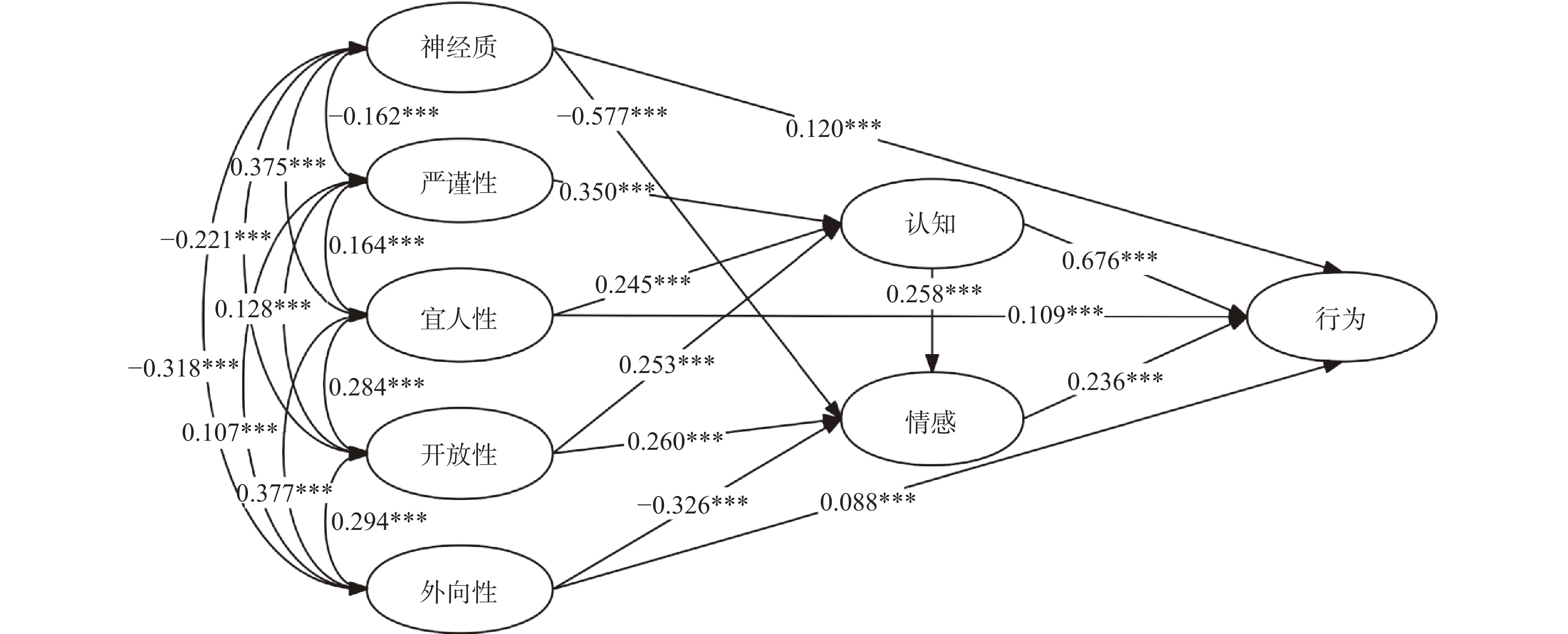
|
白学军, 都旭, 牛宏伟, 郝嘉佳. 耐挫心理结构的探索: 基于大学生群体的测量. 心理与行为研究, 2020, 18 (5): 638- 644.
|
|
|
毕轩懿, 邓娟, 高宇, 叶旭春. 机器人消极态度量表的汉化及信效度检验. 护理研究, 2023, 37 (11): 1921- 1925.
|
|
|
陈丹. 我国机器人产业现状及未来发展趋势. 电气时代, 2025 (1): 30- 33.
|
|
|
范文琪, 赵蕊, 刘晓夏, 葛莉娜. 护士对护理机器人的态度与期望的Meta整合. 中国护理管理, 2025, 25 (1): 91- 96.
|
|
|
李军, 宋晨鹏, 叶浩彬. 智能服务情境下消费者对服务型机器人使用意愿研究. 旅游学刊, 2023, 38 (6): 136- 150.
|
|
|
陆芳, 付淑英. 农村儿童社会性发展问卷的编制. 心理与行为研究, 2022, 20 (2): 248- 254.
|
|
|
罗傲, 张增一. 国外公众对智能机器人伦理风险的认知与态度——基于Twitter相关话题讨论的质性分析. 自然辩证法研究, 2024, 40 (10): 96- 101.
|
|
|
王莉莉, 张睿苏, 张运来. 消费者服务机器人使用意愿的影响因素研究. 商场现代化, 2024 (10): 22- 24.
|
|
|
王孟成, 戴晓阳, 姚树桥. 中国大五人格问卷的初步编制Ⅲ: 简式版的制定及信效度检验. 中国临床心理学杂志, 2011, 19 (4): 454- 457.
|
|
|
许丽颖, 喻丰. 机器人接受度的影响因素. 科学通报, 2020, 65 (6): 496- 510.
|
|
|
许丽颖, 张语嫣, 喻丰. 感知机器人威胁降低亲社会倾向. 心理学报, 2025, 57 (4): 671- 699.
|
|
|
赵欣, 吕晓虹, 张玉石. 外科师生对机器人手术教学的态度、兴趣、优势和挑战的调研. 中国继续医学教育, 2024, 16 (18): 138- 142.
|
|
|
Balazadeh, K. (2023). Exploring the intersection of artificial intelligence and human intimacy: A psychometric study on the Robot Intimate Receptiveness Scale (Unpublished master’s thesis). Lund University, Sweden.
|
|
|
Banks, J., & Edwards, A. (2019). A common social distance scale for robots and humans. In 2019 28th IEEE international conference on robot and human interactive communication, RO-MAN) (pp. 1–6). New Delhi, India: IEEE.
|
|
|
Bartneck, C., Kulić, D., Croft, E., & Zoghbi, S. Measurement instruments for the anthropomorphism, animacy, likeability, perceived intelligence, and perceived safety of robots. International Journal of Social Robotics, 2009, 1 (1): 71- 81.
DOI |
|
|
Carpinella, C. M., Wyman, A. B., Perez, M. A., & Stroessner, S. J. (2017). The Robotic Social Attributes Scale (RoSAS): development and validation. In 2017 12th ACM/IEEE international conference on human-robot interaction (pp. 254–262). Vienna: IEEE.
|
|
|
Conti, D., Commodari, E., & Buono, S. Personality factors and acceptability of socially assistive robotics in teachers with and without specialized training for children with disability. Life Span and Disability, 2017, 20 (2): 251- 272.
|
|
|
Damholdt, M. F., Nørskov, M., Yamazaki, R., Hakli, R., Hansen, C. V., Vestergaard, C., & Seibt, J. Attitudinal change in elderly citizens toward social robots: The role of personality traits and beliefs about robot functionality. Frontiers in Psychology, 2015, 6, 1701.
|
|
|
Dang, T. H. H., & Tapus, A. Stress game: The role of motivational robotic assistance in reducing user’s task stress. International Journal of Social Robotics, 2015, 7 (2): 227- 240.
DOI |
|
|
Davis, F. D. Perceived usefulness, perceived ease of use, and user acceptance of information technology. MIS Quarterly, 1989, 13 (3): 319- 339.
DOI |
|
|
Di Nuovo, A., Broz, F., Wang, N., Belpaeme, T., Cangelosi, A., Jones, R., … Dario, P. The multi-modal interface of Robot-Era multi-robot services tailored for the elderly. Intelligent Service Robotics, 2018, 11 (1): 109- 126.
DOI |
|
|
Ehrenbrink, P., & Möller, S. Development of a reactance scale for human-computer interaction. Quality and User Experience, 2018, 3 (1): 2.
DOI |
|
|
Esterwood, C., Essenmacher, K., & Yang, H. (2021). A meta-analysis of human personality and robot acceptance in human-robot interaction. In Proceedings of the 2021 CHI conference on human factors in computing systems (pp. 1–18). Yokohama, Japan: Association for Computing Machinery.
|
|
|
Gockley, R., & Matarić, M. J. (2006). Encouraging physical therapy compliance with a hands-off mobile robot. In Proceedings of the 1st ACM SIGCHI/SIGART conference on human-robot interaction (pp. 150–155). Salt Lake City, UT: Association for Computing Machinery.
|
|
|
Heerink, M., Kröse, B., Evers, V., & Wielinga, B. Assessing acceptance of assistive social agent technology by older adults: The Almere model. International Journal of Social Robotics, 2010, 2 (4): 361- 375.
DOI |
|
|
Hu, L. T., & Bentler, P. M. Cutoff criteria for fit indexes in covariance structure analysis: Conventional criteria versus new alternatives. Structural Equation Modeling: A Multidisciplinary Journal, 1999, 6 (1): 1- 55.
DOI |
|
|
Kline, R. B. (2015). Principles and practice of structural equation modeling (4th ed.). New York: Guilford Press.
|
|
|
McCoach, D. B., Gable, R. K., & Madura, J. P. (2013). Instrument development in the affective domain: School and corporate applications (3rd ed.). New York: Springer.
|
|
|
Morsunbul, U. Human-robot interaction: How do personality traits affect attitudes towards robot?. Journal of Human Sciences, 2019, 16 (2): 499- 504.
DOI |
|
|
Nijssen, S. R. R., Müller, B. C. N., Bosse, T., & Paulus, M. You, robot ? The role of anthropomorphic emotion attributions in children’s sharing with a robot. International Journal of Child-Computer Interaction, 2021, 30, 100319.
DOI |
|
|
Nomura, T., Suzuki, T., Kanda, T., & Kato, K. Measurement of negative attitudes toward robots. Interaction Studies: Social Behaviour and Communication in Biological and Artificial Systems, 2006, 7 (3): 437- 454.
DOI |
|
|
Park, E., & Kwon, S. J. The adoption of teaching assistant robots: A technology acceptance model approach. Program, 2016, 50 (4): 354- 366.
DOI |
|
|
Peter, J., Kühne, R., & Barco, A. Can social robots affect children’s prosocial behavior? An experimental study on prosocial robot models. Computers in Human Behavior, 2021, 120, 106712.
DOI |
|
|
Taylor, S. E., Peplau, L. A., Sears, D. O., & Kowalski, R. (2005). Social psychology (pp. 1–306). Toronto, Canada: Pearson Education, Limited
|
|
|
Venkatesh, V., Morris, M. G., Davis, G. B., & Davis, F. D. User acceptance of information technology: Toward a unified view. MIS Quarterly, 2003, 27 (3): 425- 478.
DOI |
|
|
Yam, K. C., Tang, P. M., Jackson, J. C., Su, R., & Gray, K. The rise of robots increases job insecurity and maladaptive workplace behaviors: Multimethod evidence. Journal of Applied Psychology, 2023, 108 (5): 850- 870.
DOI |
|
|
Yogeeswaran, K., Złotowski, J., Livingstone, M., Bartneck, C., Sumioka, H., & Ishiguro, H. The interactive effects of robot anthropomorphism and robot ability on perceived threat and support for robotics research. Journal of Human-Robot Interaction, 2016, 5 (2): 29- 47.
DOI |
|
|
Yuan, Y., Sun, R., Zuo, J. J., & Chen, X. A new explanation for the attitude-behavior inconsistency based on the contextualized attitude. Behavioral Sciences, 2023, 13 (3): 223.
DOI |
| [1] | Weiqing FAN, Zhe GONG. Development and Psychometric Evaluation of the Government-Funded Normal University Students’ Identity Scale [J]. Studies of Psychology and Behavior, 2026, 24(2): 273-280. |
| [2] | Zeqi LIU, Yuhua LI, Yan GAO, Jiaxin LIU, Mengmeng SU. Development and Validation of the Home Literacy Environment Scale for Chinese Children [J]. Studies of Psychology and Behavior, 2026, 24(1): 113-121. |
| [3] | Jie LIU, Weiwei CUI, Shu WANG. Personality and Aggression Among Students: A Meta-Analysis of Evidence from the Past Twenty Years [J]. Studies of Psychology and Behavior, 2025, 23(2): 168-176. |
| [4] | Lin LI, Wei GAO. The Development of Research Literacy Scale for Elementary Students and Latent Profile Analysis [J]. Studies of Psychology and Behavior, 2024, 22(6): 830-838. |
| [5] | Hang XU, Xinguang SHI, Jinyun DUAN, Hongxu LU. The Effect of Gratitude on Malevolent Creativity [J]. Studies of Psychology and Behavior, 2024, 22(4): 470-477. |
| [6] | Ke ZHANG, Xiumin DU, Liyan LI, Xuehan ZHANG, Haixia ZHAO. Studies on the Relationship Between Sour Taste and Creativity [J]. Studies of Psychology and Behavior, 2023, 21(6): 815-823. |
| [7] | Li GU, Wanbing HUANG, Yalan YANG, Zhaolan FAN, Fengbo GUO. Relationship Between Reinforcement Sensitivity Personality and Loneliness in the Context of Bullying Experiences: The Mediation Effect of Self-Concealment [J]. Studies of Psychology and Behavior, 2023, 21(5): 629-636. |
| [8] | Lan ZHANG, Jinqin HOU, Zhiyan CHEN. Employee Proactive Personality and Workplace Well-Being: A Multilevel Moderated Mediation Model [J]. Studies of Psychology and Behavior, 2023, 21(5): 698-704. |
| [9] | Ping FANG, Zijian YI, Yuan JIANG, Hui PANG. The Development of People’s Social Adaptation Scale [J]. Studies of Psychology and Behavior, 2023, 21(4): 433-439. |
| [10] | Hui PANG, Xiaonan JIN, Yuan JIANG, Ping FANG. The Development of People’s Social Risk Perception Scale [J]. Studies of Psychology and Behavior, 2023, 21(4): 440-445. |
| [11] | HE Mingying, ZHANG Xianying, LI Lingyu, YANG Lizhu. The Development of Teacher Rating Scale for Shame Development in 3~6 Years Old Children [J]. Studies of Psychology and Behavior, 2023, 21(2): 231-237. |
| [12] | Cheng CHEN, Binjie WANG. The Influence of College Students’ Personality Traits on Moral Identity: The Moderating Role of Legal Consciousness [J]. Studies of Psychology and Behavior, 2023, 21(1): 123-129. |
| [13] | Xiaofei LIU, Xiaoyan LIANG, Ziqiang XIN. The Combined Effect of Two Types Reputation Information of Charity on Donation Intention [J]. Studies of Psychology and Behavior, 2022, 20(6): 813-820. |
| [14] | ZHANG Pengcheng, LI Xi, SANG Yujie, CHEN Ning. The Effects of Neurotic Personality on Depression in Primary and Secondary School Students: The Multilayered Moderating Role of Class Environment [J]. Studies of Psychology and Behavior, 2022, 20(5): 637-643. |
| [15] | CHENG Gang, ZOU Yan, YU Wei, DING Fangyuan, JIA Yuncheng. The Relationship Between the Big Five Personality and the Trajectory of High School Freshmen’s Subjective Social Status During the School Transition Period: A Latent Growth Curve Model [J]. Studies of Psychology and Behavior, 2022, 20(5): 692-699. |
| Viewed | ||||||
|
Full text |
|
|||||
|
Abstract |
|
|||||
