
心理与行为研究 ›› 2023, Vol. 21 ›› Issue (5): 600-607.DOI: 10.12139/j.1672-0628.2023.05.004
刘蕾1, 李亚楠1, 牛若愚1, 于文婷1, 陈玉雪1, 刘莹1,2,*( )
)
收稿日期:2022-05-17
出版日期:2023-09-20
发布日期:2023-09-20
通讯作者:
刘莹
基金资助:
Lei LIU1, Yanan LI1, Ruoyu NIU1, Wenting YU1, Yuxue CHEN1, Ying LIU1,2,*()
Received:2022-05-17
Online:2023-09-20
Published:2023-09-20
Contact:
Ying LIU
摘要:
动作同步在人际关系的建立过程中起着重要作用。以往的动作同步研究大多涉及单个肢体/物体,本研究设置需要双侧肢体协调的踏步任务,使用近红外超扫描技术同步采集互动双方的大脑活动,探究单人协调与动作同步(同相和反相)的大脑激活方式以及行为方面的差异。结果发现,在双侧下顶叶单人协调的神经激活显著高于同相模式和反相模式,表明下顶叶可能是动作同步的重要神经基础。
中图分类号:
刘蕾, 李亚楠, 牛若愚, 于文婷, 陈玉雪, 刘莹. 踏步任务下动作同步的神经基础[J]. 心理与行为研究, 2023, 21(5): 600-607.
Lei LIU, Yanan LI, Ruoyu NIU, Wenting YU, Yuxue CHEN, Ying LIU. Neural Basis of Motor Coordination in Stepping Tasks[J]. Studies of Psychology and Behavior, 2023, 21(5): 600-607.
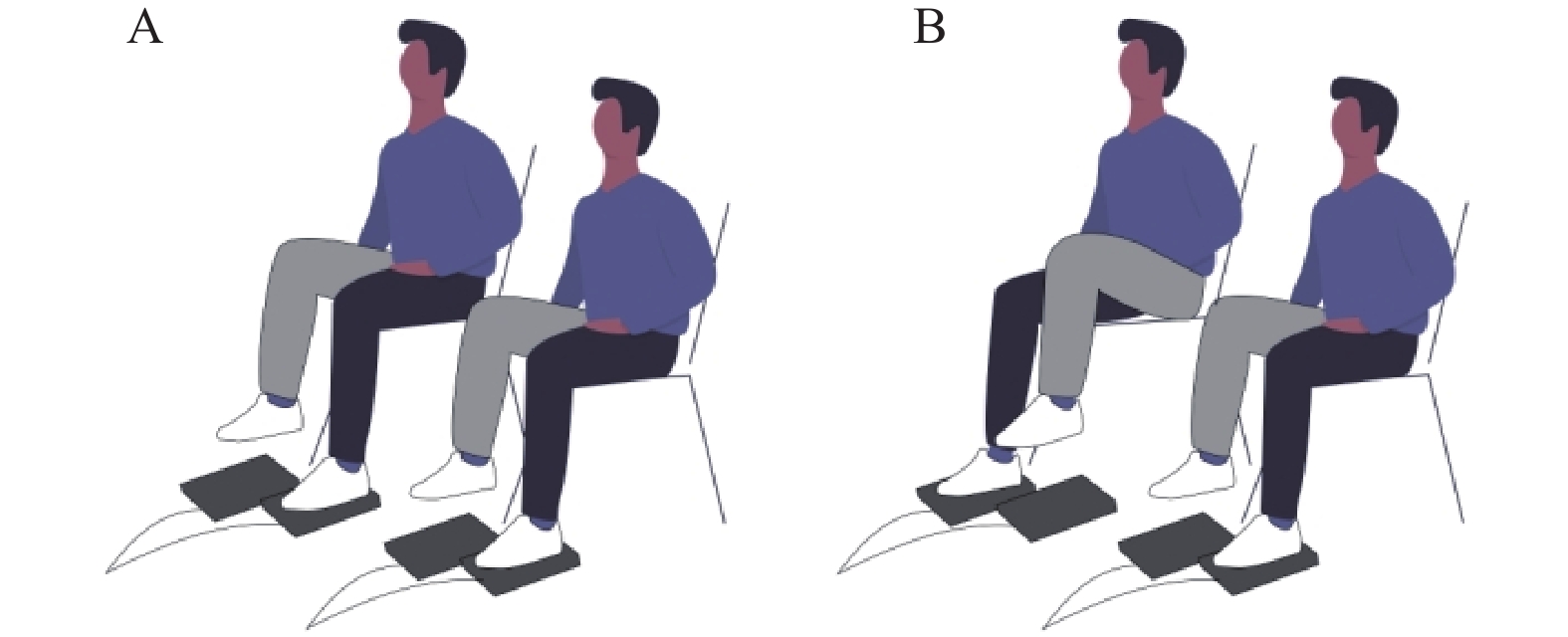
图1 两种不同的动作同步模式
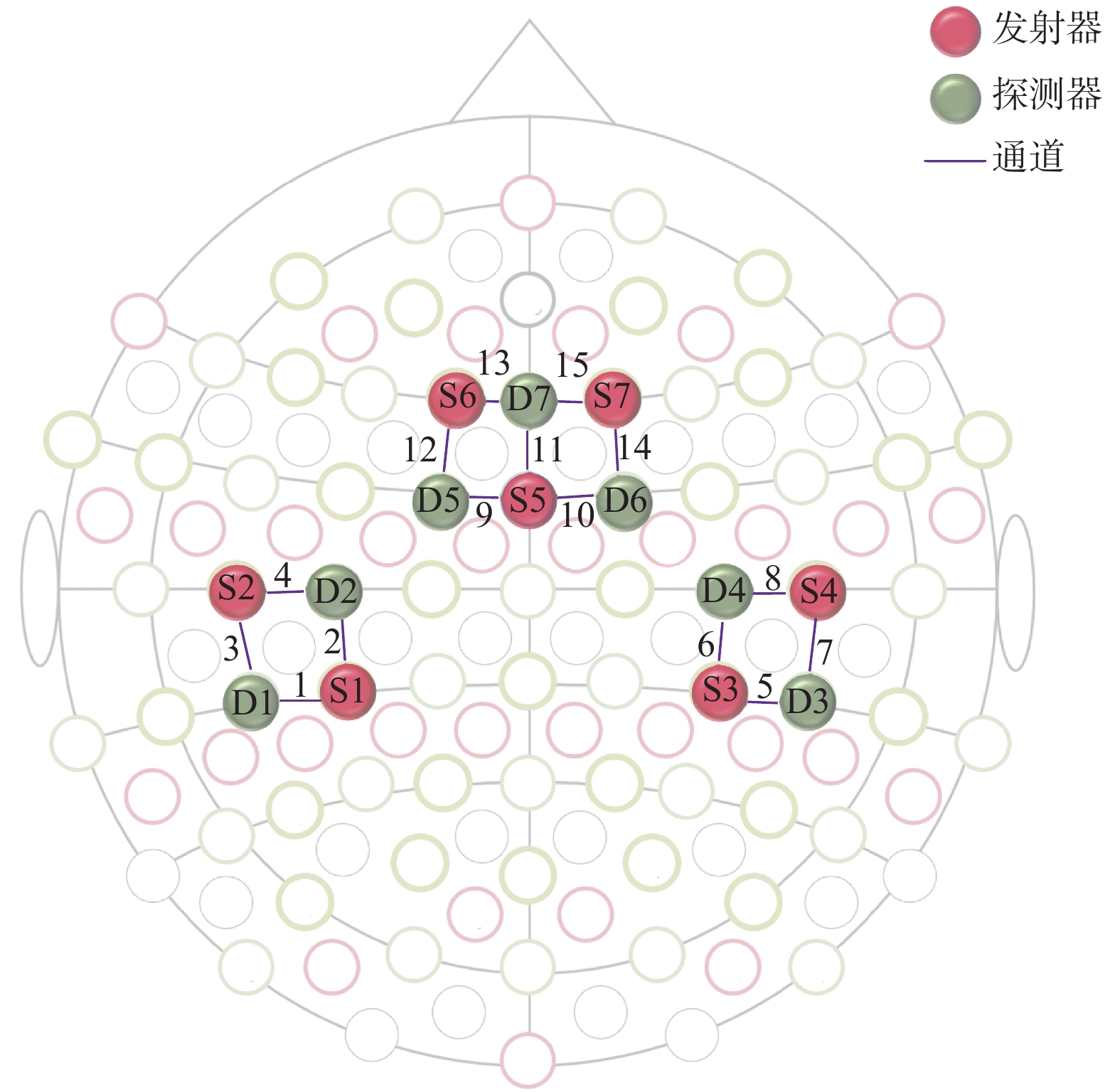
图2 fNIRS探头的空间分布
| 通道 | 10−05导联系统定位 | x | y | z | 解剖学位置 |
| Ch1 | CP5h | −61.05 | −43.48 | 44.46 | 顶下缘角回 |
| Ch2 | CCP3 | −53.44 | −30.44 | 54.19 | 中央后回 |
| Ch3 | CCP5 | −67.01 | −31.07 | 28.89 | 缘上回 |
| Ch4 | C5h | −63.49 | −16.83 | 41.21 | 缘上回 |
| Ch5 | CP6h | 62.09 | −43.19 | 44.59 | 缘上回 |
| Ch6 | CCP4 | 57.13 | −30.23 | 55.23 | 顶下缘角回 |
| Ch7 | CCP6 | 69.06 | −30.29 | 28.56 | 缘上回 |
| Ch8 | C6h | 65.29 | −16.79 | 40.93 | 中央后回 |
| Ch9 | FC1h | −13.63 | 17.58 | 67.41 | 背外侧额上回 |
| Ch10 | FC2h | 14.89 | 17.23 | 66.58 | 补充运动区 |
| Ch11 | FFC | 2.26 | 30.64 | 57.64 | 内侧额上回 |
| Ch12 | FFC1 | −23.30 | 31.67 | 54.93 | 额中回 |
| Ch13 | F1h | −10.50 | 45.34 | 50.74 | 背外侧额上回 |
| Ch14 | FFC2 | 25.90 | 31.40 | 55.89 | 背外侧额上回 |
| Ch15 | F2h | 12.86 | 45.45 | 50.67 | 背外侧额上回 |
表1 各通道对应的定位坐标(AAL)和脑区
| 通道 | 10−05导联系统定位 | x | y | z | 解剖学位置 |
| Ch1 | CP5h | −61.05 | −43.48 | 44.46 | 顶下缘角回 |
| Ch2 | CCP3 | −53.44 | −30.44 | 54.19 | 中央后回 |
| Ch3 | CCP5 | −67.01 | −31.07 | 28.89 | 缘上回 |
| Ch4 | C5h | −63.49 | −16.83 | 41.21 | 缘上回 |
| Ch5 | CP6h | 62.09 | −43.19 | 44.59 | 缘上回 |
| Ch6 | CCP4 | 57.13 | −30.23 | 55.23 | 顶下缘角回 |
| Ch7 | CCP6 | 69.06 | −30.29 | 28.56 | 缘上回 |
| Ch8 | C6h | 65.29 | −16.79 | 40.93 | 中央后回 |
| Ch9 | FC1h | −13.63 | 17.58 | 67.41 | 背外侧额上回 |
| Ch10 | FC2h | 14.89 | 17.23 | 66.58 | 补充运动区 |
| Ch11 | FFC | 2.26 | 30.64 | 57.64 | 内侧额上回 |
| Ch12 | FFC1 | −23.30 | 31.67 | 54.93 | 额中回 |
| Ch13 | F1h | −10.50 | 45.34 | 50.74 | 背外侧额上回 |
| Ch14 | FFC2 | 25.90 | 31.40 | 55.89 | 背外侧额上回 |
| Ch15 | F2h | 12.86 | 45.45 | 50.67 | 背外侧额上回 |

图3 个体内部协调性的平均值和标准误
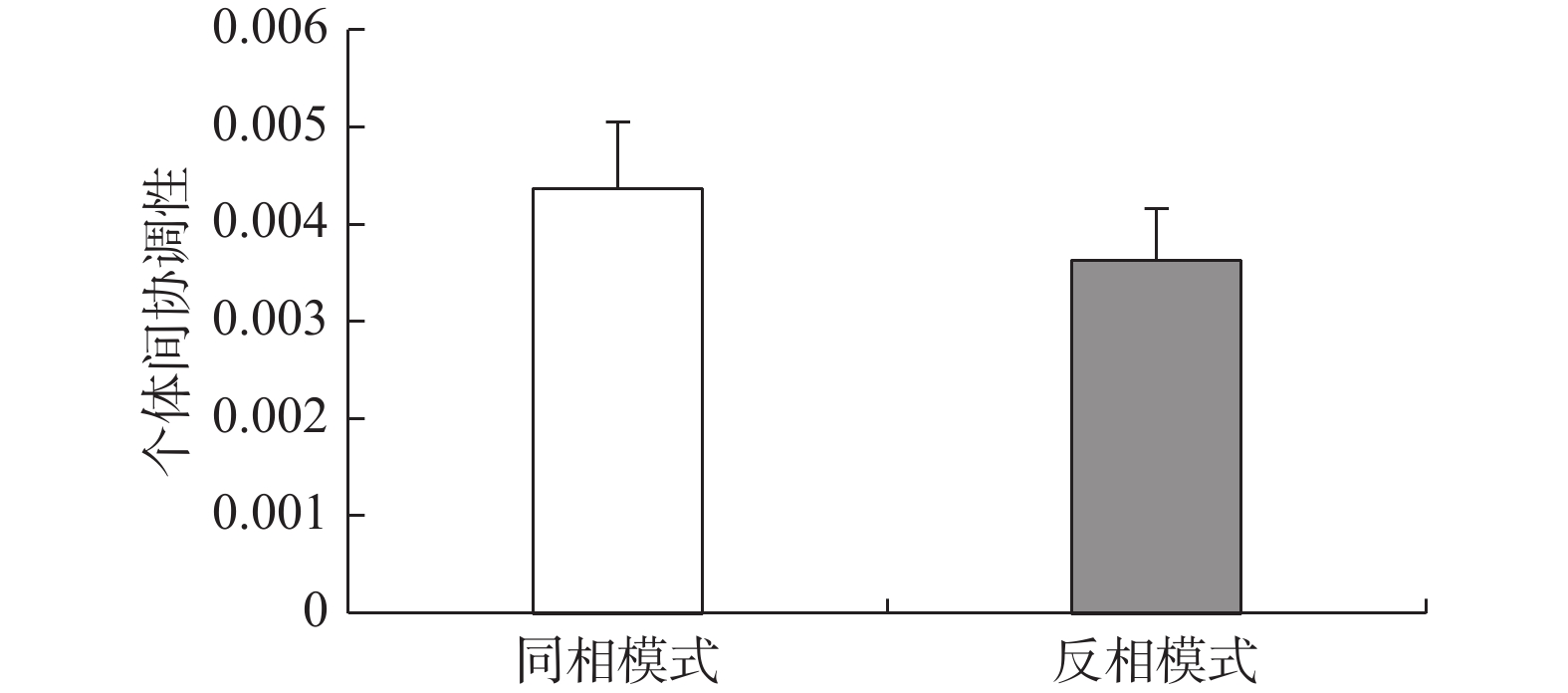
图4 个体间协调性的平均值和标准误
| 兴趣区 | 单人协调 | 同相模式 | 反相模式 |
| ROI1 | 3.692±3.559 | 2.036±3.973 | 2.293±3.131 |
| ROI2 | 2.501±3.020 | 0.544±3.469 | 0.596±2.753 |
| ROI3 | 3.695±3.339 | 3.252±3.503 | 3.022±3.034 |
表2 三种不同踏步任务时氧合血红蛋白浓度的平均值和标准差(×10−4 mmol/L)
| 兴趣区 | 单人协调 | 同相模式 | 反相模式 |
| ROI1 | 3.692±3.559 | 2.036±3.973 | 2.293±3.131 |
| ROI2 | 2.501±3.020 | 0.544±3.469 | 0.596±2.753 |
| ROI3 | 3.695±3.339 | 3.252±3.503 | 3.022±3.034 |

图5 不同踏步任务下不同兴趣区中氧合血红蛋白浓度的平均值和标准误
|
Aramaki, Y., Honda, M., Okada, T., & Sadato, N.. Neural correlates of the spontaneous phase transition during bimanual coordination. Cerebral Cortex, 2006, 16 (9): 1338- 1348.
DOI |
|
| Cope, M., Delpy, D. T., Reynolds, E. O. R., Wray, S., Wyatt, J., & van der Zee, P. (1988). Methods of quantitating cerebral near infrared spectroscopy data. In M. Mochizuki, C. R. Honig, T. Koyama, T. K. Goldstick, & D. F. Bruley (Eds.), Oxygen transport to tissue X (pp. 183–189). New York: Springer. | |
|
Crone, C. L., Rigoli, L. M., Patil, G., Pini, S., Sutton, J., Kallen, R. W., & Richardson, M. J.. Synchronous vs. non-synchronous imitation: Using dance to explore interpersonal coordination during observational learning. Human Movement Science, 2021, 76, 102776.
DOI |
|
|
De Pretto, M., Deiber, M. P., & James, C. E.. Steady-state evoked potentials distinguish brain mechanisms of self-paced versus synchronization finger tapping. Human Movement Science, 2018, 61, 151- 166.
DOI |
|
|
Delaherche, E., Chetouani, M., Mahdhaoui, A., Saint-Georges, C., Viaux, S., & Cohen, D.. Interpersonal synchrony: A survey of evaluation methods across disciplines. IEEE Transactions on Affective Computing, 2012, 3 (3): 349- 365.
DOI |
|
| Dolk, T., & Prinz, W. (2016). What it takes to share a task: Sharing versus shaping task representations. In S. S. Obhi & E. S. Cross (Eds.), Shared representations: Sensorimotor foundations of social life (pp. 3–21). Cambridge: Cambridge University Press. | |
|
Ebisch, S. J. H., Ferri, F., Romani, G. L., & Gallese, V.. Reach out and touch someone: Anticipatory sensorimotor processes of active interpersonal touch. Journal of Cognitive Neuroscience, 2014, 26 (9): 2171- 2185.
DOI |
|
|
Feng, X. D., Sun, B. H., Chen, C. S., Li, W. J., Wang, Y., Zhang, W. H., ... Shao, Y. T.. Self-other overlap and interpersonal neural synchronization serially mediate the effect of behavioral synchronization on prosociality. Social Cognitive and Affective Neuroscience, 2020, 15 (2): 203- 214.
DOI |
|
|
Fogassi, L., Ferrari, P. F., Gesierich, B., Rozzi, S., Chersi, F., & Rizzolatti, G.. Parietal lobe: From action organization to intention understanding. Science, 2005, 308 (5722): 662- 667.
DOI |
|
|
Haberstumpf, S., Seidel, A., Lauer, M., Polak, T., Deckert, J., & Herrmann, M. J.. Reduced parietal activation in participants with mild cognitive impairments during visual-spatial processing measured with functional near-infrared spectroscopy. Journal of Psychiatric Research, 2022, 146, 31- 42.
DOI |
|
|
Hu, Y., Hu, Y. Y., Li, X. C., Pan, Y. F., & Cheng, X. J.. Brain-to-brain synchronization across two persons predicts mutual prosociality. Social Cognitive and Affective Neuroscience, 2017, 12 (12): 1835- 1844.
DOI |
|
|
Jäncke, L., Loose, R., Lutz, K., Specht, K., & Shah, N. J.. Cortical activations during paced finger-tapping applying visual and auditory pacing stimuli. Cognitive Brain Research, 2000, 10 (1−2): 51- 66.
DOI |
|
| Kelso, J. A. S. (1995). Dynamic patterns: The self-organization of brain and behavior. London: MIT Press. | |
|
Kim, S. G., Jennings, J. E., Strupp, J. P., Andersen, P., & Uǧurbil, K.. Functional MRI of human motor cortices during overt and imagined finger movements. International Journal of Imaging Systems and Technology, 1995, 6 (2−3): 271- 279.
DOI |
|
| Knoblich, G., Butterfill, S., & Sebanz, N.. Psychological research on joint action: Theory and data. Psychology of Learning and Motivation, 2011, 54, 59- 101. | |
|
Koike, T., Tanabe, H. C., & Sadato, N.. Hyperscanning neuroimaging technique to reveal the “two-in-one” system in social interactions. Neuroscience Research, 2015, 90, 25- 32.
DOI |
|
|
Kokal, I., Engel, A., Kirschner, S., & Keysers, C.. Synchronized drumming enhances activity in the caudate and facilitates prosocial commitment-if the rhythm comes easily. PLoS One, 2011, 6 (11): e27272.
DOI |
|
|
Lafleur, M. F., Jackson, P. L., Malouin, F., Richards, C. L., Evans, A. C., & Doyon, J.. Motor learning produces parallel dynamic functional changes during the execution and imagination of sequential foot movements. NeuroImage, 2002, 16 (1): 142- 157.
DOI |
|
|
Liu, T., Saito, H., & Oi, M.. Role of the right inferior frontal gyrus in turn-based cooperation and competition: A near-infrared spectroscopy study. Brain and Cognition, 2015, 99, 17- 23.
DOI |
|
|
Ma, Y., Lee, E. W. M., Shi, M., & Yuen, R. K. K.. Spontaneous synchronization of motion in pedestrian crowds of different densities. Nature Human Behaviour, 2021, 5 (4): 447- 457.
DOI |
|
|
Marsh, K. L., Richardson, M. J., & Schmidt, R. C.. Social connection through joint action and interpersonal coordination. Topics in Cognitive Science, 2009, 1 (2): 320- 339.
DOI |
|
|
Mayville, J. M., Jantzen, K. J., Fuchs, A., Steinberg, F. L., & Kelso, J. A. S.. Cortical and subcortical networks underlying syncopated and synchronized coordination revealed using fMRI. Human Brain Mapping, 2002, 17 (4): 214- 229.
DOI |
|
|
Meyer, M., van der Wel, R. P. D., & Hunnius, S.. Higher-order action planning for individual and joint object manipulations. Experimental Brain Research, 2013, 225 (4): 579- 588.
DOI |
|
|
Niu, R. Y., Yu, Y. L., Li, Y. N., & Liu, Y.. Use of fNIRS to characterize the neural mechanism of inter-individual rhythmic movement coordination. Frontiers in Physiology, 2019, 10, 781.
DOI |
|
|
Nozawa, T., Sakaki, K., Ikeda, S., Jeong, H., Yamazaki, S., Kawata, K., ... Kawashima, R.. Prior physical synchrony enhances rapport and inter-brain synchronization during subsequent educational communication. Scientific Reports, 2019, 9 (1): 12747.
DOI |
|
|
Okamoto, M., Dan, H., Sakamoto, K., Takeo, K., Shimizu, K., Kohno, S., ... Dan, I.. Three-dimensional probabilistic anatomical cranio-cerebral correlation via the international 10–20 system oriented for transcranial functional brain mapping. NeuroImage, 2004, 21 (1): 99- 111.
DOI |
|
|
Okamoto, M., Tsuzuki, D., Clowney, L., Dan, H., Singh, A. K., & Dan, I.. Structural atlas-based spatial registration for functional near-infrared spectroscopy enabling inter-study data integration. Clinical Neurophysiology, 2009, 120 (7): 1320- 1328.
DOI |
|
|
Richardson, M. J., Marsh, K. L., Isenhower, R. W., Goodman, J. R. L., & Schmidt, R. C.. Rocking together: Dynamics of intentional and unintentional interpersonal coordination. Human Movement Science, 2007, 26 (6): 867- 891.
DOI |
|
|
Richardson, M. J., Marsh, K. L., & Schmidt, R.. Effects of visual and verbal interaction on unintentional interpersonal coordination. Journal of Experimental Psychology: Human Perception and Performance, 2005, 31 (1): 62- 79.
DOI |
|
|
Rizzolatti, G., Fogassi, L., & Gallese, V.. Neurophysiological mechanisms underlying the understanding and imitation of action. Nature Reviews Neuroscience, 2001, 2 (9): 661- 670.
DOI |
|
| Schippers, M. B., Roebroeck, A., Renken, R., Nanetti, L., & Keysers, C.. Mapping the information flow from one brain to another during gestural communication. Proceedings of the National Academy of Sciences of the United States of America, 2010, 107 (20): 9388- 9393. | |
| Schmidt, R. C., & Richardson, M. J. (2008). Dynamics of interpersonal coordination. In A. Fuchs, & V. K. Jirsa (Eds.), Coordination: Neural, behavioral and social dynamics (pp. 281–308). Berlin, Germany: Springer. | |
|
Sebanz, N., Bekkering, H., & Knoblich, G.. Joint action: Bodies and minds moving together. Trends in Cognitive Sciences, 2006, 10 (2): 70- 76.
DOI |
|
|
Singer, T.. The past, present and future of social neuroscience: A European perspective. NeuroImage, 2012, 61 (2): 437- 449.
DOI |
|
|
Strangman, G., Culver, J. P., Thompson, J. H., & Boas, D. A.. A quantitative comparison of simultaneous BOLD fMRI and NIRS recordings during functional brain activation. NeuroImage, 2002, 17 (2): 719- 731.
DOI |
|
|
Tomasello, M., Carpenter, M., Call, J., Behne, T., & Moll, H.. In search of the uniquely human. Behavioral and Brain Sciences, 2005, 28 (5): 721- 735.
DOI |
|
|
Tsuzuki, D., Jurcak, V., Singh, A. K., Okamoto, M., Watanabe, E., & Dan, I.. Virtual spatial registration of stand-alone fNIRS data to MNI space. NeuroImage, 2007, 34 (4): 1506- 1518.
DOI |
|
|
Tyszka, J. M., Grafton, S. T., Chew, W., Woods, R. P., & Colletti, P. M.. Parceling of mesial frontal motor areas during ideation and movement using functional magnetic resonance imaging at 1.5 tesla. Annals of Neurology, 1994, 35 (6): 746- 749.
DOI |
|
| van Dijk, J., Kerkhofs, R., van Rooij, I., & Haselager, P. (2008). Special section: Can there be such a thing as embodied embedded cognitive neuroscience? Theory & Psychology, 18(3), 297–316. | |
|
van Ulzen, N. R., Lamoth, C. J. C., Daffertshofer, A., Semin, G. R., & Beek, P. J.. Characteristics of instructed and uninstructed interpersonal coordination while walking side-by-side. Neuroscience Letters, 2008, 432 (2): 88- 93.
DOI |
|
|
Wolpert, D. M., Doya, K., & Kawato, M.. A unifying computational framework for motor control and social interaction. Philosophical Transactions of the Royal Society B: Biological Sciences, 2003, 358 (1431): 593- 602.
DOI |
| [1] | 宋娟, 焦志彬, 杨雪, 韩高鑫, 陈祎玥, 连涛, 梁竞元. 共同经历社会排斥提高女性合作倾向:基于fNIRS的超扫描研究[J]. 心理与行为研究, 2024, 22(4): 553-561. |
| [2] | 郭文欣, 张微, 李雨茜. 动作电子游戏玩家工作记忆优势的跨系统一致性:一项近红外研究[J]. 心理与行为研究, 2023, 21(4): 454-463. |
| 阅读次数 | ||||||
|
全文 |
|
|||||
|
摘要 |
|
|||||
