
心理与行为研究 ›› 2026, Vol. 24 ›› Issue (4): 525-532.DOI: 10.12139/j.1672-0628.2026.04.012
罗星雨1,2, 毛佩佩1,2, 牛更枫1,2, 翟培培3, 孙晓军*,1,2( )
)
收稿日期:2025-02-28
出版日期:2026-07-20
发布日期:2026-07-21
通讯作者:
孙晓军
基金资助:
Xingyu LUO1,2, Peipei MAO1,2, Gengfeng NIU1,2, Peipei ZHAI3, Xiaojun SUN*,1,2()
Received:2025-02-28
Online:2026-07-20
Published:2026-07-21
Contact:
Xiaojun SUN
摘要:
使用人工智能(AI)聊天机器人辅助学习被证实对学习投入有积极作用,但对相关影响因素缺乏深入研究。本研究基于人−环境匹配理论和自我决定理论,通过响应面分析建模的方式探讨聊天机器人新颖性和个体创新性的匹配与学习投入的关系。以511名在校大学生为被试,使用问卷评估感知聊天机器人新颖性、个体创新性和学习投入。结果表明:(1)聊天机器人新颖性与个体创新性越一致,学习投入程度越高;(2)相对于聊天机器人新颖性和个体创新性均低,二者均高时个体学习投入程度更高;(3)相对于聊天机器人新颖性低于个体创新性,前者高于后者时学习投入程度更高。本研究不仅丰富了相关主题研究,还为人工智能时代如何有效利用智能聊天机器人辅助学习提供了实证依据。
中图分类号:
罗星雨, 毛佩佩, 牛更枫, 翟培培, 孙晓军. 人工智能辅助学习:聊天机器人新颖性和个体创新性的匹配与学习投入的关系[J]. 心理与行为研究, 2026, 24(4): 525-532.
Xingyu LUO, Peipei MAO, Gengfeng NIU, Peipei ZHAI, Xiaojun SUN. AI-Assisted Learning: The Relationship Between Chatbot Novelty - Individual Innovativeness Congruence and Learning Engagement[J]. Studies of Psychology and Behavior, 2026, 24(4): 525-532.
| 模型 | 参数约束 | 模型解释 |
| 简单一致性 上升岭模型 | b1=b2; b3=b5; b3+b4+b5=0; b6=0; b7=0; b8=0; b9=0 | 对于具有相同平均预测变量水平(x+y)/2的个体,x和y值更接近的个体z值更高(或更低)[一致性效应]; 对于具有相同差异值(x−y)的个体,平均预测变量水平(x+y)/2较高的个体z值更高(或更低)[线性上升岭效应]。 |
| 水平依赖一致性上升岭模型 | b1=b2; b3=b5; b3<0; b4=−2b3; b7=−b6; b8=−b6; b9=b6 | 对于具有相同平均预测变量水平(x+y)/2的个体,x和y值更接近的个体z值更高(或更低)[一致性效应]; 对于具有相同差异值x−y的个体,平均预测变量水平(x+y)/2较高的个体z值更高(或更低)[线性上升岭效应]; 对于四名个体A、B、C和D,其中A和B以及C和D分别具有相同的平均预测变量水平(x+y)/2,A和B的平均预测变量水平低于C和D,且A和C以及B和D分别具有相同的差异值x−y,A和B的z值绝对差异大于(或小于)C和D的z值绝对差异[水平依赖效应]。 |
| 非对称一致性 上升岭模型 | b1=b2; b3=b5; b3<0; b4=−2b3; b7=−3b6; b8=3b6; b9=−b6 | 对于两组个体,若每组内部的x和y值要么都大于或小于对方,且具有相同的平均预测变量水平(x+y)/2,则x和y值更接近的个体z值更高(或更低)[一致性效应]; 对于具有相同差异值x−y的个体,平均预测变量水平(x+y)/2较高的个体z值更高(或更低)[线性上升岭效应]; 对于平均预测变量水平[(x+y)/2]相同且差异值(x−y)大小相等但符号相反的个体,x小于y的个体z值更高(或更低)[非对称效应]。 |
表1 本研究涉及的模型参数约束及模型解释
| 模型 | 参数约束 | 模型解释 |
| 简单一致性 上升岭模型 | b1=b2; b3=b5; b3+b4+b5=0; b6=0; b7=0; b8=0; b9=0 | 对于具有相同平均预测变量水平(x+y)/2的个体,x和y值更接近的个体z值更高(或更低)[一致性效应]; 对于具有相同差异值(x−y)的个体,平均预测变量水平(x+y)/2较高的个体z值更高(或更低)[线性上升岭效应]。 |
| 水平依赖一致性上升岭模型 | b1=b2; b3=b5; b3<0; b4=−2b3; b7=−b6; b8=−b6; b9=b6 | 对于具有相同平均预测变量水平(x+y)/2的个体,x和y值更接近的个体z值更高(或更低)[一致性效应]; 对于具有相同差异值x−y的个体,平均预测变量水平(x+y)/2较高的个体z值更高(或更低)[线性上升岭效应]; 对于四名个体A、B、C和D,其中A和B以及C和D分别具有相同的平均预测变量水平(x+y)/2,A和B的平均预测变量水平低于C和D,且A和C以及B和D分别具有相同的差异值x−y,A和B的z值绝对差异大于(或小于)C和D的z值绝对差异[水平依赖效应]。 |
| 非对称一致性 上升岭模型 | b1=b2; b3=b5; b3<0; b4=−2b3; b7=−3b6; b8=3b6; b9=−b6 | 对于两组个体,若每组内部的x和y值要么都大于或小于对方,且具有相同的平均预测变量水平(x+y)/2,则x和y值更接近的个体z值更高(或更低)[一致性效应]; 对于具有相同差异值x−y的个体,平均预测变量水平(x+y)/2较高的个体z值更高(或更低)[线性上升岭效应]; 对于平均预测变量水平[(x+y)/2]相同且差异值(x−y)大小相等但符号相反的个体,x小于y的个体z值更高(或更低)[非对称效应]。 |
| 变量 | M | SD | 1 | 2 | 3 | 4 |
| 1.性别 | ||||||
| 2.年龄 | 22.21 | 2.76 | ||||
| 3.聊天机器人新颖性 | 5.68 | 0.84 | 0.02 | −0.02 | ||
| 4.个体创新性 | 5.41 | 0.96 | 0.23** | 0.03 | 0.46*** | |
| 5.学习投入 | 5.37 | 0.96 | 0.11* | 0.004 | 0.65*** | 0.55*** |
表2 各变量描述性统计与相关系数
| 变量 | M | SD | 1 | 2 | 3 | 4 |
| 1.性别 | ||||||
| 2.年龄 | 22.21 | 2.76 | ||||
| 3.聊天机器人新颖性 | 5.68 | 0.84 | 0.02 | −0.02 | ||
| 4.个体创新性 | 5.41 | 0.96 | 0.23** | 0.03 | 0.46*** | |
| 5.学习投入 | 5.37 | 0.96 | 0.11* | 0.004 | 0.65*** | 0.55*** |
| 模型 | k | AIC | ΔAIC | Log-Likelihood | CFI | SRMR | RMSEA | R2 |
| RRCA | 3 | 1062.35 | 0.00 | −526.11 | 0.99 | 0.006 | 0.027 | 0.513 |
| FULL | 9 | 1066.60 | 4.26 | −522.04 | 1.00 | 0.000 | 0.000 | 0.521 |
| RRCL | 3 | 1067.63 | 5.29 | −528.76 | 0.98 | 0.008 | 0.049 | 0.508 |
| RRSC | 2 | 1073.10 | 10.76 | −532.51 | 0.96 | 0.015 | 0.062 | 0.501 |
| NULL | 0 | 1423.93 | 361.58 | −709.95 | 0.00 | 0.161 | 0.282 | 0.000 |
表3 模型比较结果
| 模型 | k | AIC | ΔAIC | Log-Likelihood | CFI | SRMR | RMSEA | R2 |
| RRCA | 3 | 1062.35 | 0.00 | −526.11 | 0.99 | 0.006 | 0.027 | 0.513 |
| FULL | 9 | 1066.60 | 4.26 | −522.04 | 1.00 | 0.000 | 0.000 | 0.521 |
| RRCL | 3 | 1067.63 | 5.29 | −528.76 | 0.98 | 0.008 | 0.049 | 0.508 |
| RRSC | 2 | 1073.10 | 10.76 | −532.51 | 0.96 | 0.015 | 0.062 | 0.501 |
| NULL | 0 | 1423.93 | 361.58 | −709.95 | 0.00 | 0.161 | 0.282 | 0.000 |
| β | SE | z | p | 95%CI | |
| b1 | 0.41 | 0.02 | 21.24 | <0.001 | [0.37, 0.44] |
| b2 | 0.41 | 0.02 | 21.24 | <0.001 | [0.37, 0.44] |
| b3 | −0.04 | 0.02 | −2.31 | 0.021 | [−0.07, −0.01] |
| b4 | 0.08 | 0.03 | 2.31 | 0.021 | [0.01, 0.14] |
| b5 | −0.04 | 0.02 | −2.31 | 0.021 | [−0.07, −0.01] |
| b6 | 0.02 | 0.01 | 3.59 | <0.001 | [0.01, 0.03] |
| b7 | −0.05 | 0.01 | −3.59 | <0.001 | [−0.08, −0.02] |
| b8 | 0.05 | 0.01 | 3.59 | <0.001 | [0.02, 0.08] |
| b9 | −0.02 | 0.01 | −3.59 | <0.001 | [−0.03, −0.01] |
| u1 | 0.81 | 0.04 | 21.24 | <0.001 | [0.74, 0.89] |
表4 非对称一致性上升岭模型参数
| β | SE | z | p | 95%CI | |
| b1 | 0.41 | 0.02 | 21.24 | <0.001 | [0.37, 0.44] |
| b2 | 0.41 | 0.02 | 21.24 | <0.001 | [0.37, 0.44] |
| b3 | −0.04 | 0.02 | −2.31 | 0.021 | [−0.07, −0.01] |
| b4 | 0.08 | 0.03 | 2.31 | 0.021 | [0.01, 0.14] |
| b5 | −0.04 | 0.02 | −2.31 | 0.021 | [−0.07, −0.01] |
| b6 | 0.02 | 0.01 | 3.59 | <0.001 | [0.01, 0.03] |
| b7 | −0.05 | 0.01 | −3.59 | <0.001 | [−0.08, −0.02] |
| b8 | 0.05 | 0.01 | 3.59 | <0.001 | [0.02, 0.08] |
| b9 | −0.02 | 0.01 | −3.59 | <0.001 | [−0.03, −0.01] |
| u1 | 0.81 | 0.04 | 21.24 | <0.001 | [0.74, 0.89] |
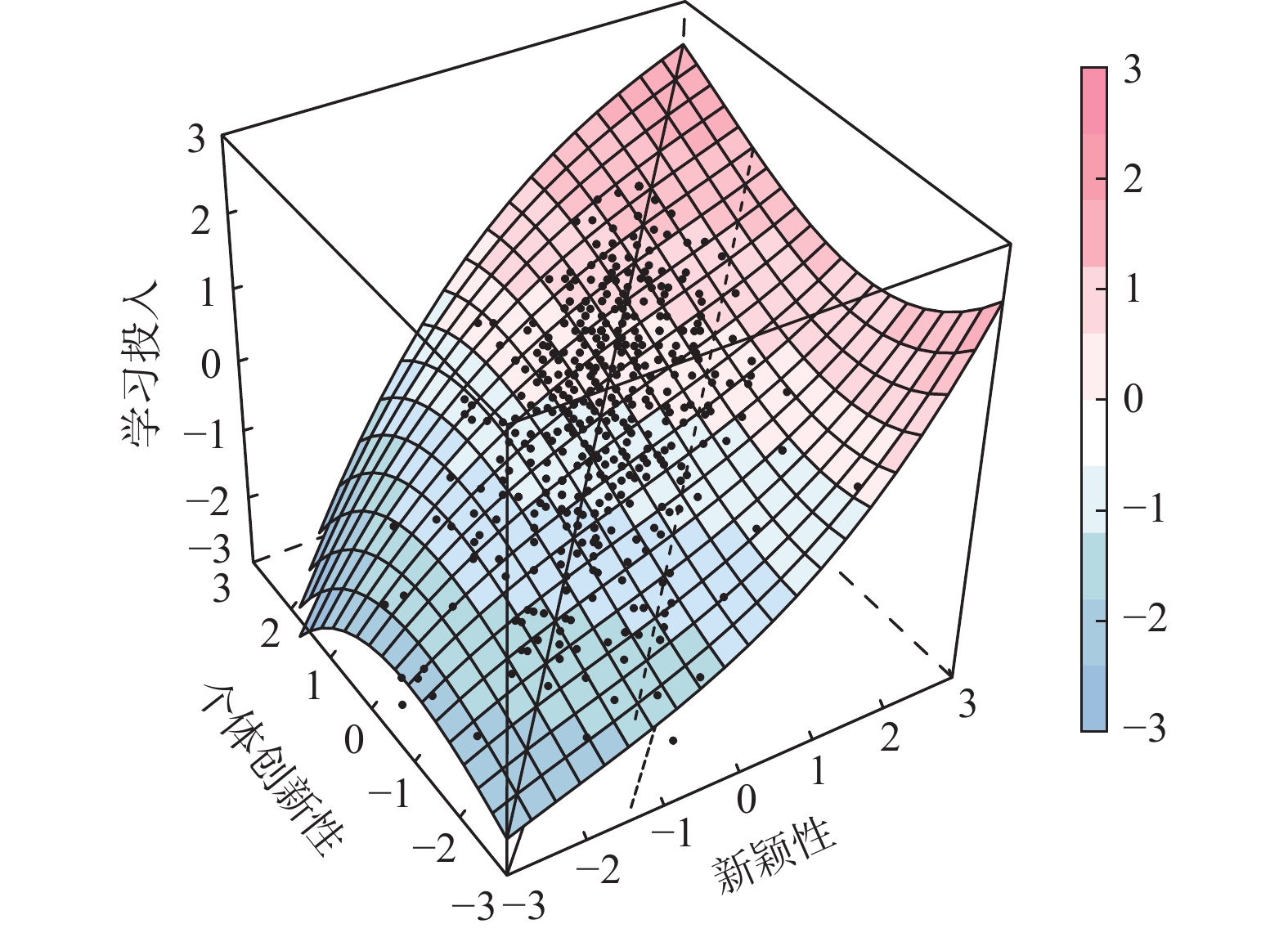
图1 非对称一致性上升岭模型响应曲面 注:图中实线为一致性线及其对应截面曲线,虚线为第二极值线及其对应截面曲线。
|
陈凯泉, 胡晓松, 韩小利, 牛翠琰, 韩羽, 王宪廷, 吕伟刚. 对话式通用人工智能教育应用的机理、场景、挑战与对策. 远程教育杂志, 2023, 41 (3): 21- 41.
|
|
|
高斌, 谭莉华, 张丹丹, 黎明新, 蔡艳香. 网络社会支持与高中生网络学习投入: 有调节的中介模型. 心理与行为研究, 2023, 21 (3): 403- 409.
|
|
|
马玉慧, 杨海珍, 刘凯. 什么样的聊天机器人更能促进学习?——基于60项实验与准实验研究的元分析. 开放教育研究, 2024, 30 (6): 79- 87.
|
|
|
钱莉, 金科, 章苏静. 教育游戏中学习者注意力资源开发策略. 远程教育杂志, 2010, 28 (6): 93- 97.
|
|
|
宋红波, 王悦. 大学英语学习者社会支持感、外语情绪与学习投入的关系探究. 外国语文, 2024, 40 (3): 164- 176.
|
|
|
Agarwal, R., & Prasad, J. A conceptual and operational definition of personal innovativeness in the domain of information technology. Information Systems Research, 1998, 9 (2): 204- 215.
DOI |
|
|
Akaike, H. (1998). Information theory and an extension of the maximum likelihood principle. In E. Parzen, K. Tanabe, & G. Kitagawa (Eds.), Selected papers of Hirotugu Akaike (pp. 199–213). New York: Springer.
|
|
|
Benlahcene, A., Kaur, A., & Awang-Hashim, R. Basic psychological needs satisfaction and student engagement: The importance of novelty satisfaction. Journal of Applied Research in Higher Education, 2021, 13 (5): 1290- 1304.
DOI |
|
|
Blöchl, M., Nestler, S., & Weiss, D. A limit of the subjective age bias: Feeling younger to a certain degree, but no more, is beneficial for life satisfaction. Psychology and Aging, 2021, 36 (3): 360- 372.
|
|
|
Bui, M. T., Nguyen, T. P., & Phan, B. T. (2024). How students interact with AI-teaching assistant: Roles of novelty and innovativeness. In 11th international conference on emerging challenges: Smart business and digital economy 2023 (ICECH 2023) (pp. 425–433). Dordrecht, Netherlands: Atlantis Press.
|
|
|
Chaudhry, I. S., Sarwary, S. A. M., El Refae, G. A., & Chabchoub, H. Time to revisit existing student’s performance evaluation approach in higher education sector in a new era of ChatGPT—A case study. Cogent Education, 2023, 10 (1): 2210461.
DOI |
|
|
Cheng, Y. M. Exploring the intention to use mobile learning: The moderating role of personal innovativeness. Journal of Systems and Information Technology, 2014, 16 (1): 40- 61.
DOI |
|
|
Christenson, S. L., Reschly, A. L., & Wylie, C. (Eds.). (2012). Handbook of research on student engagement. New York: Springer.
|
|
|
Edwards, J., Caplan, R., & Harrison, V. (1998). Person-environment fit theory: Conceptual foundations, empirical evidence, and directions for future research. In C. L. Cooper (Ed.), Theories of organizational stress (pp. 28–67). New York: Oxford University Press.
|
|
|
Edwards, J. R. (2002). Alternatives to difference scores: Polynomial regression analysis and response surface methodology. In F. Drasgow & N. Schmitt (Eds.), Measuring and analyzing behavior in organizations: Advances in measurement and data analysis (pp. 350–400). San Francisco: Jossey-Bass.
|
|
|
Evans, P., Vansteenkiste, M., Parker, P., Kingsford-Smith, A., & Zhou, S. J. Cognitive load theory and its relationships with motivation: A self-determination theory perspective. Educational Psychology Review, 2024, 36 (1): 7.
DOI |
|
|
Fleenor, J. W., McCauley, C. D., & Brutus, S. Self-other rating agreement and leader effectiveness. The Leadership Quarterly, 1996, 7 (4): 487- 506.
DOI |
|
|
González-Cutre, D., & Sicilia, Á. The importance of novelty satisfaction for multiple positive outcomes in physical education. European Physical Education Review, 2019, 25 (3): 859- 875.
DOI |
|
|
Gunness, A., Matanda, M. J., & Rajaguru, R. Effect of student responsiveness to instructional innovation on student engagement in semi-synchronous online learning environments: The mediating role of personal technological innovativeness and perceived usefulness. Computers & Education, 2023, 205, 104884.
DOI |
|
|
Hanaysha, J. R., Shriedeh, F. B., & In'airat, M. Impact of classroom environment, teacher competency, information and communication technology resources, and university facilities on student engagement and academic performance. International Journal of Information Management Data Insights, 2023, 3 (2): 100188.
DOI |
|
|
Humberg, S., Dufner, M., Schönbrodt, F. D., Geukes, K., Hutteman, R., Küfner, A. C., ... Back, M. D. Is accurate, positive, or inflated self-perception most advantageous for psychological adjustment? A competitive test of key hypotheses. Journal of Personality and Social Psychology, 2019, 116 (5): 835- 859.
DOI |
|
|
Humberg, S., Schönbrodt, F. D., Back, M. D., & Nestler, S. Cubic response surface analysis: Investigating asymmetric and level-dependent congruence effects with third-order polynomial models. Psychological Methods, 2022, 27 (4): 622- 649.
DOI |
|
|
Karjaluoto, H., Shaikh, A. A., Saarijärvi, H., & Saraniemi, S. How perceived value drives the use of mobile financial services apps. International Journal of Information Management, 2019, 47, 252- 261.
DOI |
|
|
Khurma, O. A., Albahti, F., Ali, N., & Bustanji, A. AI ChatGPT and student engagement: Unraveling dimensions through PRISMA analysis for enhanced learning experiences. Contemporary Educational Technology, 2024, 16 (2): ep503.
DOI |
|
|
Liu, Y., Li, H. X., & Carlsson, C. Factors driving the adoption of m-learning: An empirical study. Computers & Education, 2010, 55 (3): 1211- 1219.
DOI |
|
|
Ma, X. Y., & Huo, Y. D. Are users willing to embrace ChatGPT? Exploring the factors on the acceptance of chatbots from the perspective of AIDUA framework. Technology in Society, 2023, 75, 102362.
DOI |
|
|
Manwaring, K. C., Larsen, R., Graham, C. R., Henrie, C. R., & Halverson, L. R. Investigating student engagement in blended learning settings using experience sampling and structural equation modeling. The Internet and Higher Education, 2017, 35, 21- 33.
DOI |
|
|
Marstand, A. F., Martin, R., & Epitropaki, O. Complementary person-supervisor fit: An investigation of supplies-values (S-V) fit, leader-member exchange (LMX) and work outcomes. The Leadership Quarterly, 2017, 28 (3): 418- 437.
DOI |
|
|
Mui, M. L. S., Carpio, G. A. C., & Ong, C. M. Evaluation of engagement in learning within active learning classrooms: Does novelty make a difference. Journal of Learning Spaces, 2019, 8 (2): 1- 11.
|
|
|
Nguyen, A., Kremantzis, M., Essien, A., Petrounias, I., & Hosseini, S. Enhancing student engagement through artificial intelligence (AI): Understanding the basics, opportunities, and challenges. Journal of University Teaching and Learning Practice, 2024, 21 (6): 1- 13.
DOI |
|
|
Niemiec, C. P., & Ryan, R. M. Autonomy, competence, and relatedness in the classroom: Applying self-determination theory to educational practice. Theory and Research in Education, 2009, 7 (2): 133- 144.
DOI |
|
|
Nye, C. D., Su, R., Rounds, J., & Drasgow, F. Vocational interests and performance: A quantitative summary of over 60 years of research. Perspectives on Psychological Science, 2012, 7 (4): 384- 403.
DOI |
|
|
Pekrun, R., Goetz, T., Daniels, L. M., Stupnisky, R. H., & Perry, R. P. Boredom in achievement settings: Exploring control-value antecedents and performance outcomes of a neglected emotion. Journal of Educational Psychology, 2010, 102 (3): 531- 549.
DOI |
|
|
Reeve, J., Cheon, S. H., & Jang, H. R. (2019). A teacher-focused intervention to enhance students’ classroom engagement. In J. A. Fredricks, A. L. Reschly, & S. L. Christenson, (Eds.), Handbook of student engagement interventions (pp. 87–102). London: Academic Press.
|
|
|
Ryan, R. M., & Deci, E. L. (2017). Self-determination theory: Basic psychological needs in motivation, development, and wellness. London: Guilford Press.
|
|
|
Salmela-Aro, K., & Read, S. Study engagement and burnout profiles among Finnish higher education students. Burnout Research, 2017, 7, 21- 28.
DOI |
|
|
Silvia, P. J. (2006). Exploring the psychology of interest. New York: Oxford University Press.
|
|
|
Teuber, Z., Tang, X., Salmela-Aro, K., & Wild, E. Assessing engagement in Chinese upper secondary school students using the Chinese version of the schoolwork engagement inventory: Energy, dedication, and absorption (CEDA). Frontiers in Psychology, 2021, 12, 638189.
DOI |
|
|
van Vianen, A. E. M. Person-environment fit: A review of its basic tenets. Annual Review of Organizational Psychology and Organizational Behavior, 2018, 5 (1): 75- 101.
DOI |
|
|
Vygotsky, L. S. (1978). Mind in society: The development of higher psychological processes. Cambridge, MA: Harvard University Press.
|
|
|
Wang, W. T., & Lin, Y. L. The relationships among students’ personal innovativeness, compatibility, and learning performance: A social cognitive theory perspective. Educational Technology & Society, 2021, 24 (2): 14- 27.
|
|
|
Wells, J. D., Campbell, D. E., Valacich, J. S., & Featherman, M. The effect of perceived novelty on the adoption of information technology innovations: A risk/reward perspective. Decision Sciences, 2010, 41 (4): 813- 843.
DOI |
|
|
Wong, Z. Y., Liem, G. A. D., Chan, M., & Datu, J. A. D. Student engagement and its association with academic achievement and subjective well-being: A systematic review and meta-analysis. Journal of Educational Psychology, 2024, 116 (1): 48- 75.
DOI |
|
|
Wu, H. Y., Wu, H. S., Chen, I. S., & Su, Y. P. Toward better intelligent learning (iLearning) performance: What makes iLearning work for students in a university setting?. Behaviour & Information Technology, 2023, 42 (1): 60- 76.
DOI |
|
|
Yuan, L. J., & Liu, X. J. The effect of artificial intelligence tools on EFL learners’ engagement, enjoyment, and motivation. Computers in Human Behavior, 2025, 162, 108474.
DOI |
|
|
Zheng, L. Q., Niu, J. Y., Zhong, L., & Gyasi, J. F. The effectiveness of artificial intelligence on learning achievement and learning perception: A meta-analysis. Interactive Learning Environments, 2023, 31 (9): 5650- 5664.
DOI |
| [1] | 薛璐璐, 张苗怡, 孙蒙, 方平, 姜媛. 感知班级氛围与中职生学习投入的关系:专业认同的中介作用和个人成长主动性的调节作用[J]. 心理与行为研究, 2026, 24(4): 509-516. |
| [2] | 盖笑松, 刘本扬, 邸楠. 人工智能技术在青少年未来取向评分中的适用性[J]. 心理与行为研究, 2026, 24(3): 393-400. |
| [3] | 王惠惠, 唐慎佩, 赵双祐, 黄向圆, 兰松. 内在自我与外界眼光:自我评价与反射性评价一致性对青少年心理健康问题的影响[J]. 心理与行为研究, 2026, 24(2): 187-194. |
| [4] | 古美乔, 王骞, 郭莎莎, 邢增华, 丁桂凤. 主管与下属工作−家庭中心一致性对下属工作投入的影响:基于多项式回归与响应面的分析[J]. 心理与行为研究, 2026, 24(2): 281-288. |
| [5] | 彭艳红, 安晓斌, 李志勇, 吴明证. 职业认同、学习投入与师范生教育实践能力的关系—基于变量中心和个体中心的分析[J]. 心理与行为研究, 2025, 23(4): 536-543. |
| [6] | 常扩, 周肃军, 周详. 人工智能身份与拟人化对道德困境判断的影响:基于CNI模型的分析[J]. 心理与行为研究, 2025, 23(2): 233-240. |
| [7] | 谢瑞波, 姚鸿清, 丁菀, 陈妍伶, 李伟健. 父母自主支持、心理控制与青少年学习投入的关系:亲子亲合的作用[J]. 心理与行为研究, 2024, 22(6): 769-776. |
| [8] | 赵海燕, 周爱保, 迟海霞, 白红敏, 叶长春, 蒋彦妮. 感知父母婚姻冲突、亲子关系与青少年心理危机的关系:认知灵活性的中介作用[J]. 心理与行为研究, 2024, 22(2): 227-233. |
| [9] | 吴旻, 谢燕, 李妍. 母亲温暖和父亲温暖教养的一致性与农村儿童亲社会行为:心理资本的中介作用[J]. 心理与行为研究, 2024, 22(2): 251-257, 273. |
| [10] | 魏淑华, 孙慧慧, 丁合娟, 宋素波, 王荣. 工作−家庭冲突与中小学教师工作繁荣的关系:基于多项式回归与响应面分析的探索[J]. 心理与行为研究, 2024, 22(2): 266-273. |
| [11] | 白博仁, 周详, 张婧婧, 崔虞馨. 人工智能自恋提升人机合作创新意愿及其机制[J]. 心理与行为研究, 2024, 22(1): 137-144. |
| [12] | 武俐, 郭元祥. 父母自主支持与高中生学习投入:意向性自我调节和学校联结的作用[J]. 心理与行为研究, 2024, 22(1): 64-70. |
| [13] | 刘春晖, 张俊怡, 刘思佳, 郭筱琳, 罗良. 父母失败观与儿童能力实体观的关系:一项基于响应面分析的纵向研究[J]. 心理与行为研究, 2023, 21(4): 479-487. |
| [14] | 高斌, 谭莉华, 张丹丹, 黎明新, 蔡艳香. 网络社会支持与高中生网络学习投入:有调节的中介模型[J]. 心理与行为研究, 2023, 21(3): 403-409. |
| [15] | 谭丽苹, 李晴, 郭成. 师生关系对留守儿童学习投入的影响:有调节的中介模型[J]. 心理与行为研究, 2022, 20(6): 782-789. |
| 阅读次数 | ||||||
|
全文 |
|
|||||
|
摘要 |
|
|||||
