
心理与行为研究 ›› 2025, Vol. 23 ›› Issue (3): 354-360.DOI: 10.12139/j.1672-0628.2025.03.009
于永菊*,1( ), 何敏2
收稿日期:2024-10-08
出版日期:2025-05-20
发布日期:2025-05-20
通讯作者:
于永菊
基金资助:
Yongju YU*,1(), Min HE2
Received:2024-10-08
Online:2025-05-20
Published:2025-05-20
Contact:
Yongju YU
摘要:
为阐明生命意义感与抑郁症状之间的因果关系,探讨生命意义感的演变模式及其对抑郁症状检出率的影响,研究采用生命意义感问卷与抑郁症状筛查问卷对896名某高校大学生进行了间隔12个月2轮次的纵向调查。结果发现:(1)T1生命意义感可负向预测T2抑郁症状,而T1抑郁症状并不能显著预测T2生命意义感。(2)高校大学生生命意义感由T1到T2的演变模式可分为4类:持续低意义组、意义提升组、意义降低组和高意义稳定组,其抑郁症状检出率分别为13.00%、5.00%、12.00%、4.00%。(3)生命意义感演变模式对抑郁症状检出率存在显著影响。与高意义稳定组相比,持续低意义组和意义降低组的抑郁症状检出率显著较高。结果提示高校心理健康教育应重点关注持续低意义与意义降低群体,提高生命意义感是减少大学生抑郁症状检出率的有效干预途径。
于永菊, 何敏. 高校大学生生命意义感的演变模式及其与抑郁症状的关联[J]. 心理与行为研究, 2025, 23(3): 354-360.
Yongju YU, Min HE. The Evolutionary Pattern of Meaning in Life Among University Students and Its Association with Depressive Symptoms[J]. Studies of Psychology and Behavior, 2025, 23(3): 354-360.
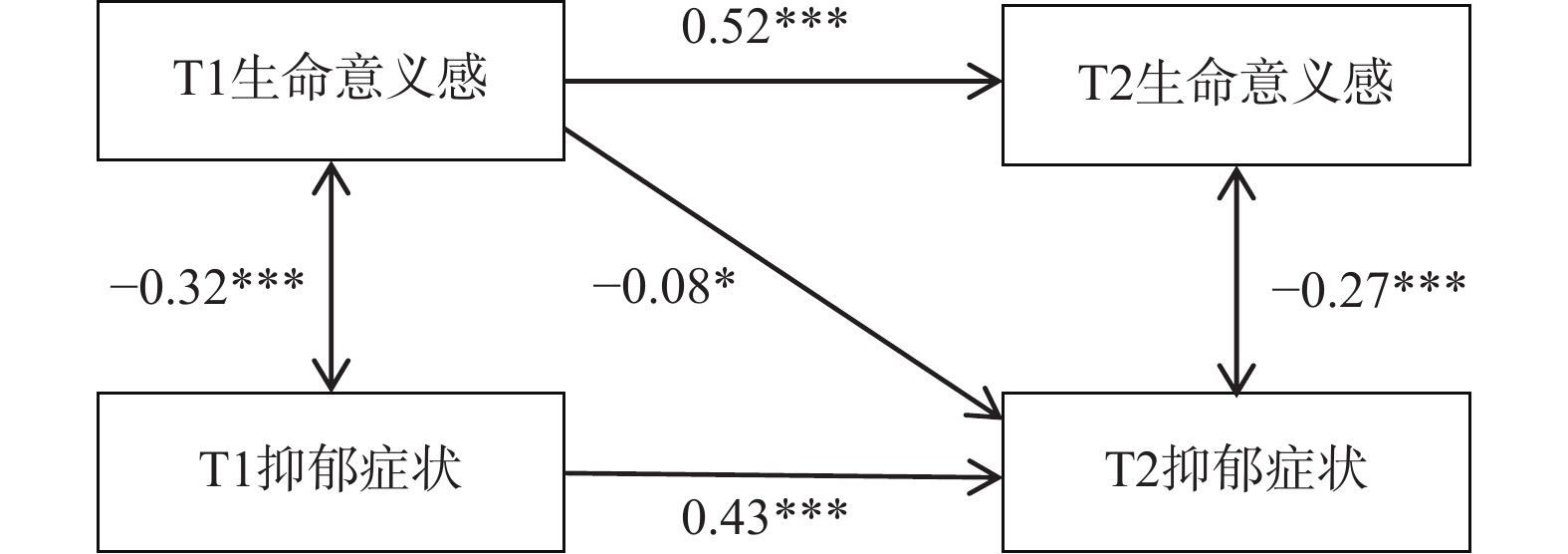
图1 生命意义感与抑郁症状的交叉滞后模型 注:图中路径系数已标准化处理,残差项未呈现;*p<0.05,***p<0.001。
| 测量时间 | 模型 | LL | AIC | BIC | aBIC | Entropy | BLRT (p) | LMR (p) | 类别概率(%) |
| T1 | 1C | −14480.06 | 29000.11 | 29096.08 | 29032.56 | ||||
| 2C | −13500.33 | 27062.66 | 27211.40 | 27112.95 | 0.841 | <0.001 | <0.001 | 63.84/36.16 | |
| 3C | −12964.57 | 26013.14 | 26214.65 | 26081.27 | 0.925 | 0.026 | 0.027 | 65.07/4.24/30.69 | |
| 4C | −12690.78 | 25487.55 | 25741.84 | 25573.52 | 0.910 | 0.015 | 0.016 | 57.25/9.71/3.68/29.35 | |
| 5C | −12490.03 | 25108.05 | 25415.12 | 25211.87 | 0.888 | 0.048 | 0.050 | 1.67/10.49/11.83/49.44/26.56 | |
| T2 | 1C | −14574.72 | 29189.44 | 29285.40 | 29221.88 | ||||
| 2C | −13450.20 | 26962.40 | 27111.13 | 27012.68 | 0.857 | <0.001 | <0.001 | 61.83/38.17 | |
| 3C | −13034.49 | 26152.97 | 26354.49 | 26221.10 | 0.852 | 0.010 | 0.011 | 24.78/49.00/26.23 | |
| 4C | −12731.41 | 25568.83 | 25823.12 | 25654.80 | 0.876 | 0.071 | 0.073 | 3.02/25.05/44.77/27.17 | |
| 5C | −12541.33 | 25210.67 | 25517.73 | 25314.48 | 0.880 | 0.157 | 0.160 | 3.68/16.18/41.74/31.25/7.14 |
表1 生命意义感潜在类别模型的拟合结果
| 测量时间 | 模型 | LL | AIC | BIC | aBIC | Entropy | BLRT (p) | LMR (p) | 类别概率(%) |
| T1 | 1C | −14480.06 | 29000.11 | 29096.08 | 29032.56 | ||||
| 2C | −13500.33 | 27062.66 | 27211.40 | 27112.95 | 0.841 | <0.001 | <0.001 | 63.84/36.16 | |
| 3C | −12964.57 | 26013.14 | 26214.65 | 26081.27 | 0.925 | 0.026 | 0.027 | 65.07/4.24/30.69 | |
| 4C | −12690.78 | 25487.55 | 25741.84 | 25573.52 | 0.910 | 0.015 | 0.016 | 57.25/9.71/3.68/29.35 | |
| 5C | −12490.03 | 25108.05 | 25415.12 | 25211.87 | 0.888 | 0.048 | 0.050 | 1.67/10.49/11.83/49.44/26.56 | |
| T2 | 1C | −14574.72 | 29189.44 | 29285.40 | 29221.88 | ||||
| 2C | −13450.20 | 26962.40 | 27111.13 | 27012.68 | 0.857 | <0.001 | <0.001 | 61.83/38.17 | |
| 3C | −13034.49 | 26152.97 | 26354.49 | 26221.10 | 0.852 | 0.010 | 0.011 | 24.78/49.00/26.23 | |
| 4C | −12731.41 | 25568.83 | 25823.12 | 25654.80 | 0.876 | 0.071 | 0.073 | 3.02/25.05/44.77/27.17 | |
| 5C | −12541.33 | 25210.67 | 25517.73 | 25314.48 | 0.880 | 0.157 | 0.160 | 3.68/16.18/41.74/31.25/7.14 |
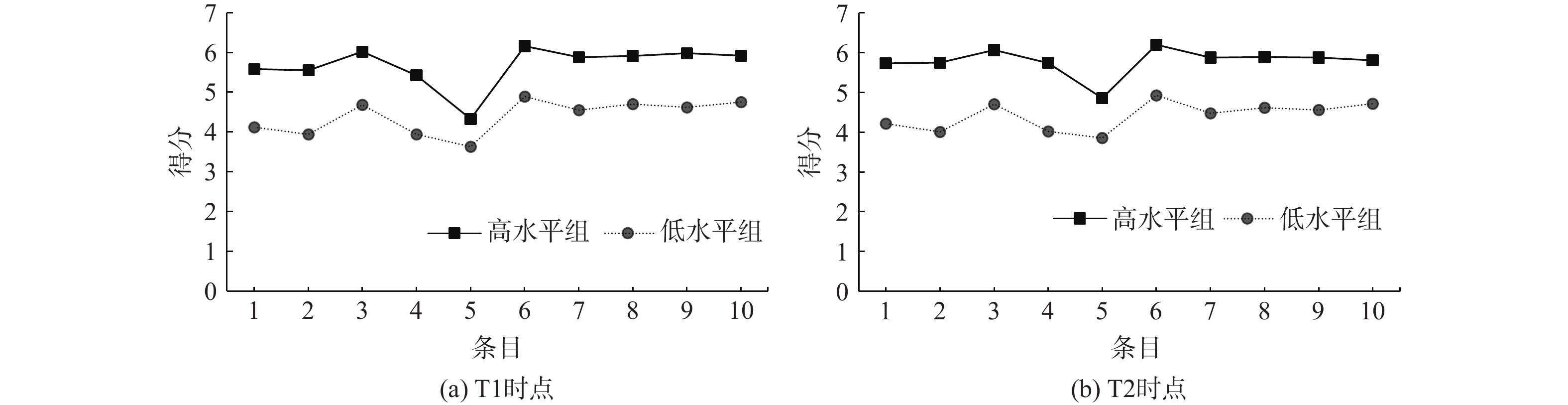
图2 T1和T2时点上生命意义感潜在类别的特征分布
| 项目 | T2 | ||
| Class21:低意义组 | Class22:高意义组 | ||
| T1 | Class11:低意义组 | 442,49.30% | 130,14.50% |
| Class12:高意义组 | 112,12.50% | 212,23.70% | |
表2 生命意义感T1~T2演变模式(n, %)
| 项目 | T2 | ||
| Class21:低意义组 | Class22:高意义组 | ||
| T1 | Class11:低意义组 | 442,49.30% | 130,14.50% |
| Class12:高意义组 | 112,12.50% | 212,23.70% | |
| 演变模式 | OR | 95%CI | p | |
| 模型1 | 高意义稳定组 | 1.00 | ||
| 持续低意义组 | 3.41 | [1.65, 7.02] | 0.001 | |
| 意义提升组 | 1.09 | [0.38, 3.14] | 0.871 | |
| 意义降低组 | 2.96 | [1.23, 7.16] | 0.016 | |
| 模型2 | 高意义稳定组 | 1.00 | ||
| 持续低意义组 | 3.48 | [1.67, 7.26] | 0.001 | |
| 意义提升组 | 1.13 | [0.39, 3.26] | 0.828 | |
| 意义降低组 | 3.05 | [1.25, 7.40] | 0.014 | |
| 模型3 | 高意义稳定组 | 1.00 | ||
| 持续低意义组 | 2.74 | [1.28, 5.88] | 0.010 | |
| 意义提升组 | 0.81 | [0.27, 2.44] | 0.708 | |
| 意义降低组 | 3.00 | [1.19, 7.52] | 0.019 |
表3 生命意义感演变模式与T2抑郁症状的二分类logistic回归分析
| 演变模式 | OR | 95%CI | p | |
| 模型1 | 高意义稳定组 | 1.00 | ||
| 持续低意义组 | 3.41 | [1.65, 7.02] | 0.001 | |
| 意义提升组 | 1.09 | [0.38, 3.14] | 0.871 | |
| 意义降低组 | 2.96 | [1.23, 7.16] | 0.016 | |
| 模型2 | 高意义稳定组 | 1.00 | ||
| 持续低意义组 | 3.48 | [1.67, 7.26] | 0.001 | |
| 意义提升组 | 1.13 | [0.39, 3.26] | 0.828 | |
| 意义降低组 | 3.05 | [1.25, 7.40] | 0.014 | |
| 模型3 | 高意义稳定组 | 1.00 | ||
| 持续低意义组 | 2.74 | [1.28, 5.88] | 0.010 | |
| 意义提升组 | 0.81 | [0.27, 2.44] | 0.708 | |
| 意义降低组 | 3.00 | [1.19, 7.52] | 0.019 |
|
陈曼曼, 胜利, 曲姗. 病人健康问卷在综合医院精神科门诊中筛查抑郁障碍的诊断试验. 中国心理卫生杂志, 2015, 29 (4): 241- 245.
DOI |
|
|
陈雨濛, 张亚利, 俞国良. 2010~2020中国内地大学生心理健康问题检出率的元分析. 心理科学进展, 2022, 30 (5): 991- 1004.
DOI |
|
|
李幼东, 彭雨涵, 王紫妍, 邓屹杉, 周婉玉, 刘政, 武育颖. 焦虑抑郁情绪对大学生生命意义感的影响: 无聊倾向性的中介作用. 中华行为医学与脑科学杂志, 2021, 30 (7): 634- 639.
DOI |
|
|
廖娟娟, 郑亚楠, 黄亮明, 魏泽红. PHQ-2-C、CES-D和BDI-Ⅱ-C在筛查青少年抑郁障碍中的应用研究. 国际精神病学杂志, 2017, 44 (1): 25- 28.
|
|
|
麻超, 刘亚飞, 于海波, 武晓光. 高中生生命意义感的类别特征及与孤独感的关系: 基于潜在剖面分析. 心理与行为研究, 2023, 21 (2): 216- 223.
DOI |
|
|
汪瑞, 李书琴, 金正格, 钱燕, 蒋志成, 李若瑜, 张诗晨, 万宇辉. 大学生亲密伴侣暴力演变及其与抑郁症状的关联. 中国心理卫生杂志, 2022, 36 (11): 930- 936.
DOI |
|
|
王鑫强, 游雅媛, 张大均. 生命意义感量表中文修订版在大学生中的信效度及与心理素质的关系. 西南大学学报(自然科学版), 2016, 38 (10): 161- 167.
|
|
|
王玉, 吴欣洋, 甘怡群. 大学生生命意义寻求和视角转换对抑郁的影响——有中介的调节模型. 中国心理卫生杂志, 2015, 29 (11): 858- 863.
DOI |
|
|
张荣伟, 李丹. 如何过上有意义的生活?——基于生命意义理论模型的整合. 心理科学进展, 2018, 26 (4): 744- 760.
|
|
|
赵娜, 马敏, 辛自强. 生命意义感获取的心理机制及其影响因素. 心理科学进展, 2017, 25 (6): 1003- 1011.
|
|
|
周浩, 龙立荣. 共同方法偏差的统计检验与控制方法. 心理科学进展, 2004, 12 (6): 942- 950.
DOI |
|
|
Adler, N. E., Epel, E. S., Castellazzo, G., & Ickovics, J. R. Relationship of subjective and objective social status with psychological and physiological functioning: Preliminary data in healthy, white women. Health Psychology, 2000, 19 (6): 586- 592.
DOI |
|
|
Appel, J. E., Park, C. L., Wortmann, J. H., & van Schie, H. T. Meaning violations, religious/spiritual struggles, and meaning in life in the face of stressful life events. The International Journal for the Psychology of Religion, 2020, 30 (1): 1- 17.
DOI |
|
|
Baquero-Tomás, M., Grau, M. D., Moliner, A. R., & Sanchis-Sanchis, A. Meaning in life as a protective factor against depression. Frontiers in Psychology, 2023, 14, 1180082.
DOI |
|
|
Czyżowska, N., & Gurba, E. Does reflection on everyday events enhance meaning in life and well-being among emerging adults? Self-efficacy as mediator between meaning in life and well-being. International Journal of Environmental Research and Public Health, 2021, 18 (18): 9714.
DOI |
|
|
Dewitte, L., Vandenbulcke, M., & Dezutter, J. Meaning in life matters for older adults with Alzheimer’s disease in residential care: Associations with life satisfaction and depressive symptoms. International Psychogeriatrics, 2019, 31 (5): 607- 615.
DOI |
|
|
He, Y. Q., Chen, M. H., Guo, S. P., & Liang, J. Y. An analysis of the latent profile and influencing factors of the sense of the meaning of life amongst medical students post-COVID-19 from the perspective of Chinese collectivist culture. Current Psychology, 2024, 43 (20): 18790- 18799.
DOI |
|
|
Kleftaras, G., & Psarra, E. Meaning in life, psychological well-being and depressive symptomatology: A comparative study. Psychology, 2012, 3 (4): 337- 345.
DOI |
|
|
Kroenke, K., Spitzer, R. L., & Williams, J. B. W. The Patient Health Questionnaire-2: Validity of a two-item depression screener. Medical Care, 2003, 41 (11): 1284- 1292.
DOI |
|
|
Kuk, A., & Guszkowska, M. Changes and predictors of the sense of meaning in life in polish university students participating in psychological workshops Communication–Forgiveness–Love. Journal of Religion and Health, 2019, 58 (4): 1095- 1106.
DOI |
|
|
Lee, J. E., Kahana, E., Kahana, B., & Zarit, S. The role of goal and meaning in life for older adults facing interpersonal stress. Aging & Mental Health, 2022, 26 (1): 149- 158.
|
|
|
Lubke, G., & Muthén, B. O. Performance of factor mixture models as a function of model size, covariate effects, and class-specific parameters. Structural Equation Modeling: A Multidisciplinary Journal, 2007, 14 (1): 26- 47.
DOI |
|
|
McCabe, P. J., & Christopher, P. P. Symptom and functional traits of brief major depressive episodes and discrimination of bereavement. Depression and Anxiety, 2016, 33 (2): 112- 119.
DOI |
|
|
Mirowsky, J., & Ross, C. E. (2003). Social causes of psychological distress (2nd ed.). New York: Routledge.
|
|
|
Nylund, K. L., Asparouhov, T., & Muthén, B. O. Deciding on the number of classes in latent class analysis and growth mixture modeling: A Monte Carlo simulation study. Structural Equation Modeling: A Multidisciplinary Journal, 2007, 14 (4): 535- 569.
DOI |
|
|
Skaletz, C., & Seiffge-Krenke, I. Models of developmental regulation in emerging adulthood and links to symptomatology. New Directions for Child and Adolescent Development, 2010, 2010 (130): 71- 82.
DOI |
|
|
Steger, M. F. Making meaning in life. Psychological Inquiry, 2012, 23 (4): 381- 385.
DOI |
|
|
Steger, M. F. (2017). Meaning in life and wellbeing. In M. Slade, L. Oades, & A. Jarden (Eds.), Wellbeing, recovery and mental health (pp. 75–85). Cambridge: Cambridge University Press.
|
|
|
Steger, M. F., Frazier, P., Oishi, S., & Kaler, M. The Meaning in Life Questionnaire: Assessing the presence of and search for meaning in life. Journal of Counseling Psychology, 2006, 53 (1): 80- 93.
DOI |
|
|
Tein, J. Y., Coxe, S., & Cham, H. Statistical power to detect the correct number of classes in latent profile analysis. Structural Equation Modeling: A Multidisciplinary Journal, 2013, 20 (4): 640- 657.
DOI |
|
|
Yang, C. C. Evaluating latent class analysis models in qualitative phenotype identification. Computational Statistics & Data Analysis, 2006, 50 (4): 1090- 1104.
|
|
|
Yu, Y. J., He, M., & Li, K. X. Effect of socioeconomic status on emerging adults’ positive mental health: Roles of relative deprivation, thwarted belongingness, and meaning in life. Current Psychology, 2024, 43 (41): 31969- 31977.
DOI |
|
|
Yue, X. D., Cheung, C. K. J., Hiranandani, N. A., & Feng, J. Dispositional predispositions of depression, life satisfaction, and life meaning among Chinese college students. International Journal of Psychology & Behavior Analysis, 2018, 4, 142.
|
| [1] | 胡义秋, 何震, 曾子豪, 赵纤, 常梦梦. 初中生身体监控与抑郁症状的纵向关系研究:主观幸福感的中介作用[J]. 心理与行为研究, 2025, 23(1): 58-65. |
| [2] | 姚雨佳, 林慧慧, 徐舵. 青少年特质焦虑与情绪调节灵活性、痛苦忍受性之间的关系:一项交叉滞后分析[J]. 心理与行为研究, 2024, 22(6): 761-768. |
| [3] | 李琳, 皋伟. 小学生研究素养的量表编制与潜在剖面分析[J]. 心理与行为研究, 2024, 22(6): 830-838. |
| [4] | 杨华耕, 孙芳, 李欢欢. 基于潜在剖面分析的多重家庭因素与中学生网络游戏成瘾的关系:非适应性认知的中介作用[J]. 心理与行为研究, 2024, 22(3): 329-337. |
| [5] | 徐慧艳, 王小英. 3~6岁儿童同胞关系的异质性及其影响因素:基于潜在剖面分析[J]. 心理与行为研究, 2024, 22(3): 346-353. |
| [6] | 胡永时, 赵怡霖, 张镇. 老年人独处能力与生命意义感:基本心理需求的中介和家庭亲密度的调节作用[J]. 心理与行为研究, 2024, 22(3): 425-432. |
| [7] | 郑柯君, 李妍, 陈欣银, 边玉芳. 青少年早期抑郁症状对父母温暖与社交淡漠关系的中介作用:一项三年追踪研究[J]. 心理与行为研究, 2024, 22(1): 71-78. |
| [8] | 占萍萍, 古静静, 王金良. 父母教养方式类型与青少年网络成瘾的关系:认知情绪调节策略的中介作用[J]. 心理与行为研究, 2023, 21(6): 776-783. |
| [9] | 吴明证, 陈迪, 严梦瑶, 倪苏杭, 王士祺, 尹金荣, 孙晓玲. 家庭仪式与青少年自我控制的关系:亲子依恋与生命意义感的链式中介作用[J]. 心理与行为研究, 2023, 21(6): 832-838. |
| [10] | 李文福, 刘燕, 段熙明, 牛四方, 许瑞雪, 慕福芹. 反刍思维量表在不同性别和抑郁症状医学院校新生中的测量等值性[J]. 心理与行为研究, 2023, 21(6): 854-860. |
| [11] | 张晓颖, 李亚琴, 黄希庭, 杨庆. 自我概念视角下的师范生职业使命感提升机制:一项追踪研究[J]. 心理与行为研究, 2023, 21(4): 524-532. |
| [12] | 蒋俊杰, 陈珺怡, 喻婧. 老年人微信使用与获得感的关系:领悟社会支持和生命意义感的链式中介作用[J]. 心理与行为研究, 2023, 21(3): 367-373. |
| [13] | 麻超, 刘亚飞, 于海波, 武晓光. 高中生生命意义感的类别特征及与孤独感的关系:基于潜在剖面分析[J]. 心理与行为研究, 2023, 21(2): 216-223. |
| [14] | 蒋俊杰, 王旭, 喻婧, 向欢欢, 郭成. 教师关怀行为对中学生学业压力的影响:睡眠质量的中介作用和生命意义感的调节作用[J]. 心理与行为研究, 2023, 21(2): 260-265. |
| [15] | 丁轶飞, 陈兰双, 张镇. 中老年人线上社会参与和抑郁症状的关系:基于自我决定理论[J]. 心理与行为研究, 2023, 21(1): 86-93. |
| 阅读次数 | ||||||
|
全文 |
|
|||||
|
摘要 |
|
|||||
